What Are Video Annotation Services and How Do They Work?
Artificial intelligence is becoming a core part of many industries in the United States, from autonomous vehicles and healthcare to retail, security, and smart manufacturing. However, AI systems cannot understand raw video without proper training data. This is where Video Annotation Services play an important role.
Video annotation involves labeling and organizing objects, actions, movements, and events within video footage so machine learning models can recognize and understand visual information. High-quality annotations help AI systems learn from real-world scenarios and make more accurate predictions.
What Are Video Annotation Services?
Video Annotation Services are professional data-labeling solutions used to add meaningful labels to video content. These labels provide AI and machine learning models with the information they need to identify objects, people, actions, and events across multiple video frames.
Unlike image annotation, video annotation requires understanding how objects and activities change over time. For example, an autonomous driving model may need to identify a pedestrian, track their movement, and understand whether they are crossing a road.
Common Types of Video Annotation
Depending on the AI application, video datasets may require different annotation techniques, including:
-
Object tracking: Following an object across multiple frames.
-
Bounding boxes: Drawing boxes around objects such as vehicles, people, or products.
-
Polygon annotation: Creating precise outlines around irregular objects.
-
Semantic segmentation: Assigning labels to individual pixels or regions.
-
Keypoint annotation: Marking important points on people, animals, or objects.
-
Action labeling: Identifying activities such as walking, running, driving, or picking up an item.
-
Event annotation: Marking specific events or interactions within a video.
The right approach depends on the requirements of the machine learning model and the intended application.
How Do Video Annotation Services Work?
The video annotation process usually follows several structured steps. A professional Video Annotation Company combines trained annotators, quality-control processes, and annotation technologies to create reliable datasets.
Step 1: Collecting Video Data
The first step is gathering relevant video footage. Data can come from cameras, sensors, recorded environments, public datasets, or client-provided sources.
The footage should represent the conditions in which the AI model will eventually operate. For example, a self-driving vehicle model may require videos captured in different weather, lighting, traffic, and road conditions.
Step 2: Preparing the Video
Raw videos are reviewed and prepared before annotation begins. This may include removing unsuitable footage, extracting frames, adjusting video quality, or dividing long videos into manageable segments.
Proper preparation makes the annotation workflow more efficient and helps maintain consistency.
Step 3: Labeling Objects and Activities
Annotators identify the relevant objects, movements, and events in each video. Depending on the project, they may draw bounding boxes, create polygons, mark keypoints, or apply other labels.
For tracking projects, annotators must maintain consistent labels as objects move between frames.
Step 4: Quality Checking
Quality assurance is one of the most important parts of Video Annotation Services. Errors or inconsistent labels can negatively affect AI model performance.
Quality-control teams review annotations for accuracy, consistency, completeness, and compliance with project guidelines. Some workflows also use automated validation tools to identify potential errors.
Step 5: Delivering the Dataset
After annotation and quality checks are complete, the finalized dataset is delivered in a format compatible with the client's machine learning workflow.
Depending on project requirements, annotated data may be provided in formats such as JSON, XML, CSV, or other supported structures.
Why Businesses Need Video Annotation Services
AI models depend heavily on the quality of their training data. Poorly labeled videos can introduce errors and make models less reliable.
Professional Video Annotation Services can help businesses create structured datasets for applications such as:
Autonomous Vehicles
Self-driving and driver-assistance systems need to recognize cars, pedestrians, traffic signs, cyclists, road markings, and other objects. Annotated video helps these systems understand objects and their movement.
Healthcare
Video annotation can support AI applications involving medical procedures, patient movement, rehabilitation, and other visual healthcare use cases where video data is appropriate and properly governed.
Retail and E-commerce
Retail businesses can use annotated video to train AI systems for customer behavior analysis, inventory monitoring, product recognition, and store analytics.
Security and Surveillance
Annotated footage can help train computer vision models to detect specific activities, identify objects, and track movement in monitored environments.
Robotics and Manufacturing
Robots need to recognize objects and understand actions within their surroundings. Annotated video can provide training data for robotic vision, quality inspection, and automated manufacturing systems.
How to Choose a Video Annotation Company
Selecting the right Video Annotation Company is important when building datasets for AI development. Businesses should consider several factors before starting a project.
Look for providers with experience in your specific industry and annotation type. Check their quality-control procedures, data security practices, scalability, turnaround times, and ability to follow detailed annotation guidelines.
It is also useful to choose a provider that can handle large and complex datasets while maintaining consistent annotation quality.
Final Thoughts
Video Annotation Services transform raw video footage into structured training data that AI and machine learning systems can understand. From object tracking and segmentation to action and event labeling, annotation provides the foundation for many computer vision applications.
For U.S. businesses developing AI-powered solutions, working with an experienced Video Annotation Company can help create accurate, consistent, and application-ready datasets. As computer vision continues to expand across industries, high-quality video annotation will remain an important part of successful AI development.
FAQs
What are Video Annotation Services?
Video Annotation Services involve labeling objects, actions, movements, and events within video footage to create training data for AI and machine learning models.
What is the difference between image and video annotation?
Image annotation labels information in individual images, while video annotation tracks and labels objects or activities across multiple frames over time.
Why is video annotation important for AI?
Video annotation provides structured examples that help computer vision models learn to recognize objects, actions, and movements in real-world environments.
What industries use video annotation?
Common industries include autonomous vehicles, healthcare, retail, security, robotics, manufacturing, and smart technology.
How can businesses choose a Video Annotation Company?
Businesses should evaluate annotation expertise, quality-control processes, scalability, data security, turnaround time, and experience with their specific AI use case.
Categories
Read More
Considering adding a Lord of the Rings sword replica to your collection? If you are, you should know what to look for. Here are some of the things you should be weighing to assess quality. What Determines Quality in a Sword? First, let’s just look at what determines quality in a sword replica; these observations regarding attributes are transferrable to pretty much any...

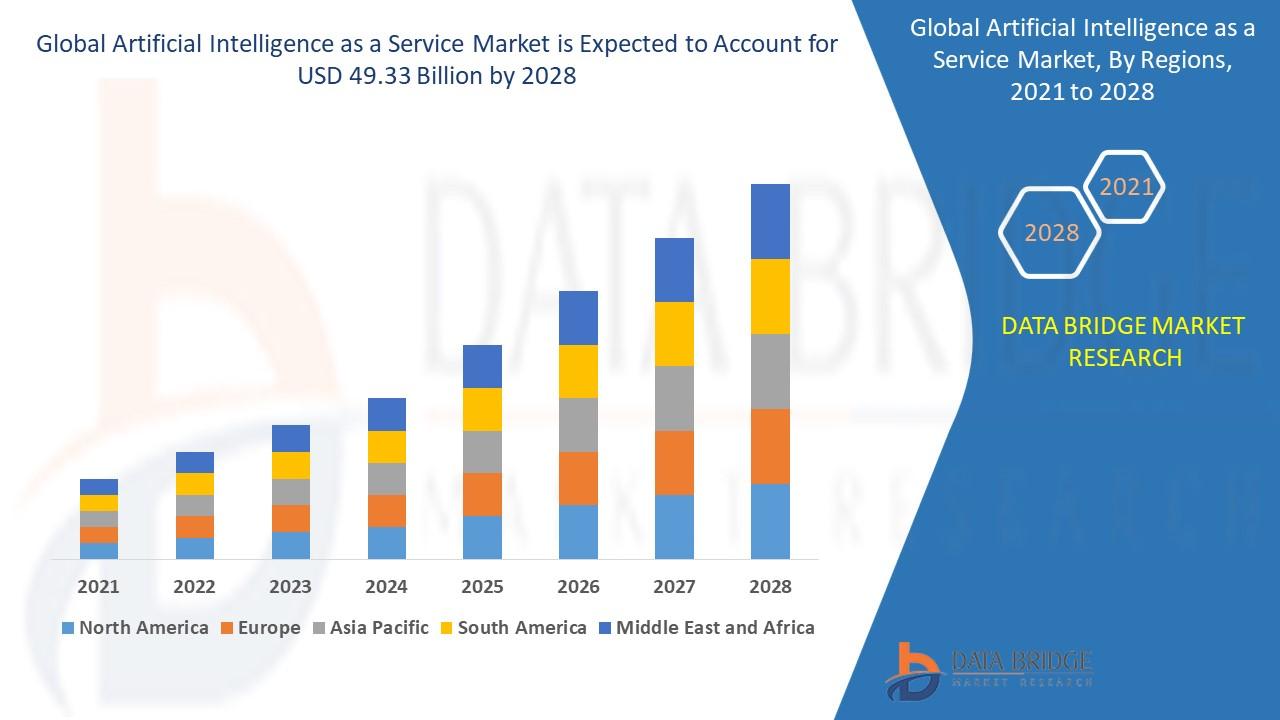
According to the latest report published by Data Bridge Market Research, the Artificial Intelligence as a Service Market CAGR Value The global artificial intelligence as a service market size was valued at USD 14.72 billion in 2024 and is projected to reach USD 165.31 billion by 2032, with a CAGR of 35.30% during the forecast period of 2025...
A house number rock offers a distinctive way to display a property's address while adding a natural decorative feature to the landscape. Instead of using a conventional metal, plastic, or wooden plaque, homeowners can incorporate numbers directly onto a stone surface that complements gardens, pathways, entrances, and exterior architecture. Because natural stone has an inherently durable...

If you're searching for the best Body Spa in Kohat Enclave, Cozy Body Spa is your trusted destination for premium wellness and relaxation services. We offer professional spa therapies that help relieve stress, reduce muscle tension, and restore your physical and mental well-being. Whether you need a luxurious Deep Tissue Massage in Rohini or a rejuvenating Body Spa in Rani Bagh, our experienced...

According to the latest report published by Data Bridge Market Research, the Orthostatic Hypotension Drugs Market Data Bridge Market Research analyses that the orthostatic hypotension drugs market, which was USD 744.93 million in 2022, is expected to reach USD 1,313.81 million by 2030, at a CAGR of 7.35% during the forecast period 2023 to 2030. Winning Orthostatic Hypotension Drugs...