House Number Rock: Stylish and Durable Address Display Ideas
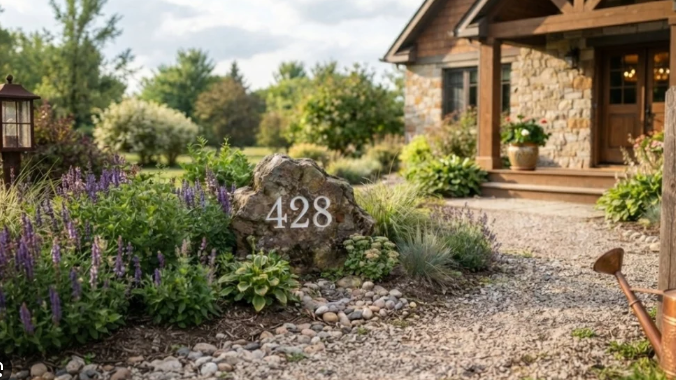
A house number rock offers a distinctive way to display a property's address while adding a natural decorative feature to the landscape. Instead of using a conventional metal, plastic, or wooden plaque, homeowners can incorporate numbers directly onto a stone surface that complements gardens, pathways, entrances, and exterior architecture. Because natural stone has an inherently durable appearance, it can provide a long-lasting address marker that feels integrated with the surrounding property rather than added as an afterthought. This makes personalized rock displays appealing to homeowners looking for practical improvements that also contribute to curb appeal.
Choosing the right house number rock involves more than selecting an attractive stone. The number should be easy to see from the street, appropriately sized for the property, and positioned where visitors, delivery drivers, and emergency personnel can locate it without difficulty. The rock's shape, color, texture, lettering style, placement, and surrounding landscaping all influence how effective the finished display will be. With thoughtful planning, a natural stone address marker can combine visibility, personalization, and outdoor design in one simple feature.
Why Use a Rock for House Numbers?
Natural stone provides a combination of durability and visual character that makes it well suited to permanent address displays. Each rock has its own shape, texture, and coloration, giving homeowners the opportunity to create a feature that feels unique to the property. Stone can complement many landscape styles, from informal gardens and rustic yards to modern homes with clean architectural lines. It can also withstand ordinary outdoor exposure when properly selected and installed. Unlike temporary signs or lightweight plaques, a substantial stone marker can provide a strong visual presence near an entrance. The key is choosing a stone whose scale and appearance work with the property instead of overwhelming the surrounding landscape.
Choosing the Right Rock
The shape and size of the stone should reflect both the available space and the desired visibility of the address. A tall, upright rock can provide a strong vertical display near an entrance, while a flatter stone may work well beside a walkway or driveway. The surface should have enough usable area for the house numbers to remain clear and properly spaced. Color is another consideration because the lettering needs sufficient contrast to be visible from a reasonable distance. Homeowners should also think about how the rock looks during different seasons and lighting conditions. A stone that blends beautifully into the landscape but makes the numbers difficult to read may not be the most practical choice.
Designing Clear and Attractive House Numbers
The lettering is one of the most important elements of a stone address marker. Numbers should be large enough to read from the street while remaining proportional to the size of the rock. Simple lettering styles are often easier to recognize than highly decorative designs, particularly when the marker is positioned some distance from approaching vehicles. Contrast between the numbers and stone surface can improve visibility, while a carefully selected finish can help the lettering remain attractive over time. The arrangement should also provide enough space around each number so that the address can be understood quickly. A visually appealing design should never sacrifice basic readability for decoration.
Placement Matters for Visibility
Even a beautifully designed stone can become ineffective if it is placed in an inconvenient location. A house number rock should generally be positioned where it can be seen clearly from the primary approach to the property. Driveway entrances, front walkways, garden entrances, and areas near gates can all be suitable depending on the property's layout. Vegetation should not obscure the numbers, and the stone should not be positioned where parked vehicles routinely block the view. Homeowners should evaluate visibility during both daytime and evening conditions. If the property has a long driveway or sits away from the road, the address display may need to be positioned closer to the entrance for easier identification.
Integrating the Rock With Landscape Design
A house number rock can become a natural part of a broader landscape composition when surrounded by appropriate plants and hardscape materials. Low-growing plants, ornamental grasses, mulch, gravel, or decorative ground cover can frame the stone without covering the address. The surrounding area should remain sufficiently open to preserve visibility. A stone can also be coordinated with other natural materials used around the property, such as retaining walls, pathway edging, stepping stones, or garden features. The goal is to create visual continuity between the address marker and the rest of the landscape. When the surrounding design is kept simple, the house number remains the functional focal point.
Durability and Weather Considerations
Outdoor address markers are exposed to sunlight, rain, temperature changes, dust, and seasonal debris. Selecting a suitable stone and durable lettering method can help preserve the appearance of the display over time. The surface should be appropriate for the chosen numbering technique, whether the numbers are painted, carved, engraved, or otherwise applied. Homeowners should consider how the lettering may respond to prolonged outdoor exposure and whether occasional maintenance will be necessary. The stone itself should also be positioned securely so that it remains stable. Proper installation can help prevent movement caused by soil changes, accidental contact, or erosion. A durable design reduces the need for frequent replacement while maintaining the property's visual appeal.
House Number Rock Ideas for Different Home Styles
A natural stone address marker can be adapted to suit many architectural styles. A rough-textured stone may complement a rustic or country property, while a smoother stone with simple lettering can work well with a contemporary home. Properties with formal landscaping may benefit from a carefully shaped stone surrounded by neatly maintained planting, whereas informal gardens can accommodate more irregular natural shapes. The color of the stone can also be coordinated with exterior walls, paving, roofing, or other landscape materials. Personalization does not require excessive decoration. Often, the most effective designs use a well-chosen stone, clear numbers, and a thoughtfully landscaped setting.
Conclusion
A house number rock can combine practical address identification with natural landscape design, creating a feature that is both useful and visually distinctive. The best results come from selecting a suitably sized stone, using clear and durable numbering, and placing the marker where it remains easy to see from the property's main approach. Surrounding landscaping should enhance the display without hiding the address, while secure installation can help the feature remain stable through changing weather and seasons. Whether the home has a rustic garden, modern exterior, or traditional landscape, a thoughtfully designed stone address marker can provide a durable and personalized finishing touch to the property's entrance.
Categories
Read More
One of the best and most economical tools of branding perceptions by contemporary companies to help create succour and trust is Business Stickers. Stickers are a central aspect in creating a memorable image that is professional enough, both in the case of startups and already developed brands. Using extreme printing capabilities and customization, companies will be able to create stickers that...

Artificial intelligence is no longer an experimental technology for enterprises. It has become a strategic investment that helps organizations automate operations, improve customer experiences, and increase employee productivity. As Salesforce continues to expand its AI ecosystem through Agentforce and Einstein AI, businesses are exploring how to build AI agents that go beyond answering...

Buy an old Yahoo Account. In today’s competitive digital environment, email accounts remain among the most important tools for communication, registration, marketing, and business operations. Many users now prefer to buy an old Yahoo Account rather than create a new one because older accounts save time and offer immediate usability. An older Yahoo Mail account can be useful for business...

Data Analytics Services: Transforming Business Data into Strategic Growth Introduction Data Analytics Services help businesses transform raw data into actionable insights that drive smarter decisions and sustainable growth. Using advanced analytics, business intelligence, data visualization, and predictive modeling, our experts identify trends, optimize operations, improve customer...