


How Machine Learning Consulting Is Reshaping MLOps and Model Governance in 2026

Machine learning has moved beyond experimental projects and is becoming part of everyday enterprise operations. Businesses now use machine learning to forecast demand, detect anomalies, personalize customer experiences, optimize resources, automate decisions, and identify emerging risks.
However, building a successful model is only one part of the journey.
Once a model enters production, organizations must continuously manage its performance, data dependencies, security, infrastructure, and business impact. This growing operational challenge is making MLOps and model governance essential components of modern AI programs.
In 2026, Machine Learning Consulting Services can help organizations establish practical frameworks for deploying, monitoring, governing, and improving machine learning systems throughout their operational lifecycle.
Why Machine Learning Operations Matter
A machine learning model may perform effectively during development but behave differently after deployment.
Production environments introduce changing conditions that may not exist in development datasets. Customer behavior can change, market conditions can shift, product catalogs can evolve, and operational processes can be modified.
These changes can affect model outputs over time.
MLOps brings software engineering, data engineering, machine learning, and operational practices together to create a structured process for managing models after development.
An effective MLOps environment can support:
-
Automated model deployment
-
Version management
-
Data pipeline monitoring
-
Model performance tracking
-
Automated testing
-
Infrastructure management
-
Retraining workflows
-
Model rollback
-
Auditability
Moving From Model Development to Model Lifecycle Management
Traditional machine learning projects often focus heavily on experimentation.
Data scientists test different algorithms, compare results, tune parameters, and select a promising model. But enterprise deployment introduces another set of requirements.
Organizations need to know:
-
Which model is currently running?
-
Which dataset was used to train it?
-
When was it deployed?
-
What changed between versions?
-
Is performance declining?
-
What happens if the model fails?
-
Who approved the deployment?
-
When should retraining occur?
A structured Machine Learning Consulting approach can help businesses establish lifecycle processes that answer these questions and create greater operational visibility.
The Growing Importance of Model Monitoring
Model monitoring is becoming increasingly important as machine learning becomes embedded into business-critical processes.
Monitoring can track technical and analytical indicators such as prediction quality, data distribution, latency, error rates, and system availability.
One important issue is model drift.
A model trained on historical patterns may become less effective when the environment changes. For example, customer purchasing behavior may change significantly after a new product launch or market shift.
Monitoring systems can identify unusual changes and trigger further investigation or retraining processes.
This turns machine learning from a static software component into a continuously managed business capability.
Building an Enterprise Machine Learning Strategy
MLOps should not exist independently from the organization's broader Machine Learning Strategy.
Businesses need to determine which models require strict governance, which applications need real-time monitoring, and which systems can operate with less operational complexity.
A practical strategy can define:
-
Model development standards.
-
Deployment requirements.
-
Testing procedures.
-
Monitoring policies.
-
Retraining triggers.
-
Access controls.
-
Documentation requirements.
-
Human review processes.
-
Incident response procedures.
-
Retirement policies.
This creates consistency across machine learning projects and helps organizations avoid isolated implementations that are difficult to maintain.
Model Governance for Responsible AI Operations
As AI systems become more influential in business decisions, governance becomes increasingly important.
Model governance provides processes for documenting how models are developed, validated, deployed, monitored, and changed.
Depending on the application, organizations may need to maintain information about:
-
Training datasets
-
Model versions
-
Intended use
-
Known limitations
-
Evaluation results
-
Approval workflows
-
Data sources
-
Performance thresholds
-
Access permissions
-
Change history
Strong governance can improve transparency and make it easier for organizations to investigate unexpected model behavior.
Integrating MLOps With Existing Technology
Enterprise machine learning rarely operates in isolation.
Models may depend on cloud infrastructure, databases, APIs, analytics platforms, enterprise applications, data warehouses, and business workflows.
This means organizations need operational architectures that connect machine learning systems with existing technology.
Modern ML Consulting Services can help businesses evaluate these dependencies and design workflows that make deployment and maintenance more manageable.
For example, a predictive model could receive data from an enterprise application, process it through a managed pipeline, generate a prediction, and return the result to an operational system.
The entire workflow needs to be reliable—not just the model itself.
Automating the Machine Learning Pipeline
Automation is one of the key principles behind scalable MLOps.
Manual processes can introduce inconsistencies and slow down model releases. Automated pipelines can connect multiple stages of the machine learning lifecycle.
A typical pipeline may include:
Data ingestion → Data validation → Feature preparation → Model training → Model evaluation → Approval → Deployment → Monitoring → Retraining
Automation does not eliminate human oversight. Instead, it allows teams to establish repeatable processes while reserving human intervention for decisions that require business or technical judgment.
Combining MLOps With Predictive Applications
Predictive models increasingly influence operational systems across industries.
Businesses may use machine learning to forecast demand, estimate risks, predict equipment failures, identify suspicious activity, or anticipate customer behavior.
When these models become part of daily operations, organizations need dependable processes for maintaining them.
Predictive Analytics Consulting can help organizations connect predictive use cases with appropriate data pipelines, monitoring capabilities, and operational requirements.
This can make predictive intelligence more sustainable as business conditions evolve.
AI and ML Consulting for Cross-Functional Collaboration
Successful MLOps requires collaboration across multiple teams.
Data scientists may understand model behavior, while engineers manage infrastructure and developers integrate models into applications. Security teams may focus on access and risk, while business stakeholders define operational requirements.
This makes AI and ML Consulting valuable when organizations need to align technical and business teams around common AI operating practices.
A cross-functional framework can establish clear responsibilities throughout the machine learning lifecycle.
Preparing for Continuous Model Improvement
Machine learning systems should not be considered permanently finished after deployment.
As new data becomes available and business requirements change, models may require updates.
Organizations can establish continuous improvement processes involving:
-
New training data
-
Model performance analysis
-
Feature evaluation
-
A/B testing
-
Retraining
-
Version comparison
-
Human feedback
-
Business outcome analysis
This creates a feedback loop between production performance and future model development.
The Future of Enterprise MLOps
As organizations deploy more machine learning applications, MLOps will increasingly become part of standard enterprise technology operations.
The future is likely to involve greater automation across model development, deployment, monitoring, governance, and retraining. At the same time, organizations will need stronger oversight as machine learning becomes connected to increasingly important business processes.
The key challenge will not simply be building more models. It will be creating an operating environment in which models can be trusted, monitored, maintained, and improved.
HyprForge helps organizations approach this challenge through structured machine learning planning, technical architecture, deployment support, and lifecycle management.
In 2026, scalable machine learning depends on more than powerful algorithms. It requires an operational foundation capable of keeping intelligent systems reliable as data, technology, and business conditions continue to change.
Categorieën
Meer lezen
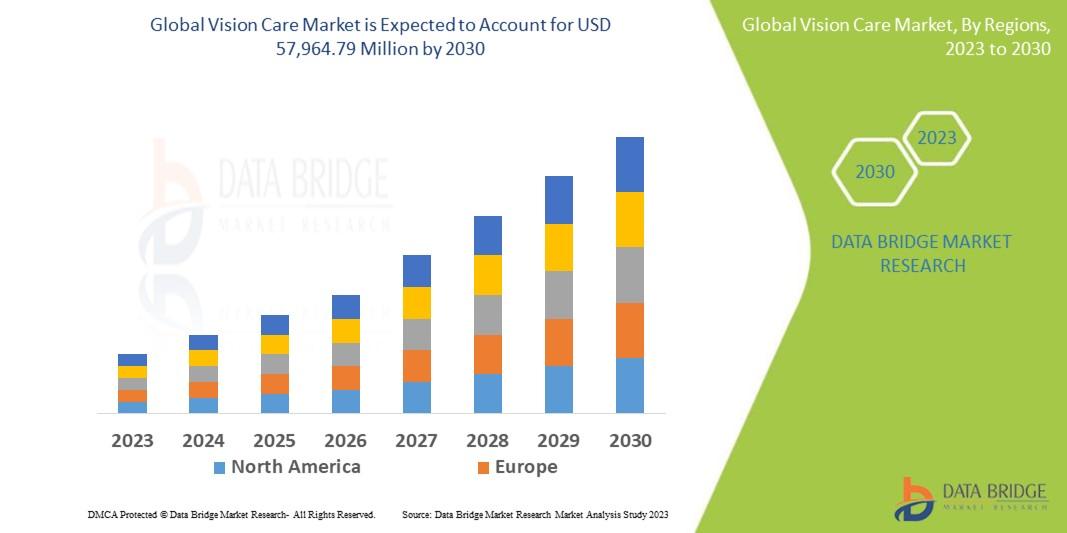
"According to the latest report published by Data Bridge Market Research, the Vision Care Market CAGR Value Data Bridge Market Research analyses that the global vision care market which was USD 41,167.62 million in 2022, is expected to reach USD 57,964.79 million by 2030, and is expected to undergo a CAGR of 4.23% during the forecast period 2023-2030. Vision Care...
International Shipping From UK has become an increasingly important service for individuals and businesses looking to transport vehicles across the world. Whether you are moving abroad, exporting a personal vehicle, purchasing a car from the United Kingdom, or shipping commercial automobiles to overseas markets, choosing the right shipping method is essential for ensuring a smooth and secure...
Smartphones have transformed the way people follow sports and access online entertainment. With mobile-friendly platforms, users can stay connected without relying on a desktop computer. Selfless.gg offers a convenient mobile experience designed around accessibility, simple navigation, and quick access to different platform features. For users exploring the platform for the first time,...

