


Decoupling Tank JINYI For Hydronic Projects

Modern hydronic systems often combine different heat sources, pumps, and distribution zones, making system coordination an important part of the design process. A Decoupling Tank can provide a practical separation point between primary and secondary circuits, while a properly selected Decoupling Tank can help installers manage different flow requirements without forcing every circuit to operate under the same conditions. This approach is useful when heating equipment and distribution loops have different circulation demands.
Coordinating Multiple Hydronic Circuits
A heating system may include a boiler, heat pump, underfloor heating manifold, radiators, or several independently controlled zones. Each part can have its own circulation requirements, and direct connection between pumps may create unwanted hydraulic interaction.
A hydraulic separator creates a common chamber between the primary and secondary sides. This arrangement allows the heat source circuit and distribution circuit to operate with greater independence. When flow requirements change between zones, the separator provides a low-resistance connection that helps accommodate those differences.
For system designers, this can simplify the overall piping concept. Instead of trying to make every pump and circuit follow identical flow conditions, the system can be organized around separate operating requirements.
JINYI Solutions For Heating Applications
JINYI offers several decoupling tank and hydraulic separator configurations for different hydronic applications. The product range includes models such as JY-6001, JY-6002, JY-6003, JY-6004, and JY-6005, giving buyers different configurations to consider.
The product information identifies applications including underfloor heating, heat pumps, boiler systems, and commercial HVAC installations. OEM manufacturing is also available, with customized capacities, connection sizes, materials, and configurations according to project requirements.
For equipment manufacturers and distributors, this flexibility can be useful when one standard configuration does not match every heating project. Different port arrangements, installation orientations, and system capacities may require different product specifications.
Choosing The Right Configuration
Selecting a hydraulic separator starts with understanding the complete system rather than focusing on the tank alone. Designers need to consider the heat source, secondary circuits, expected flow requirements, connection sizes, operating conditions, and available installation space.
For example, JY-6003 is listed with stainless steel SS304 or SS316 construction, threaded BSP/NPT connections, a maximum pressure of 10 bar, and a maximum temperature of 110°C. Its configuration includes two primary and two secondary ports.
Other models provide different specifications. JY-6001, for instance, lists several interface and reference-flow configurations, allowing selection according to system size and application requirements.
These details should be checked against the actual system design before ordering.
Installation And Maintenance Considerations
A separator should be positioned where it can connect naturally with the primary and secondary circuits while leaving enough room for installation and future servicing. Pipe direction, connection accessibility, insulation, valves, and nearby equipment all need to be considered during layout planning.
Some configurations include an air vent, drain valve, mounting components, and insulation cover, which can simplify installation and routine service work. JY-6003, for example, is listed with an air vent, drain valve, mounting bracket, and insulation cover.
The newer JY-6005 configuration also provides standard interfaces, horizontal or vertical mounting options, and a multi-port design intended for systems serving multiple terminal circuits.
Flexible Sourcing For HVAC Projects
For wholesalers, heating equipment manufacturers, and engineering suppliers, sourcing a separator involves more than checking basic dimensions. Material, connection type, flow range, pressure conditions, mounting method, insulation, and accessory configuration can all influence product selection.
A manufacturer that supports customized production can make it easier to coordinate the separator with a specific system architecture. This is particularly useful for OEM projects where buyers may require their own connection arrangements, dimensions, materials, or private-label packaging.
With multiple configurations and customization capabilities, JINYI can support different procurement requirements across hydronic heating and HVAC projects. For more information about available models and customized solutions, visit https://www.yh-jinyi.com/ .
Categories
Read More
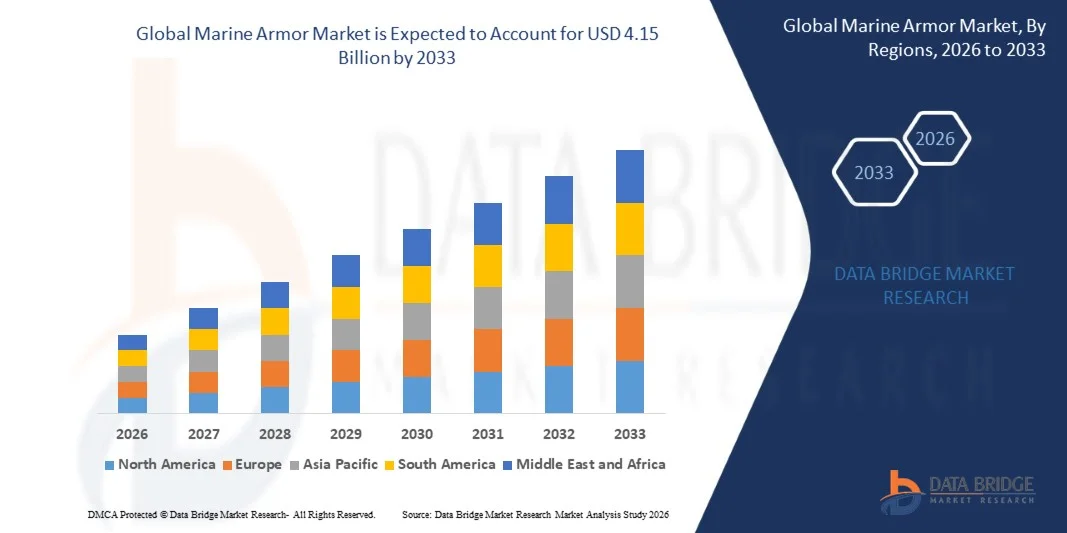
According to the latest report published by Data Bridge Market Research, the Marine Armor Market CAGR Value The global marine armor market was valued at USD 2.79 Billion in 2025 and is projected to reach USD 4.15 Billion by 2033, growing at a CAGR of 5.1% from 2026 to 2033. The Marine Armor Market document contains precise and up to date information about the...
North America is experiencing sustained investment in electricity infrastructure, telecommunications networks, transportation electrification, renewable energy, and advanced industrial systems. In the US, modernization of aging power infrastructure and the expansion of data-intensive technologies are increasing the need for reliable electrical connectivity. These developments are creating...

Botox has become one of the most widely chosen non-surgical cosmetic treatments for individuals seeking smoother, younger-looking skin without invasive procedures. Its popularity comes not only from the visible results but also from the simplicity and predictability of the process. In modern aesthetic care, Botox Riyadh are commonly selected by individuals who want refined facial...

Noida has become an important business destination for startups, established companies, freelancers, consultants, and growing teams looking for a professional base in the Delhi NCR region. Its connectivity, commercial infrastructure, expanding business ecosystem, and range of workspace options make it suitable for businesses at different stages of growth. For a company planning a physical...

Buy New & Old Twitter Accounts Are you looking to expand your social media presence quickly and effectively? Buying new or old Twitter accounts might be the solution you’ve been searching for. Whether you’re a business aiming to connect with a larger audience or an individual wanting to boost your personal brand, acquiring established Twitter accounts can save you time and...