


Machine Learning Development Services: Building Intelligent Marketing Demand and Campaign Performance Prediction Systems

Modern marketing teams operate across search engines, social media, email, content platforms, paid advertising, websites, mobile applications, and customer databases. Every channel generates valuable data, but converting that information into reliable predictions about future campaign performance can be challenging.
Marketing teams often need to answer questions such as:
Which campaigns are likely to generate the strongest response? Which customer segments may engage with a particular offer? When should a campaign be launched? How much demand could a promotion generate?
Traditional reporting primarily explains what has already happened. Machine learning can help organizations move toward predictive marketing intelligence by analyzing historical campaign performance, customer behavior, seasonal patterns, engagement signals, and changing market conditions.
With Machine Learning Development Services, businesses can develop predictive systems that help marketing teams understand campaign performance, forecast demand, identify audience patterns, and improve planning.
What Is Predictive Marketing Intelligence?
Predictive marketing intelligence uses machine learning models to analyze historical and current marketing information and estimate potential future outcomes.
A predictive system may analyze:
-
Campaign performance
-
Customer engagement
-
Website activity
-
Email interactions
-
Advertising data
-
Purchase history
-
Customer segments
-
Seasonal trends
-
Product demand
-
Promotion history
-
Conversion behavior
Instead of relying entirely on fixed assumptions, organizations can use these signals to develop models that identify patterns associated with specific outcomes.
The predictions can then support campaign planning and marketing decisions.
Why Traditional Marketing Forecasting Is Changing
Traditional campaign planning may depend heavily on historical averages and manually defined assumptions.
For example, a marketing team might estimate that a particular campaign will generate approximately the same number of leads as a similar campaign from the previous year.
However, customer behavior can change significantly.
A new competitor, pricing change, product launch, economic shift, platform algorithm update, or change in customer preferences can affect campaign performance.
Machine learning can incorporate a wider range of signals and update predictions as new data becomes available.
How Machine Learning Development Supports Marketing Forecasting
Machine Learning Development can help organizations create models around specific marketing objectives.
A typical workflow can include:
Marketing data → Data preparation → Behavioral features → ML model → Prediction → Campaign planning → Outcome tracking
Historical campaign data can be used to train models that identify patterns related to conversions, engagement, demand, or customer response.
The resulting predictions can then be integrated into marketing workflows.
Predictive Analytics for Campaign Performance
Predictive Analytics Services can help marketing teams estimate potential campaign outcomes before allocating significant resources.
Models can potentially forecast:
-
Lead volume
-
Conversion probability
-
Customer engagement
-
Campaign response
-
Product demand
-
Email interaction
-
Promotion performance
-
Audience response
For example, a business launching several campaigns could use predictive analytics to estimate which audience segments may demonstrate stronger engagement based on historical behavioral patterns.
These estimates can support planning while leaving final campaign decisions with marketing professionals.
Custom ML Models for Different Marketing Goals
Different businesses measure campaign success differently.
An e-commerce company may prioritize purchases and revenue.
A SaaS company may focus on qualified leads, product demonstrations, subscriptions, and customer acquisition cost.
A media company may prioritize engagement, subscriptions, and content consumption.
A financial-services company may focus on qualified applications or customer-product adoption.
Custom ML Models can be designed around these different objectives.
This allows organizations to build predictive systems using business-specific data and measurable outcomes.
Intelligent Audience Segmentation
Marketing audiences are rarely uniform.
Customers may differ in purchasing behavior, engagement levels, product interests, price sensitivity, and lifecycle stage.
Machine learning can identify behavioral patterns and help create dynamic customer segments.
Possible segments can include:
-
Highly engaged customers
-
New customers
-
Returning customers
-
High-value customers
-
At-risk customers
-
Promotion-sensitive customers
-
Inactive customers
-
Emerging customer segments
Unlike static segmentation, ML-based segmentation can be updated as customer behavior changes.
Predicting Customer Response
A marketing campaign may receive different responses from different customers.
One customer may respond to a discount, while another may be more interested in product education or a premium offering.
Machine learning can analyze historical interactions to identify patterns associated with customer responses.
For example, the system could estimate the probability that a customer will:
-
Open an email
-
Click an offer
-
Complete a purchase
-
Register for an event
-
Request more information
-
Renew a subscription
These predictions can support more contextual campaign planning.
AI-Powered Marketing Budget Allocation
Marketing teams often need to allocate limited budgets across multiple channels.
Machine learning can provide analytical support by examining historical relationships between spending and outcomes.
A predictive system could compare campaign performance across:
-
Search advertising
-
Social advertising
-
Email
-
Content marketing
-
Affiliate channels
-
Display advertising
-
Events
-
Referral programs
The objective is not for AI to independently control marketing budgets. Instead, predictive insights can help marketing professionals evaluate possible allocation scenarios.
Real-Time Campaign Intelligence
Campaign performance can change quickly.
A campaign that performs well during its first few hours may experience different results later because of audience saturation, changing demand, competitive activity, or other factors.
Connected machine learning systems can analyze new performance signals and update predictions.
For example:
Campaign launched → New performance data → ML analysis → Updated forecast → Marketing review → Campaign adjustment
This creates a more responsive marketing environment.
Intelligent ML Applications for Marketing Teams
Intelligent ML Applications can support multiple areas of marketing intelligence.
Potential applications include:
-
Campaign forecasting
-
Customer segmentation
-
Lead scoring
-
Churn prediction
-
Recommendation systems
-
Demand forecasting
-
Customer lifetime value prediction
-
Promotion analysis
-
Marketing attribution support
-
Engagement prediction
These capabilities can work together to create a connected predictive marketing ecosystem.
Integrating Machine Learning With Marketing Platforms
Predictive intelligence becomes more practical when it is connected to the tools marketing teams already use.
Potential integrations include:
-
CRM systems
-
Marketing automation platforms
-
Customer-data platforms
-
Advertising platforms
-
E-commerce systems
-
Analytics tools
-
Email platforms
-
Business intelligence systems
For example, an ML prediction could be displayed alongside a customer record inside a CRM.
Marketing teams can then review the prediction together with the customer's existing context.
Marketing Attribution and Machine Learning
Understanding which marketing activities contribute to customer outcomes can be difficult when customers interact with multiple channels.
A customer might see an advertisement, read a blog article, receive an email, visit a product page, and later make a purchase.
Machine learning can help analyze these complex interaction patterns.
Rather than assuming that one interaction caused a conversion, organizations can use ML to identify relationships among multiple customer-touchpoint signals.
This can provide additional analytical context for campaign evaluation.
Managing Data Quality and Model Drift
Marketing environments change frequently.
Campaign strategies, customer preferences, platforms, products, and market conditions can all evolve.
A model trained on older data may become less accurate when customer behavior changes.
Organizations should therefore establish processes for:
-
Data validation
-
Model monitoring
-
Performance measurement
-
Drift detection
-
Feature review
-
Retraining
-
Access control
-
Privacy management
Regular evaluation helps ensure that predictions remain relevant.
Human Oversight in Predictive Marketing
Predictive systems can identify patterns, but marketing decisions often require contextual judgment.
A marketing professional may understand factors that are not represented in historical datasets, such as a new product strategy, brand positioning, competitive activity, or upcoming business changes.
A practical workflow is therefore:
ML prediction → Marketing review → Business context → Campaign decision → Outcome measurement
This keeps machine learning in a decision-support role.
Measuring Predictive Marketing Performance
Organizations should evaluate predictive marketing systems using measurable outcomes.
Relevant metrics include:
Forecast accuracy: How closely do predictions match actual campaign outcomes?
Conversion rate: Do predictive insights help identify stronger opportunities?
Customer engagement: Are interactions improving among relevant audiences?
Campaign efficiency: Can teams reduce ineffective campaign activity?
Revenue contribution: Are predictive insights associated with measurable business outcomes?
Model performance: Does predictive accuracy remain stable over time?
These metrics help organizations improve both their models and marketing workflows.
A Practical Roadmap for Predictive Marketing ML
1. Define the Marketing Objective
Determine whether the primary goal is campaign forecasting, demand prediction, customer response, or another measurable outcome.
2. Consolidate Marketing Data
Connect approved information from CRM, advertising, analytics, customer, and campaign platforms.
3. Prepare the Data
Clean historical records and identify useful behavioral and campaign features.
4. Develop the Model
Train and evaluate machine learning models against historical outcomes.
5. Integrate Predictions
Make predictions available through dashboards, CRM systems, or marketing platforms.
6. Add Human Review
Allow marketing professionals to evaluate predictions alongside business context.
7. Monitor and Improve
Compare forecasts with actual outcomes and continuously improve the system.
The Future of Predictive Marketing
Marketing intelligence is moving toward more adaptive systems that continuously learn from customer behavior and campaign outcomes.
Future platforms may combine demand forecasting, customer lifetime value, lead scoring, recommendation engines, churn prediction, and campaign intelligence into unified predictive environments.
This can allow organizations to understand not only what happened during a campaign but also how customer behavior may evolve in response to future marketing activity.
Conclusion
Machine learning is creating new possibilities for predictive marketing by helping businesses analyze customer behavior, campaign performance, engagement signals, and demand patterns.
Through Machine Learning Development Services, organizations can build predictive systems tailored to their marketing objectives. Machine Learning Solutions can connect these capabilities with enterprise systems, while Machine Learning Development, Predictive Analytics Services, Custom ML Models, and Intelligent ML Applications can support campaign forecasting, audience intelligence, customer prediction, and marketing analytics.
The goal is not to remove human decision-making from marketing. It is to provide teams with better predictive information so they can plan campaigns, understand customers, and respond to changing market behavior with greater context.
Categories
Read More
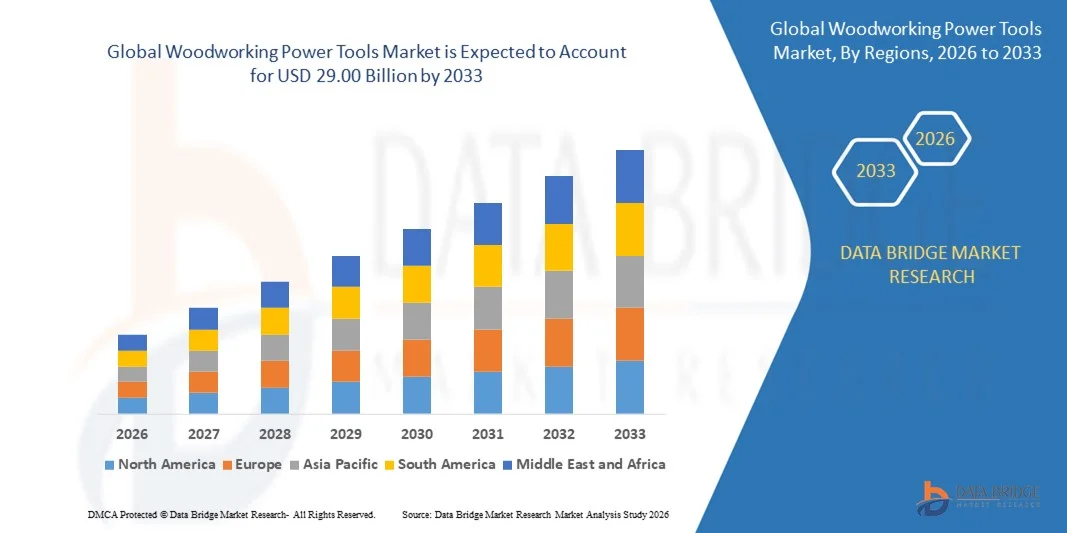
According to the latest report published by Data Bridge Market Research, the Woodworking Power Tools Market CAGR Value The global woodworking power tools market size was valued at USD 20.63 billion in 2025 and is expected to reach USD 29.00 billion by 2033, at a CAGR of 4.35% during the forecast period A talented team works strictly with...
Buy TextNow Account | Verified & Ready-to-Use Accounts Looking for a reliable way to communicate without limitations? Choose to Buy TextNow account from smmpvaio.com to enjoy seamless calling and texting services with absolute ease. Our premium, verified, and high-quality TextNow accounts are engineered for professionals who need a dedicated US-based number for business verification,...

According to the latest report published by Data Bridge Market Research, the Machine-to-Machine (M2M) Connections Market The global Machine-to-Machine (M2M) Connections market size was valued at USD 3.20 billion in 2024 and is expected to reach USD 7.96 billion by 2032, at a CAGR of 11.30% during the forecast period A comprehensive Machine-to-Machine (M2M) Connections...

Choosing the right furniture can transform a house, office, or commercial space into an elegant and comfortable environment. For customers searching for Luxury Furniture Gulberg Lahore, quality craftsmanship, sophisticated design, durability, and customization are important factors to consider. In the heart of Lahore, Mohkam Furnishers offers premium furniture solutions designed for customers...

When people talk about the funniest jesters in the world, Dave Chappelle is always part of the discussion. With an estimated net worth of around $100 million, his fiscal success didn’t come from following the traditional path. Rather, it came from bold opinions, strategic comebacks, and an unvarying commitment to creative control Click here. Chappelle’s trip to getting one of...