


Can Eyebrow Hair Transplant in Dubai Restore Outer Brow Hair
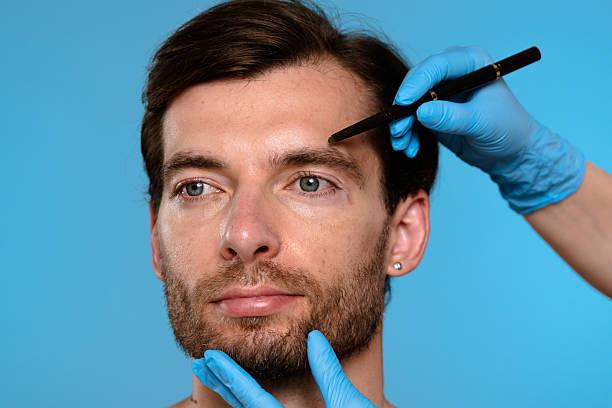
The outer third of the eyebrow is particularly vulnerable to visible thinning because even a modest reduction in hair can make the brow appear shorter or less defined. Eyebrow Hair Transplant in Dubai can restore selected outer-brow areas by transferring donor follicles into precisely planned recipient sites while following the existing direction, taper, and contour of the brow. The objective is to rebuild the missing section without making the tail look artificially dense or extended.
Why Outer Brow Hair Loss Changes Facial Definition
The outer brow, often referred to as the brow tail, contributes to the overall length and visual balance of the eyebrow. When this region becomes sparse, the inner and central brow may remain relatively intact while the outer edge gradually disappears.
This creates a different restoration challenge from generalized eyebrow thinning. The surgeon has to determine where the natural brow should transition into the restored tail and how far the new hair should extend.
The Brow Tail Has a Distinct Taper
A natural eyebrow usually does not maintain identical thickness from its inner portion to its outer edge. The tail commonly becomes narrower as it approaches its endpoint.
Recreating this taper is important. Placing the same density throughout the tail can produce a blunt appearance rather than a natural continuation of the eyebrow.
Small Changes Can Be Visually Significant
Because the eyebrow occupies a relatively small facial area, moving the outer boundary by only a small distance can alter the perceived shape.
The treatment therefore requires detailed planning rather than simply filling every visibly thin section.
How Eyebrow Hair Transplant in Dubai Can Restore the Outer Brow
Tajmeels describes eyebrow transplantation as a follicular procedure in which donor hairs are extracted individually, prepared, and implanted into fine openings according to the planned eyebrow shape, direction, and size.
For outer-brow restoration, these technical details become especially important because the tail has a narrow, directional structure.
Identifying the True Restoration Boundary
The first planning step is determining whether the tail is genuinely missing or simply thinner than the rest of the eyebrow.
Existing fine hairs may be difficult to see without close examination. Preserving these native follicles can provide a natural foundation for the transplanted hairs.
Extending the Tail Gradually
If the outer brow has shortened because of follicular loss, the restored area should generally transition gradually from existing growth toward the new endpoint.
The final boundary should correspond with facial proportions rather than being selected solely according to a preferred measurement.
Following the Native Hair Angle
Outer eyebrow hairs tend to lie in a specific direction as they approach the tail. Recipient sites must accommodate this change in orientation.
A graft that grows in the wrong direction can remain noticeable even when it successfully produces hair.
Common Reasons the Outer Brow Becomes Sparse
Several different factors can affect the eyebrow tail. The underlying cause should be considered before transplantation is planned.
Long-Term Grooming
Repeated plucking, waxing, or other aggressive grooming can gradually reduce visible hair in selected sections. If the follicles have been permanently damaged, cosmetic restoration may become an option.
Aging-Related Changes
Changes in eyebrow fullness can occur with age. In some individuals, the outer brow becomes noticeably less dense while the central region remains comparatively stable.
The pattern of loss should be assessed rather than assuming every case represents the same biological process.
Trauma or Burns
An injury can permanently interrupt hair growth in the tail. Burns and other forms of tissue damage can also alter the condition of the skin where follicles would need to be implanted.
Medical or Hormonal Factors
Eyebrow loss can also be associated with medical conditions, hormonal changes, chemotherapy, genetics, and other causes listed by Tajmeels.
If the loss is unexplained or continuing, identifying the underlying cause is an important part of treatment planning.
Planning the Outer Brow Around Existing Hair
A common mistake in tail restoration is treating the missing section as an isolated patch.
The surrounding brow provides important information about the correct thickness, direction, curvature, and transition.
Comparing Both Outer Brows
Both sides should be assessed even when only one tail appears deficient.
The opposite eyebrow can provide a useful anatomical reference, but it should not automatically be copied. Natural facial asymmetry means that a perfectly mirrored design may not always produce the most natural visual result.
Studying Native Hair Direction
The direction of brow hair changes across different regions. Hair closer to the head of the eyebrow behaves differently from hair approaching the outer tail.
Transplanted follicles therefore need to be positioned according to their intended location rather than implanted using one uniform angle.
Maintaining a Controlled Density
Outer-brow restoration generally requires selective placement.
Too little implantation may leave the tail visibly incomplete, while excessive packing can make the outer edge appear heavy compared with the central brow.
Why the Tail Should Not Be Designed as a Straight Extension
The outer eyebrow has a three-dimensional contour rather than a simple horizontal endpoint.
The restoration needs to account for the brow's curvature and the natural decrease in density toward the outer edge.
Preserving the Arch-to-Tail Transition
The arch often represents a visual turning point in the eyebrow. From there, the hair direction and contour gradually change toward the tail.
A successful restoration should preserve this transition rather than creating an abrupt change between native and transplanted hair.
Avoiding an Artificial Endpoint
The final few hairs should not necessarily form a hard line.
A softer termination can help the restored tail blend into the surrounding facial anatomy. The exact approach depends on the patient's existing brow characteristics and the amount of missing hair.
Donor Hair Selection for Outer Brow Restoration
The donor area is another important part of the assessment. Tajmeels' eyebrow treatment information describes donor hairs being taken from the scalp and prepared for individual implantation.
Because scalp hair can continue growing longer than native eyebrow hair, patients need to understand the grooming implications of using donor follicles.
Matching Hair Characteristics
The surgeon needs to consider whether the available donor hair can provide a suitable aesthetic match for the eyebrow.
Hair caliber, texture, and growth behavior can all influence the appearance of the final tail.
Long-Term Trimming
Once transplanted follicles mature, the resulting hairs may require regular trimming to maintain the desired eyebrow length.
Tajmeels notes that transplanted eyebrow hair can be trimmed or plucked after maturation.
This ongoing maintenance is different from simply applying temporary brow makeup.
Outer Brow Restoration After Scarring
A scarred eyebrow tail requires additional evaluation because the recipient tissue may differ from normal skin.
Evaluating the Recipient Area
The appearance of a scar does not by itself determine whether transplantation can be performed. Tissue quality, scar characteristics, blood supply, and the condition of the surrounding skin all need to be considered.
The assessment should also determine whether the hair loss is confined to the scar or extends beyond it.
Designing Around the Scar
Where appropriate, the restoration may need to transition between scarred and unaffected areas.
This makes accurate site placement particularly important because the new follicles need to integrate visually with the existing brow.
Recovery After Outer Brow Transplantation
Restoring the tail does not mean the final appearance will be visible immediately.
Tajmeels describes an initial recovery period of around five to seven days. Redness, swelling, tenderness, and scabbing can occur during early healing, while transplanted hairs may shed during the following weeks before new growth develops.
| Recovery Stage | What May Happen | Main Focus |
|---|---|---|
| Days 1–3 | Redness, swelling, tenderness | Protect the treated area |
| Days 4–7 | Early healing and crusting | Follow cleansing and aftercare instructions |
| Weeks 2–4 | Temporary hair shedding may occur | Avoid judging the final result |
| Months 1–4 | New fine hairs begin developing | Allow follicles time to mature |
| Months 4–6 | More visible density develops | Monitor gradual improvement |
| Months 6–12 | Continued maturation | Assess the established result |
The published treatment information indicates that natural growth may become apparent around four to five months, with fuller maturation occurring over approximately one year.
Why Early Tail Density Can Be Misleading
A patient may initially see implanted hairs and later experience shedding. This is part of the expected growth cycle described by the clinic.
The final assessment should therefore be based on long-term maturation rather than the appearance of the first few postoperative weeks.
Dubai-Specific Considerations After Tail Restoration
Patients recovering in Dubai need to consider the local environment when protecting newly treated skin.
Strong sunlight and outdoor heat can make postoperative sun avoidance particularly relevant. Tajmeels' treatment guidance includes avoiding direct sunlight during the recovery period.
Managing Sun Exposure
Patients who spend substantial time outdoors should plan their activities around the recovery instructions provided by their treating team.
The eyebrow area should not be unnecessarily exposed to intense sunlight while it is healing.
Adjusting Daily Grooming
Threading, waxing, rubbing, aggressive cleansing, and eyebrow makeup may need to be paused during early recovery.
Patients should follow their individual postoperative instructions rather than returning to normal grooming as soon as visible redness decreases.
When Outer Brow Transplantation May Be Appropriate
Outer-brow transplantation may be considered when the loss is established and the patient has suitable donor hair and recipient anatomy.
The consultation should establish whether the problem is permanent follicular loss, temporary thinning, a shape issue, or an underlying medical concern.
Stable Outer Brow Loss
Patients with long-standing loss after plucking, trauma, burns, or other causes may benefit from a targeted restoration assessment.
The treatment plan can focus only on the deficient tail when the remainder of the eyebrow already provides satisfactory coverage.
A Defined Restoration Objective
A clear goal helps determine the appropriate design.
For example, the objective may be to restore the original tail length, reinforce a partially depleted edge, reconnect a gap, or recreate a more gradual arch-to-tail transition.
What Patients in Dubai Should Do Next
Patients noticing a disappearing or thinning eyebrow tail should have the entire brow evaluated rather than focusing only on the visibly empty outer section.
An appropriate assessment can examine the native follicles, donor hair, skin condition, brow proportions, direction of existing hairs, and the likely cause of the loss. This allows the treatment plan to distinguish between genuine follicular absence and areas that may still contain recoverable or very fine native hair.
For patients considering personalized outer brow restoration in Dubai, the key decision is how much restoration is actually required and where each follicle should be positioned to create a natural transition.
The Strategic Investment
Restoring outer brow hair is a precision-focused procedure because the tail has a distinct taper, direction, and relationship with the rest of the eyebrow. Successful planning is therefore less about creating maximum density and more about rebuilding the missing structure without disrupting the native pattern.
A detailed assessment can determine whether targeted transplantation is suitable and how the restored tail should connect with the existing brow. Patients seeking individualized eyebrow restoration can discuss their anatomy, donor area, and desired brow design with Tajmeels Clinic before proceeding.
Categories
Read More
The Cloud-Based Contact Center Market size is achieving substantial growth as enterprises embrace cloud platforms to enhance customer interaction management. Cloud-Based Contact Center Market Size was valued at 18.1 USD Billion in 2024. The Cloud-Based Contact Center Market is expected to grow from 19.7 USD Billion in 2025 to 45 USD Billion by 2035. The Cloud-Based Contact Center Market...

In today's competitive marketplace, businesses need more than a great product or service to stand out. They need a strong online presence, meaningful customer engagement, and marketing strategies that deliver measurable results. Partnering with a digital marketing agency auburn al can help businesses connect with local customers, strengthen their brand, and create sustainable growth....

If you rely on a monthly retirement income, knowing the Canada Pension Plan Payment Dates 2026 will help you tailor your financial planning in a way that is effective to your needs. The Canada Pension Plan Program serves as a significant financial given savior to beneficiaries- retired persons, disabled, and survivors. This article gives you the full details about the payment schedule, how CPP...

Achieving a radiant, youthful complexion often requires a multi-dimensional approach to skincare. Skin Booster in Riyadh While individual procedures provide targeted benefits, layering aesthetic treatments can amplify your results, addressing texture, hydration, and volume simultaneously. Understanding how to integrate these services creates a cohesive plan that enhances your natural...