


Why Proper Drill Bit Selection Matters for Project Efficiency
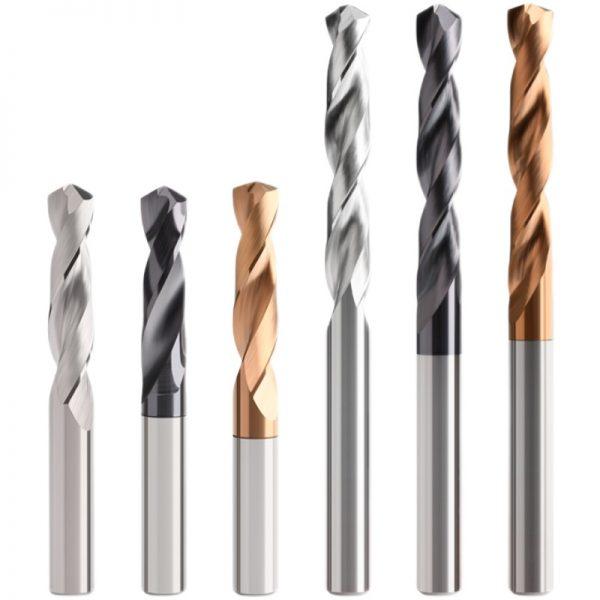
Drill bit selection is one of the most consequential decisions in any drilling project. The wrong bit for the formation being drilled creates problems that affect every aspect of project performance. Slow penetration rates, excessive bit wear, poor borehole quality, and equipment damage all trace back to improper bit selection. Making the right choice requires understanding the formation, the project objectives, and the capabilities of available bit technologies. This article explains why drill bit selection matters so profoundly and how it affects overall project efficiency.
The Direct Relationship Between Bit Selection and Penetration Rate
Penetration rate is the most visible measure of drilling efficiency and is directly determined by bit selection. A bit designed for the geological formation being drilled achieves its design penetration rate efficiently. A bit mismatched to formation conditions struggles to make progress regardless of the rig power applied. The difference between a matched and mismatched bit in hard rock can be a penetration rate factor of five or more. Over a long drilling program, this factor translates into enormous differences in total project cost and schedule.
In hard rock, the failure mode of an incorrectly selected bit is rapid wear without productive penetration. Soft formation roller cone bits applied to granite experience catastrophic tooth wear within minutes. The worn teeth cannot fracture the rock, so the bit merely polishes the borehole face and generates heat. At this point, the bit must be pulled for replacement, which consumes significant rig time in deep boreholes. Replacing a mismatched bit with the correct tool then begins the process that should have started from the beginning.
In soft formations, a hard rock bit may advance more slowly than an optimized soft formation tool. Aggressive gauge features designed for hard rock may cause borehole wall instability in soft, unconsolidated material. Excessive bit weight on a hard rock bit in soft formations can cause the bit to drill crooked rather than straight. These effects reduce borehole quality and increase the cost of any casing or instrumentation to be installed subsequently. Formation-specific bit selection protects both penetration efficiency and borehole quality across all formation types.
How Bit Wear Rate Affects Project Economics
Bit wear rate is a major cost driver in all drilling projects, especially in hard abrasive formations. Every bit change in a deep borehole requires pulling the entire drill string to the surface. This round trip consumes time that could otherwise be spent advancing the borehole. In boreholes hundreds of meters deep, a single bit trip can take several hours. Programs that require many bit changes due to poor bit life selection can lose more time to bit changes than to actual drilling.
Bit consumable costs accumulate significantly in large drilling programs with high wear rates. A single premium hard rock bit may cost several hundred to several thousand dollars depending on its diameter and design. Programs requiring ten to twenty bit changes per hundred meters of drilling bear substantial direct consumable costs. Multiplied across a program involving thousands of meters of drilling, these costs represent major budget line items. Selecting bits with appropriate life for the formation being drilled reduces both direct consumable costs and indirect round-trip costs simultaneously.
Understanding the Formation Before Selecting a Bit
Formation characterization is the essential input to any rational bit selection decision. Rock mechanical properties including unconfined compressive strength, tensile strength, and abrasivity index quantify the drilling challenge. Laboratory testing on representative formation samples provides these measurements before a single meter is drilled. Published geological data and nearby borehole records provide supplementary formation information where testing is not feasible. The more accurately formation properties are known, the more precisely the optimal bit can be selected.
Geotechnical investigations that characterize hard rock properties before drilling programs begin are a sound investment. Knowing that a planned borehole will penetrate granite with 200 megapascals compressive strength changes bit selection decisions entirely. The same investment reveals whether the granite is fresh and massive or weathered and fractured. Both scenarios require different operational approaches even though the intact rock strength may be similar. Pre-drilling characterization investments are recovered many times over through improved drilling efficiency and reduced equipment losses.
Lithological variability along a planned borehole path complicates bit selection decisions. Variable formations may require changing bit types at different depth intervals during a single borehole completion. Planning for these changes before drilling begins prevents the delays caused by unexpected formation transitions during operations. Selecting initial bits appropriate for the shallowest and typically softer materials, while having appropriate hard rock bits on-site for expected transitions, reflects good operational planning. Formation variability planning is as important to project efficiency as initial bit selection for any given interval.
Tungsten Carbide Insert Bits for Hard Rock Percussion Drilling
Tungsten carbide insert bits are the standard cutting element for hard rock percussion drilling applications. Carbide buttons embedded in the bit face contact the rock during each percussion blow. The hardness and toughness of tungsten carbide allow it to survive the repeated high-energy impacts of percussion drilling in crystalline rock. Button geometry, size, and spacing are engineered for specific ranges of rock hardness and abrasiveness. Matching button specifications to the specific hard rock target optimizes both penetration rate and bit service life.
Button shape significantly affects cutting action and wear characteristics in different rock types. Hemispherical buttons provide a good balance of penetration and durability across a wide range of medium to very hard rocks. Ballistic or parabolic buttons penetrate more aggressively in moderately hard formations but sacrifice some durability. Flat-topped buttons distribute impact energy more broadly and resist chipping in highly abrasive formations. Understanding button geometry selection for specific formations is a technical competency that experienced drill bit professionals and drilling contractors develop through field experience.
Carbide grade selection is equally important to button geometry for hard rock percussion bit performance. Fine-grained carbide grades offer better wear resistance in abrasive formations but are more susceptible to impact fracture. Coarse-grained grades are tougher and more impact-resistant but wear faster in highly abrasive applications. Selecting the right carbide grade for the specific combination of hardness and abrasiveness in the target formation requires experience and technical knowledge. Bit suppliers with application experience in specific geological settings are valuable resources for carbide grade guidance.
The Role of Bit Design in the Broader Drilling System
Drill bit selection cannot be made in isolation from the broader drilling system in which it will operate. The bit must be compatible with the hammer tool, drill string, air supply, and rig specifications being used. An undersized bit for a given hammer tool wastes percussion energy through poor mechanical coupling. An oversized bit creates excessive annular air velocity that may blow out borehole walls in unstable conditions. Bit diameter must match the intended borehole diameter and be compatible with planned casing sizes.
The application of hammer bit drilling technology demonstrates how bit design must be integrated with the complete percussion drilling system to achieve optimal performance.
Air supply specifications determine the available flushing velocity for cuttings removal around the bit. Insufficient air volume relative to bit diameter and annular area results in cuttings packing around the bit face. Packed cuttings reduce penetration rates because the bit is grinding cuttings rather than fresh rock. Bit selection that results in excessive annular areas for the available air supply creates operational problems that cannot be solved without additional compressor capacity. System integration analysis before bit selection prevents these avoidable performance limitations.
Rotational speed delivered by the drill rig must also be compatible with the selected bit. Percussion bits advance through rock by indexing between blows, not by continuous abrasive contact. This means optimal rotation speeds are lower than those used in pure rotary drilling applications. Rotating a percussion bit too fast causes gauge problems and reduces the benefit of the percussion mechanism. Matching rotational parameters to bit design specifications is part of the complete system integration that proper bit selection requires.
Diamond and Impregnated Bits for Core Recovery Applications
Diamond and impregnated bits serve different purposes than percussion bits and require different selection criteria. Surface-set diamond bits use industrial diamonds embedded in the bit face to cut through hard rock while recovering a continuous core. These bits are highly effective in uniform hard formations where geological information is the primary requirement. Impregnated bits expose fresh diamond through controlled wear and excel in the hardest and most abrasive formations encountered in exploration drilling. Both bit types are expensive and require careful operational management to achieve their design service lives.
Diamond bit selection for core drilling programs requires matching the diamond grade, concentration, and matrix hardness to the specific formation. Soft matrix bits expose diamonds quickly and work best in very hard, abrasive formations that wear the matrix rapidly. Hard matrix bits retain diamonds longer and are appropriate for softer, less abrasive hard rock formations. Selecting too soft a matrix in a soft formation causes rapid bit loss without adequate core recovery. Selecting too hard a matrix in a very hard abrasive formation causes the bit to glaze, reducing penetration rate to near zero.
Water injection rate during core drilling with diamond bits significantly affects both bit life and core recovery. Insufficient water fails to cool the diamond cutting face, causing thermal damage and rapid loss of cutting ability. Excessive water flush may erode fragile core in naturally fractured formations before it reaches the core barrel. Optimal water injection rates depend on both bit specifications and formation characteristics. Developing these parameters during initial runs on each new geological target improves performance throughout the program.
Bit Selection for Specific Project Applications
Different drilling applications within a single project type may require different bit selections. Environmental monitoring well programs that must drill through overburden before entering hard bedrock may require two bit types at a single location. Foundation investigation boreholes that must characterize both soft soils and hard rock require sequential method and bit changes. Water well programs in hard fractured rock must prioritize intercepting productive fracture zones over achieving maximum penetration rate. Each application imposes its own constraints that guide bit selection beyond simple formation matching.
Continuous improvement in bit selection decisions within ongoing drilling programs produces measurable efficiency gains. Tracking penetration rate, bit life, and cost per meter for each bit type in each geological unit provides the data for evidence-based selection optimization. Bits that underperform against predictions should be reviewed for potential specification modifications. Bits that outperform expectations reveal opportunities to apply similar specifications in analogous geological settings. Building a performance database from each drilling program creates institutional knowledge that improves future project planning and bit selection efficiency.
Collaboration between drilling contractors, bit suppliers, and project geologists produces the best bit selection outcomes. Contractors bring operational knowledge of how different bits behave in field conditions. Bit suppliers bring technical knowledge of product specifications and application experience. Geologists bring knowledge of formation properties and project objectives that constrain selection decisions. When these three perspectives are integrated before mobilization, bit selection decisions are more likely to achieve the efficiency and quality outcomes that projects require.
Categories
Read More
Buy Old Snapchat Accounts: 2026 Guide to Account Maturity, Profile Records and Privacy Meta Title Buy Old Snapchat Accounts: 2026 Guide to Account Maturity, History & Privacy Meta Description Explore Buy Old Snapchat Accounts with a 2026-focused guide covering account maturity, profile records, privacy preferences, security awareness, digital footprints, and responsible Snapchat use....

Buy GitHub AccountsBuy In the fast-paced world of tech and software development, having a strong online presence is essential. Enter GitHub, the platform where millions of developers showcase their work, collaborate on projects, and contribute to open-source initiatives. But did you know that purchasing GitHub accounts can give your business an edge? Whether you're looking to expand your...

Perkembangan teknologi internet telah mengubah cara masyarakat menemukan informasi dan menikmati berbagai bentuk hiburan. Berbekal smartphone atau komputer, pengguna dapat mengakses banyak layanan digital tanpa harus bergantung pada media konvensional. Dalam proses pencarian tersebut, berbagai istilah dan nama platform dapat muncul, salah satunya adalah https://care-ethics.com/. Agar pengalaman...

Rajabandot login menjadi salah satu langkah penting bagi pengguna yang ingin menikmati berbagai layanan hiburan digital secara praktis. Dengan proses masuk yang sederhana, pengguna dapat mengakses akun pribadi melalui toto macau slot pilihan seperti komputer, tablet, maupun smartphone. Sistem login dirancang agar memberikan pengalaman yang nyaman dengan navigasi yang mudah dipahami oleh...
How to Find Trusted Maids In Delhi for Your Home Finding dependable domestic help can make everyday life much easier, especially for families managing work, children, elderly parents, and household responsibilities at the same time. However, choosing someone who is reliable, experienced, respectful, and suitable for your home requires careful consideration. With many options available, families...

