


Why Voice Coil Motors Matter in Precision Technology
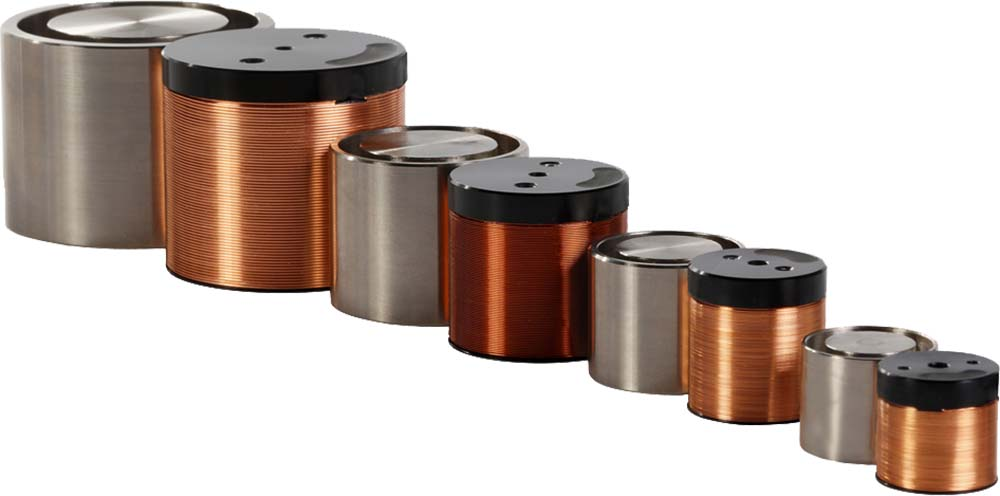
Precision motion has become a central requirement across modern electronics, imaging systems, industrial equipment, and advanced automation. Voice coil motors are increasingly relevant because they provide direct, responsive movement without the complex mechanical transmission systems associated with conventional rotary motors. Their ability to support controlled linear or limited rotary motion makes them particularly suitable for applications where compact dimensions, rapid response, and accurate positioning are essential.
The growing complexity of electronic devices is also changing actuator requirements. Smartphones, optical instruments, communication equipment, and automated systems increasingly depend on smaller components capable of making highly controlled movements. Research into precision actuator technologies shows how voice coil motors are being considered across lens focus, miniature position control, speakers, shakers, and servo valve applications as manufacturers pursue more compact system architectures.
A voice coil motor operates through electromagnetic interaction between a magnetic field and an energized coil. Electrical current produces force that moves the coil or magnetic assembly in a controlled direction. This relatively direct operating principle can enable smooth acceleration and responsive positioning. For engineers, the technology is valuable where mechanical simplicity and precise movement must coexist within a limited installation space.
Smartphone Imaging Is Raising Actuator Requirements
Modern smartphone cameras illustrate why compact motion control is receiving greater attention. Multi-camera devices may combine wide-angle, telephoto, and other imaging modules, each with specific focusing or stabilization requirements. Voice coil actuators can help reposition optical components rapidly within these confined modules. The International Telecommunication Union notes the extensive global reach of mobile connectivity, providing broader context for the large device ecosystem supporting continuous smartphone technology development.
According to analysis published by MarkNtel Advisors, the Voice Coil Motor Market is projected to expand from USD 4.5 billion in 2026 to USD 6.5 billion by 2032, registering a CAGR of 6.32% during 2026–2032. The same research identifies IT and telecom as a leading end-user segment, reflecting the close relationship between precision actuation and increasingly advanced electronic device architectures.
As imaging systems become more sophisticated, the challenge is no longer limited to moving a single lens. Multiple camera modules must operate within increasingly thin device designs while supporting autofocus and optical image stabilization functions. This places greater emphasis on miniaturized actuators that can deliver repeatable movement. The shift toward complex imaging architectures therefore creates a practical engineering role for smaller and more responsive voice coil motor configurations.
Precision Motion Is Expanding Beyond Consumer Devices
Voice coil motors are not restricted to smartphone camera modules. Industrial positioning systems, semiconductor equipment, optical instruments, medical technologies, and automated machinery can require direct motion with limited mechanical complexity. In these environments, rapid acceleration and controlled positioning may improve the ability of equipment to complete delicate movement tasks. The suitability of each actuator still depends on force, stroke, thermal management, and system integration requirements.
Linear Designs Support Direct Positioning Needs
Linear voice coil motors are particularly relevant where an application requires movement along a defined axis. Unlike systems that convert rotary motion into linear travel through gears, screws, or other mechanisms, a linear voice coil design can produce force directly. This can reduce mechanical complexity in selected applications and support responsive movement, although engineers must still consider guidance systems, position sensing, and control electronics.
Direct actuation is useful in applications involving lens positioning, precision stages, valves, and other components that need short and controlled travel. The absence of conventional mechanical transmission components can also influence system design by reducing backlash-related concerns. However, actuator selection remains application-specific because continuous force, peak force, stroke length, operating temperature, and control accuracy can significantly affect performance.
Miniaturization Is Changing Voice Coil Motor Design
Smaller electronic assemblies are creating a clear design challenge for motion component manufacturers. An actuator must occupy less space without compromising the movement required by the surrounding system. Ultra-compact voice coil motors address this requirement by integrating electromagnetic motion into increasingly small packages. This direction is particularly relevant for camera modules and other portable electronic systems where internal space is carefully allocated among batteries, sensors, processors, and communication components.
Miniaturization also increases the importance of manufacturing consistency. Small variations in magnetic materials, coil geometry, assembly tolerances, or thermal behavior can influence actuator performance. As a result, voice coil motor development increasingly intersects with precision manufacturing, materials engineering, and advanced control systems. The actuator itself is only one part of a wider motion architecture that may include sensors, drivers, software, and feedback mechanisms.
Asia-Pacific Remains Central to the Technology Ecosystem
Asia-Pacific has a strong position in the voice coil motor landscape because of its established electronics manufacturing and component supply networks. China, Japan, and South Korea host extensive smartphone, camera module, semiconductor, and precision component activities. Proximity between device manufacturers and specialist suppliers can support faster component integration, manufacturing coordination, and refinement of compact actuator designs for high-volume electronic applications.
The concentration of electronics production also allows actuator suppliers to respond to changing device specifications. When smartphone manufacturers modify camera layouts or introduce new optical capabilities, component producers may need to adjust motor dimensions, force characteristics, or assembly methods. This close relationship between device architecture and actuator engineering makes supply-chain coordination an important factor in the development of precision motion solutions.
Engineering Challenges Will Shape Future Adoption
Despite their advantages, voice coil motors must meet demanding technical requirements. Heat generation, power consumption, magnetic design, control accuracy, and physical durability can affect system performance. Compact devices make thermal management especially important because components operate near sensitive electronics. Engineers must balance actuator force and response characteristics against energy efficiency, available space, and the expected operating environment.
Future development is likely to focus on more compact structures, refined electromagnetic designs, and better integration with sensors and electronic control systems. Voice coil motors may become increasingly relevant wherever equipment requires short-stroke, responsive, and precisely controlled movement. Their role will depend less on replacing conventional motors broadly and more on addressing specialized motion challenges across imaging, telecommunications, industrial automation, optical systems, and other precision-focused applications.
Κατηγορίες
Διαβάζω περισσότερα
Buy Yahoo Accounts from getpvasmm.com In today’s digital age, having an online presence is more crucial than ever. Yahoo accounts are a gateway to numerous services, from email communication to news and social networking. But managing just one account can be limiting, especially for professionals or businesses that require multiple profiles. This is where the option to buy Yahoo accounts...

Introduction The Podcast Clips Editing Service by Prime Edits Ltd is designed for UK podcasters, creators, and businesses who want to transform long-form podcast content into short, engaging, and high-performing video clips. In today’s digital landscape, short-form content dominates platforms like YouTube Shorts, Instagram Reels, and TikTok. Prime Edits Ltd helps creators maximize reach...

Hair loss is a common concern that can affect both men and women. Thinning hair, receding hairlines, and bald patches can develop for several reasons, including genetics, age, hormonal changes, and other factors. For people considering hair restoration, finding a suitable hair transplant clinic in Gurgaon is an important first step. Gurgaon has several clinics that offer hair restoration...

When people talk about sustainable packaging, they often focus on the final products—egg trays, cup carriers, protective inserts, or biodegradable food containers. Yet behind these items lies a piece of equipment that rarely gets the spotlight: the pulp molding machine. Over the years, I’ve come to appreciate this machine not just as industrial hardware, but as a symbol of how...

Buy Old Gmail Accounts – Aged Email Accounts, Benefits, Security and Smart Digital Practices Introduction 🌟📌 Contact now for more information and services 📌🌟🟢🛎💫🗓🔔 Available ➜ Online Support 24/7🛰📞🔵🧭 Telegram ➜ @smmhubpva🕹🎙🟣🖥 Discord ➜ @smmhubpva📨🧾🟠📬 Email ➜ smmhubpva@gmail.com The interest in Buy Old Gmail Accounts has increased as more people look for established email profiles for...

