


Taj mahal tour by train from Delhi
Taj Mahal Tour by Train from Delhi: A Complete Travel Guide
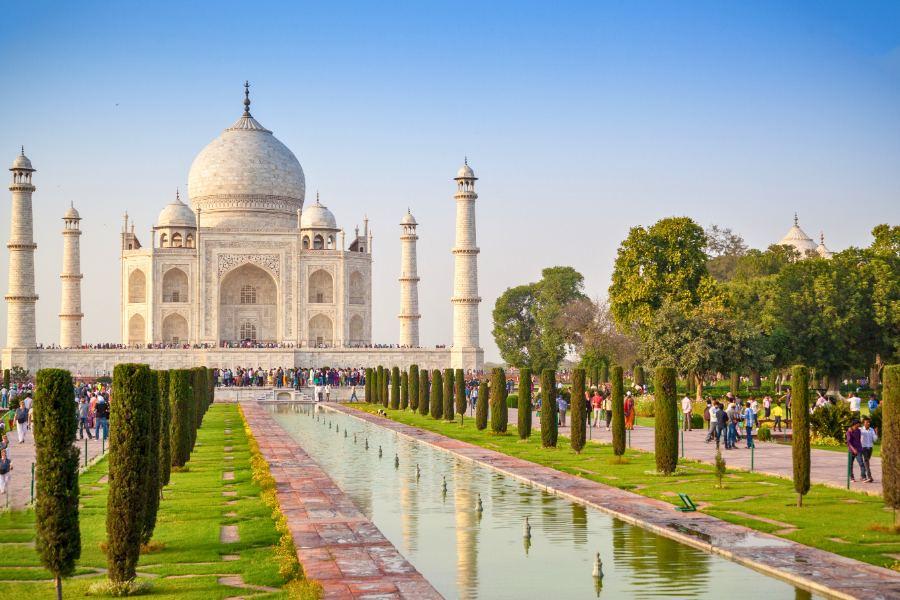
A Taj Mahal tour by train from Delhi is one of the most convenient ways to experience India's most celebrated monument in a single day. Instead of spending several hours dealing with highway traffic, travelers can board a fast train from Delhi, arrive in Agra, explore the Taj Mahal and other Mughal landmarks, and return to the capital in the evening. The journey is particularly attractive for international visitors, families, couples, and business travelers who have limited time but still want to see Agra properly. The Taj Mahal itself is a UNESCO World Heritage Site and one of the world's Seven Wonders, commissioned by Mughal emperor Shah Jahan in memory of Mumtaz Mahal.
There is something special about approaching Agra by train. You leave behind the enormous urban landscape of Delhi, watch the scenery change through the window, and gradually find yourself in one of India's most historic cities. Once in Agra, the day can be organized around the Taj Mahal, with additional time for Agra Fort, local markets, Mughlai food, and other historic attractions. The result is more than a simple monument visit; it becomes a compact introduction to Mughal history, architecture, food, and everyday life. If you're wondering whether taking the train is better than hiring a private car, the answer depends on your priorities, but for many travelers, a train tour offers the best combination of speed, comfort, predictable travel time, and sightseeing value.
Why Choose a Taj Mahal Tour by Train from Delhi?
The biggest reason to choose a Delhi to Agra Taj Mahal train tour is time. Delhi and Agra are well connected by rail, and fast services make it possible to travel between the two cities without dedicating most of your day to transportation. This is especially useful if you are staying in Delhi and don't want to change hotels or spend a night in Agra. A carefully planned itinerary lets you depart Delhi early, reach Agra in the morning, spend several hours sightseeing, and board a return train later in the day. Instead of watching a highway through a car window for hours, you can relax in your seat, have breakfast, catch up on messages, or simply watch northern India's landscape pass by.
Train travel can also make the experience feel less stressful. Road conditions are difficult to predict, particularly when you are traveling through heavily populated areas, while a reserved train seat gives you a clear departure plan. You will still need to arrange transportation between Agra railway station and the monuments, but that is relatively straightforward when you book a local taxi, private car, or organized tour in advance. For first-time visitors, a private guided package that combines train tickets, hotel pickup, sightseeing, and a local guide can be even easier because you don't have to negotiate each part of the journey independently. The key is to plan the railway portion and sightseeing portion as one itinerary rather than treating them as separate arrangements.
Best Trains for a Delhi to Agra Day Trip
When planning a Taj Mahal tour from Delhi by train, look for services that maximize your sightseeing time in Agra. One of the best-known options is the Gatimaan Express, which operates between Delhi and Jhansi and serves Agra on the route. IRCTC's current catering information specifically lists Gatimaan Express train numbers 12049–12050, confirming that it remains part of the current rail network.
Other trains may also be suitable depending on your travel date and availability. Railway schedules can change, and the most convenient service on one date may not be the best choice on another. Rather than relying on an old blog post showing a particular departure or return time, check the current schedule and seat availability through the official railway booking system before finalizing your itinerary. IRCTC's current booking interface allows travelers to search trains by origin, destination, date, class, and quota, which is useful when planning a day trip.
For a sightseeing day, the ideal train is not necessarily the one with the lowest fare. Think about the total time available in Agra. A train that arrives earlier and returns later may give you more useful sightseeing hours, while a slightly cheaper service could leave you with a rushed itinerary. If you're traveling with children, older family members, or luggage, seat comfort and convenient departure times can matter just as much as price. Check the timetable shortly before your trip because railway operations can change, and don't build your entire holiday around an old timetable found on an unrelated travel website.
How to Book Your Train Tickets
Booking your Delhi to Agra train tickets is best done through official railway channels or a reputable authorized booking service. Start by selecting your Delhi departure station and an appropriate Agra station for the service you intend to use. Enter your travel date, choose the desired class, and compare the available trains. If you're traveling during a popular tourist period, weekends, holidays, or peak winter season, booking ahead is sensible because seats on convenient morning and evening services can become limited.
Don't forget that your train ticket is only one part of the trip. A common mistake is to book an excellent train connection but make no arrangements for transportation once you arrive in Agra. Agra is a busy tourist destination, and having a prearranged driver or tour operator can make your day much smoother. Your driver can meet you at the railway station, take you to the Taj Mahal, wait while you explore, and then continue to Agra Fort and other attractions. If you prefer independent travel, app-based taxis and local transportation may also be options, but allow extra time for finding a vehicle and moving between crowded sightseeing areas.
A Perfect One-Day Taj Mahal Tour Itinerary by Train
A well-organized one-day Taj Mahal tour by train from Delhi should be designed around the train timetable rather than trying to squeeze every Agra attraction into a few hours. Begin by reaching your Delhi railway station with enough time to locate your platform and board comfortably. Once aboard, use the journey to have breakfast and prepare for the day. When you arrive in Agra, meet your prearranged driver or guide and head directly toward the Taj Mahal instead of wasting the morning deciding what to do.
Your first major stop should normally be the Taj Mahal because it is the central reason for the journey. The official Incredible India tourism portal currently states that the Taj Mahal opens 30 minutes before sunrise and closes 30 minutes before sunset, and it is closed on Fridays. This makes checking the calendar before booking your train especially important. There is little point in organizing an elaborate Friday train excursion if your primary objective is entering the Taj Mahal. Once inside, give yourself enough time to appreciate more than the famous front photograph. Look closely at the marble inlay, geometric symmetry, calligraphy, gardens, reflecting pool, and architectural details that make the monument so remarkable.
After visiting the Taj Mahal, continue to Agra Fort, which is close enough to fit naturally into a day itinerary. The official tourism portal lists Agra Fort's opening hours as 6:00 AM to 6:00 PM, although travelers should verify details before visiting. The fort offers a completely different atmosphere from the Taj Mahal. The Taj is associated strongly with romance and beauty, while Agra Fort reveals the political and military power of the Mughal Empire. From parts of the fort, you can also see the Taj Mahal in the distance, creating an interesting visual connection between two of Agra's most important monuments.
Visiting the Taj Mahal: What Should You Expect?
The first glimpse of the Taj Mahal can be surprisingly emotional. You may have seen thousands of photographs before your trip, yet the scale, symmetry, and changing appearance of the white marble are difficult to understand until you stand in front of the monument yourself. The complex includes extensive Mughal-style gardens, gateways, pathways, and architectural details that deserve more attention than a quick photograph. The official tourism information notes that the monument's marble can appear different under changing light, contributing to its distinctive appearance throughout the day.
Give yourself time to walk rather than rushing from the entrance to the main mausoleum. If you're interested in history, hiring a knowledgeable guide can add context to what you're seeing. Without explanation, details such as the pietra dura inlay, the relationship between the gardens and mausoleum, or the symbolism of the architectural layout can easily be overlooked. A guide can also help you understand the story of Shah Jahan and Mumtaz Mahal while explaining how the monument fits into the broader history of Mughal architecture. The official tourism portal highlights the Taj Mahal's intricate marble inlay work and its Persian and Mughal design influences.
Remember that the Taj Mahal is an active heritage attraction rather than simply a photo backdrop. Visitors should follow current security instructions, respect restricted areas, avoid touching architectural surfaces unnecessarily, and listen to staff instructions. Rules concerning permitted belongings, photography, entry procedures, and security can change, so check the latest official visitor information before your journey rather than relying on an old travel checklist.
Explore Agra Fort After the Taj Mahal
If your schedule allows only one additional monument after the Taj Mahal, Agra Fort is an excellent choice. Located roughly 2.5 kilometers from the Taj Mahal, the fort is a UNESCO World Heritage Site and was an important seat of Mughal power. Its massive red sandstone walls create a dramatic contrast with the Taj Mahal's pale marble, and walking through its courtyards provides a very different understanding of the Mughal period.
The fort is not simply one enormous defensive structure. Inside, you encounter palaces, audience halls, mosques, courtyards, gardens, and other architectural spaces associated with successive Mughal rulers. The official tourism information explains that construction began under Emperor Akbar in 1565 and that later rulers, including Shah Jahan, added elegant marble elements. This makes Agra Fort particularly valuable for travelers who want to understand the historical world that produced the Taj Mahal. Rather than seeing the Taj as an isolated masterpiece, you begin to understand it as part of a much larger Mughal architectural tradition.
If you have enough time, you can also consider Mehtab Bagh or Itimad-ud-Daulah's Tomb, commonly called the Baby Taj. The latter is especially interesting for architecture enthusiasts because its decorative style is often discussed in relation to the Taj Mahal. Incredible India lists Itimad-ud-Daulah's Tomb among Agra's major attractions and gives its current listed hours as 6:00 AM to 6:00 PM. However, on a same-day train tour, don't try to visit everything simply because it appears on a sightseeing list. Two or three meaningful experiences are usually better than six rushed stops.
Taj Mahal Tour by Train vs. Car from Delhi
| Feature | Train Tour | Private Car Tour |
|---|---|---|
| Travel comfort | Comfortable reserved seating | Private and flexible |
| Traffic concerns | Generally less affected by road traffic | Can be affected by congestion |
| Departure flexibility | Fixed timetable | Flexible |
| Sightseeing flexibility | Moderate | High |
| Ideal for | Couples, families, first-time visitors, short stays | Groups wanting maximum flexibility |
| Travel planning | Requires train reservations | Requires driver/car arrangement |
| Best advantage | Fast, predictable intercity travel | Door-to-door convenience |
The choice between a train and private car ultimately depends on how you like to travel. Train travel is excellent when your priority is getting between Delhi and Agra efficiently while avoiding the uncertainty of highway traffic. A private car is better when you want complete control over departure time, sightseeing stops, restaurants, shopping, and optional attractions outside central Agra. Families traveling with young children may appreciate the flexibility of a car, while couples or solo travelers may find a train-based itinerary more economical and enjoyable.
There is also a psychological advantage to train travel: the journey feels like part of the adventure. You can sit back and watch villages, fields, stations, and towns pass outside the window rather than focusing on traffic. On the other hand, a private vehicle can take you directly from your Delhi hotel to the Taj Mahal without requiring you to reach a railway station. Neither option is universally better. The smart decision is to choose based on your group size, budget, mobility needs, sightseeing ambitions, and preferred travel style.
Best Time for a Taj Mahal Train Tour
Choosing the right season can dramatically affect your experience. October through March is generally the most comfortable period for sightseeing in Agra because temperatures are usually more manageable than during the hottest months. Winter mornings can be foggy, particularly in northern India, and this can sometimes affect visibility and transportation schedules. Still, the cooler weather makes long walks around the Taj Mahal and Agra Fort much more pleasant than the intense heat that can occur during late spring and summer.
The official Incredible India portal provides monthly temperature ranges for Agra, illustrating how dramatically conditions can vary through the year. It lists particularly high temperatures in April, May, and June, while winter months are considerably cooler. If you're sensitive to heat, a winter or early-spring visit can be much more comfortable. If you visit during the hotter months, carry water, wear breathable clothing, use sun protection, and plan your outdoor sightseeing intelligently.
The day of the week matters just as much as the season because the Taj Mahal is closed to visitors on Fridays. Always check the exact date before purchasing non-refundable travel arrangements. A little planning can prevent one of the most frustrating travel mistakes: arriving in Agra with a perfect train connection only to discover that the monument you came to see is closed.
What to Eat During Your Agra Day Trip
A Taj Mahal tour from Delhi by train doesn't have to be only about monuments. Agra has its own food culture, and trying local cuisine can add another layer to the experience. Mughlai dishes, kebabs, breads, sweets, and traditional snacks are commonly associated with the city. If you're on a tight schedule, choose a reputable restaurant near your sightseeing route rather than spending an hour searching for somewhere to eat.
You can also eat during the train journey. IRCTC's eCatering service currently allows passengers to order meals through its official platform and have food delivered at selected railway stations along eligible routes. The service says it operates across more than 400 stations and provides options through authorized food partners. This can be useful if your train itinerary leaves little time for a leisurely meal in Agra.
For safety, use official food-ordering channels rather than accepting unsolicited offers from people approaching you on trains or platforms. IRCTC specifically warns passengers about unauthorized food vendors and fraudulent ordering services. A simple rule works well: if you didn't initiate the order yourself through a recognized platform, don't provide payment information or personal details.
What to Pack for Your Taj Mahal Day Trip
Because a Delhi to Agra Taj Mahal tour by train involves several stages of travel, packing light is one of the easiest ways to make the day more comfortable. You don't need a large suitcase for a day trip. A small backpack or day bag is usually more practical, allowing you to carry essential personal items while keeping your hands free for walking and photography.
Bring comfortable walking shoes because sightseeing involves considerably more walking than many first-time visitors expect. Sunglasses, sunscreen, a reusable water bottle where permitted, tissues, hand sanitizer, and a portable phone charger can also be useful. Dress according to the season, and remember that Agra's weather can feel very different between a cool winter morning and a sunny afternoon. If you are visiting during colder months, layers are particularly useful because you can adjust your clothing as temperatures rise.
Before entering the Taj Mahal, check the current security rules for permitted items. Visitor regulations can change, so don't assume that an item allowed during a previous trip will automatically be permitted now. Keeping your belongings to a minimum makes security checks faster and reduces the chance of having to leave something behind.
How Much Does a Taj Mahal Train Tour Cost?
The total price of a Taj Mahal tour by train from Delhi depends on several variables, so there isn't one universal package price. Your final budget may include train tickets, monument entry, local transportation, a private guide, meals, and optional attractions. The train class you select can also change the cost significantly. Similarly, traveling independently will generally have a different cost structure from booking an all-inclusive tour package.
A useful way to build your budget is to divide it into four categories: transportation, sightseeing, food, and services. Transportation includes your Delhi-to-Agra and return train tickets plus local transfers. Sightseeing covers entrance fees and any optional experiences. Food includes breakfast, lunch, drinks, and snacks. Services include a guide, driver, or organized tour operator if you choose one.
Don't select a tour solely because it advertises the lowest price. Ask exactly what is included. Does the package include return train tickets? Is railway-station pickup included? Is the guide licensed or professionally arranged? Are monument entrance fees included? Is lunch included? Are there compulsory shopping stops? These details can make two apparently similar packages dramatically different in value. A transparent itinerary is often more important than a bargain headline price.
Tips for a Smooth Delhi to Agra Train Journey
A little preparation can turn your train tour from stressful to effortless. First, confirm your train, departure station, boarding time, and return journey before leaving your hotel. Keep your ticket information easily accessible and arrive at the railway station with enough time to locate the platform. Don't schedule your return train so tightly that a small sightseeing delay creates a crisis. Agra has traffic, crowds, security checks, and unpredictable delays, so giving yourself a reasonable buffer is a wise investment.
Second, arrange your Agra sightseeing transportation in advance if possible. A prebooked driver can meet you after arrival and take you directly to the Taj Mahal. This is particularly helpful if you're unfamiliar with the city or traveling with elderly relatives. If you're booking a private tour, request a written itinerary that clearly identifies the train, pickup point, sightseeing locations, and return arrangements.
Third, keep digital and physical copies of essential travel information. Your train details, hotel contact information, tour operator's phone number, and identification documents should be accessible even if your phone battery becomes low. A power bank is therefore a surprisingly useful travel companion. Small precautions like these may seem boring before the journey, but they're exactly what allow you to concentrate on the fun parts once you're in Agra.
Is a Same-Day Taj Mahal Tour Worth It?
For many travelers, absolutely. A same-day Taj Mahal tour from Delhi by train is particularly worthwhile if your itinerary does not allow an overnight stay in Agra. You can experience the Taj Mahal, explore Agra Fort, eat local food, and return to Delhi without changing hotels. It is a compact travel experience, but that doesn't mean it has to feel rushed if the itinerary is designed intelligently.
The main limitation is that a day trip cannot reveal every side of Agra. The city has additional monuments, markets, gardens, religious sites, and culinary experiences that deserve more time. Incredible India highlights attractions including Mehtab Bagh, Itimad-ud-Daulah's Tomb, Fatehpur Sikri, Akbar's Tomb, and other sites beyond the Taj Mahal. If you're a serious history enthusiast or photographer, staying overnight may be preferable because it gives you more opportunities to explore at a relaxed pace.
For a first visit, however, the train day trip is hard to beat for convenience. It gives you the headline experience without requiring a major change to your Delhi itinerary. Think of it as a concentrated taste of Agra: enough to see its greatest treasures, but perhaps enough to make you want to return for more.
Conclusion
A Taj Mahal tour by train from Delhi is a practical, comfortable, and memorable way to discover Agra in a single day. The combination of fast rail travel, organized local sightseeing, and world-famous Mughal monuments makes it especially attractive to travelers with limited time. Start with a convenient morning train, visit the Taj Mahal while allowing plenty of time to appreciate its architecture, continue to Agra Fort, enjoy a local meal, and return to Delhi on an evening service with a camera full of photographs and a much deeper appreciation for India's history.
The most important part of planning is not simply finding the cheapest train or tour. It is building an itinerary that leaves enough time between transportation and sightseeing. Check the current railway timetable, confirm the Taj Mahal's opening information, remember that the monument is closed on Fridays, and arrange local transportation before you arrive. With those details handled in advance, your Delhi-to-Agra journey can feel less like a complicated excursion and more like a beautifully organized day of discovery.
FAQs About Taj Mahal Tours by Train from Delhi
1. Can I visit the Taj Mahal from Delhi in one day by train?
Yes. A same-day trip is practical when you select suitable morning and evening trains and organize your Agra transportation in advance. The key is to avoid an itinerary with unnecessarily long gaps between the train arrival and departure. You should also check the Taj Mahal's operating schedule before choosing your travel date.
2. Which train is best for a Taj Mahal tour from Delhi?
The Gatimaan Express is one of the well-known fast-train options serving the Delhi–Agra route. However, the best train depends on your exact travel date, current timetable, seat availability, and preferred departure and return times. Always verify the latest schedule through official railway channels rather than relying on an old timetable.
3. Is the Taj Mahal open every day?
No. The Taj Mahal is currently listed as closed on Fridays. The official Incredible India tourism portal lists opening as 30 minutes before sunrise and closing as 30 minutes before sunset. Check the latest visitor information before traveling because operating arrangements can change.
4. What else can I visit in Agra besides the Taj Mahal?
Agra Fort is the most obvious addition to a short itinerary, especially because of its historical connection with the Mughal emperors and its proximity to the Taj Mahal. Depending on your available time, you can also consider Mehtab Bagh, Itimad-ud-Daulah's Tomb, Akbar's Tomb, or Fatehpur Sikri. On a one-day train trip, however, it is better to choose two or three attractions rather than rush through an overly ambitious list.
5. Should I book a private Taj Mahal tour or travel independently by train?
Both options can work. Independent train travel can be ideal for experienced travelers who are comfortable arranging local transportation and tickets themselves. A private or organized tour is often easier for first-time visitors because transportation, sightseeing, and guide arrangements can be coordinated in advance. If convenience and a stress-free schedule are your priorities, a well-organized private tour can be worth the additional cost.
Kategorien
Mehr lesen
Buy Telegram Accounts Buy Telegram accounts can be a game-changer for businesses looking to expand their digital footprint. With millions of active users, Telegram offers an unparalleled platform for marketing and audience engagement. 🌐📲 Always Online — For any info, just contact us. 📶⚛️📊📉➤Telegram: @getpvasmm 📶⚛️📊📉➤Discord:getpvasmm 📶⚛⚛️📊📉➤WhatsApp: + 1 (830) 739-8217...

Goa, India’s coastal paradise, has long been celebrated for its sun-kissed beaches, vibrant nightlife, and cosmopolitan spirit. In recent years, one aspect of Goa’s evolving social scene that has drawn attention is the presence of Russian escorts in Goa. Known for their elegance, professionalism, and unique charm, Russian escorts have become a sought-after choice for those seeking...

A reliable computer should continue delivering excellent performance long after the first day of use. A prebuilt gaming PC provides a strong foundation for gaming, creative work, and demanding applications, especially with regular care and thoughtful upgrades. Small improvements can extend the system's lifespan and help it keep pace with new software and hardware requirements. Keep...

A ring gold design is more than just a piece of jewelry it is a symbol of elegance, love, and timeless fashion. Gold rings have remained one of the most popular jewelry choices for generations because they combine beauty with lasting value. Whether you are shopping for an engagement, wedding, anniversary, birthday, or everyday wear, choosing the right gold ring design can enhance your personal...

Buy Telegram Accounts Buy Telegram accounts can be a game-changer for businesses looking to expand their digital footprint. With millions of active users, Telegram offers an unparalleled platform for marketing and audience engagement. 👉📩📢🔗🤳📶💼📞🚀 Need quick assistance? Our team is always online — Just contact!👉📩📢🔗🤳📶💼➤Telegram: @getpvasmm👉📩📢🔗🤳📶💼➤WhatsApp: + 1 (830)...