


KP AUTOMATIONS Automatic Pasta Machine: Understanding Machine Price, Drying and Packaging Costs
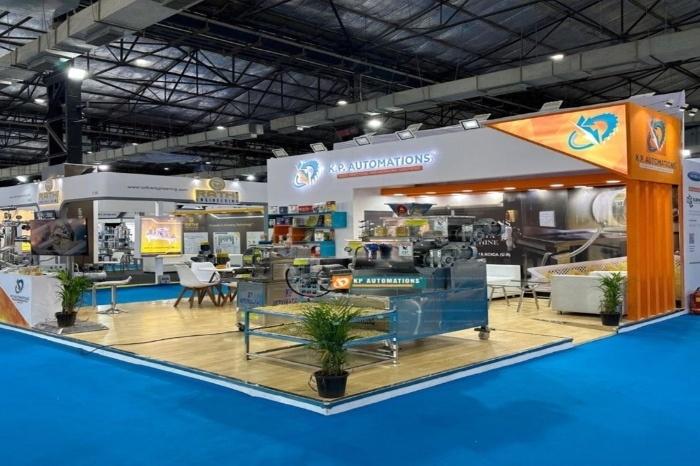
Investing in an automatic pasta machine is a major decision for any food manufacturing business. While production capacity is an important consideration, the actual investment involves much more than the price of the pasta-making equipment itself.
Manufacturers also need to consider drying, cooling, packaging, utilities, factory infrastructure, automation, maintenance, and future production requirements.
This is why searching only for pasta making machine price may not provide enough information to make the right purchasing decision.
A better approach is to evaluate the complete production system and understand how each machine contributes to the final cost and operating performance.
KP AUTOMATIONS provides pasta processing equipment ranging from compact machines to larger commercial and industrial production systems, along with drying and packaging solutions.
What Determines Pasta Making Machine Price?
The pasta making machine price can vary considerably depending on the production requirements and configuration.
Several factors influence the investment, including:
- Production capacity
- Degree of automation
- Pasta type and shapes
- Machine construction
- Extrusion technology
- Control system
- Required dies and tooling
- Dryer configuration
- Packaging integration
- Factory requirements
A small production system and a fully integrated industrial pasta line cannot be compared simply by looking at their purchase prices.
The correct question is whether the equipment provides the required output, consistency, flexibility, and operating value for the business.
Start With the Production Requirement
Before comparing an automatic pasta machine, manufacturers should define their production model.
A business supplying local retailers may have very different requirements from a manufacturer supplying distributors, supermarkets, hotels, restaurants, or export markets.
Important planning questions include:
How much pasta needs to be produced per hour?
Which pasta shapes will be manufactured?
How many shifts will the factory operate?
Will production increase in the future?
Will drying and packaging be automated?
Answering these questions helps manufacturers avoid selecting machinery based only on the lowest quoted price.
Automatic Pasta Machine and Production Value
An automatic pasta machine can combine several important stages of pasta manufacturing into a controlled production process.
Depending on the configuration, the system may involve dough preparation, extrusion, shaping, cutting, and integration with downstream drying.
Automation can also reduce repetitive manual handling and provide more consistent control over production.
For manufacturers, this means the value of the equipment should be evaluated over its expected operating life rather than only at the time of purchase.
A machine that costs more initially may provide better commercial value if it offers suitable capacity, reliable operation, product flexibility, and easier integration with the rest of the production line.
The Importance of Pasta Drying
Producing pasta is only one part of manufacturing dried pasta.
After extrusion and shaping, the product requires controlled drying to achieve the desired moisture level and product stability.
This makes a pasta dryer an important part of the overall production investment.
A manufacturer that focuses heavily on extrusion while overlooking drying may later discover that the drying section cannot support the required production rate.
The result can be unnecessary handling, production delays, or limitations on actual output.
Therefore, the dryer should be considered when planning the complete pasta manufacturing project.
Industrial Pasta Dryer for Larger Production
For commercial and industrial manufacturers, an industrial pasta dryer can provide controlled drying conditions for larger production volumes.
Industrial drying systems may use controlled temperature, humidity, airflow, and defined drying zones to provide a more systematic process.
The correct configuration depends on the pasta format, production capacity, factory layout, and required drying process.
Short-cut pasta and long-cut pasta may also require different handling and drying arrangements.
For this reason, the dryer should be selected according to the production line rather than purchased as a completely independent machine.
Pasta Continuous Dryer for Continuous Production
A pasta continuous dryer is particularly relevant when the production process is designed around continuous operation.
Instead of depending on manual batch movement, continuous drying allows pasta to progress through controlled drying stages.
A typical continuous production flow may look like:
Mixing → Extrusion → Shaping → Pre-Drying → Drying → Cooling → Packaging
The advantage of this arrangement is that the production stages can be planned as one connected process.
For larger manufacturers, this can make factory operations more organized and reduce unnecessary manual product movement.
Automatic Pasta Dryer and Process Control
An automatic pasta dryer can provide greater control over the drying stage than an entirely manual drying arrangement.
Controlled drying is important because pasta quality can be affected by the way moisture is removed from the product.
An appropriately designed system can incorporate defined temperature and humidity conditions across different drying zones.
PLC-based control can also help operators manage the drying process according to the production requirements.
The objective is not simply to remove moisture quickly.
The objective is to achieve controlled and repeatable drying that supports the required product quality.
Why Drying Should Be Included in the Initial Investment
One common mistake when calculating equipment investment is to consider only the extrusion machine.
For a dried pasta manufacturing facility, the complete investment may include:
- Automatic pasta machine
- Pasta dryer
- Cooling system
- Dies and inserts
- Conveying arrangements
- Electrical control systems
- Air and utility requirements
- Pasta packing machine
- Factory installation
- Supporting infrastructure
Considering these components together provides a more realistic understanding of the project's total cost.
It also makes it easier to identify potential bottlenecks before the plant becomes operational.
Pasta Packing Machine: The Final Production Stage
Once pasta has been produced and dried, it must be prepared for sale.
This is where a pasta packing machine becomes important.
Modern pasta packaging systems can automate weighing, filling, pouch forming, and sealing depending on the selected configuration.
Packaging requirements can vary according to:
- Pack size
- Pasta shape
- Retail or bulk packaging
- Pouch design
- Required production speed
- Weighing accuracy
- Packaging material
A manufacturer producing pasta at a high rate should ensure that the packing section can handle the output of the processing and drying sections.
Otherwise, packaging can become the final bottleneck in the production line.
Think About the Complete Production Flow
A commercially successful pasta plant requires balance between its different sections.
For example, installing a high-output extrusion system without sufficient drying capacity does not necessarily create a high-output factory.
Similarly, having adequate drying capacity but insufficient packaging speed can result in finished pasta waiting before packing.
A balanced production system should therefore consider:
Raw Materials
↓
Mixing and Dough Preparation
↓
Extrusion and Shaping
↓
Drying
↓
Cooling
↓
Weighing
↓
Pasta Packing Machine
↓
Finished Goods
Each section contributes to the overall production performance.
Does a Higher Machine Price Mean a Better Machine?
Not necessarily.
The most expensive automatic pasta machine is not automatically the best choice for every manufacturer.
Likewise, selecting the cheapest machine may create problems later if the equipment cannot support the required production conditions.
The better approach is to compare the machine against measurable business requirements.
Consider:
- Expected production volume
- Product range
- Automation level
- Operator requirements
- Energy consumption
- Maintenance requirements
- Available factory space
- Dryer capacity
- Packaging capacity
- Future expansion
This approach provides a more useful basis for evaluating pasta making machine price.
Consider the Cost Per Kilogram
Manufacturers should also look beyond the initial equipment quotation.
A useful commercial calculation is the estimated cost of producing each kilogram of pasta.
This can include:
Raw Material + Energy + Labour + Maintenance + Packaging + Other Operating Costs
The machinery investment should then be considered in relation to the expected production volume and utilization.
For example, a machine operating consistently near its practical production requirement may provide better economics than a larger machine that remains underutilized.
Therefore, the right equipment is the one that fits the business model rather than simply having the highest output specification.
Product Flexibility Can Add Commercial Value
Another factor that can influence the value of an automatic pasta machine is product flexibility.
Manufacturers may want to produce different formats such as:
- Macaroni
- Penne
- Fusilli
- Vermicelli
- Shells
- Spaghetti
- Linguine
- Fettuccine
Appropriate dies and production configurations can allow manufacturers to expand their product portfolio.
This can be particularly valuable for businesses supplying multiple customer segments.
A machine should therefore be evaluated not only by today's production requirement but also by the products the manufacturer may want to introduce later.
When a Complete Pasta Line Makes Sense
For a new factory or major expansion, purchasing individual machines without considering their compatibility can create unnecessary complications.
A complete production line can allow the manufacturer to plan processing, drying, cooling, and packaging together.
This can simplify decisions involving:
- Production flow
- Automation
- Space planning
- Utilities
- Operator movement
- Material handling
- Future expansion
For larger projects, integrated planning can therefore be more valuable than selecting individual machines based only on their separate prices.
Why Choose KP AUTOMATIONS?
KP AUTOMATIONS provides machinery for different stages of pasta production, including automatic pasta machines, industrial pasta systems, pasta drying equipment, dies and inserts, and packaging solutions.
The company has been involved in food processing and packaging machinery since 1998 and has developed equipment for both domestic and international markets.
Its portfolio allows manufacturers to evaluate pasta production as an integrated process rather than focusing exclusively on extrusion.
For businesses comparing pasta making machine price, this broader approach can help when planning a complete commercial or industrial pasta manufacturing facility.
Planning Your Investment Before Ordering
Before requesting a final quotation, manufacturers should prepare a basic project brief.
The brief should include:
- Desired production capacity
- Pasta shapes to be manufactured
- Expected operating hours
- Required automation level
- Drying method
- Packaging format
- Available factory space
- Utility availability
- Expected future expansion
- Target production cost
Providing this information to the machinery manufacturer can make equipment selection more accurate.
It also helps ensure that the quoted automatic pasta machine, dryer, and packing equipment are suitable for the intended production model.
Conclusion
The right way to evaluate an automatic pasta machine is to look beyond its purchase price.
The pasta making machine price is only one component of the overall investment. Drying, cooling, packaging, utilities, automation, maintenance, and factory infrastructure all contribute to the actual cost of establishing a pasta manufacturing operation.
An appropriately selected pasta dryer, industrial pasta dryer, or pasta continuous dryer can help create a balanced production flow, while a suitable automatic pasta dryer can provide controlled drying for commercial production. At the final stage, a reliable pasta packing machine can complete the process by preparing the finished product for distribution.
KP AUTOMATIONS offers equipment covering multiple stages of pasta production, giving manufacturers an opportunity to plan machinery around their current requirements and long-term business goals.
For any pasta manufacturing project, the best investment is not necessarily the cheapest machine. It is the system that delivers the right combination of production capacity, quality, automation, flexibility, operating cost, and future scalability.
Κατηγορίες
Διαβάζω περισσότερα
The Amiri brand represents a significant shift within modern high fashion circles today. Founder Mike Amiri started this journey by crafting custom pieces for famous rock musicians. His deep obsession with Los Angeles youth culture fueled every single early creative design. These humble beginnings helped shape a unique identity rooted in raw, artistic, rebellious energy. By merging luxury...

A unique fantasy-meets-modern-day adult visual novel continues its slow but steady development, and Lust Games is covering the newest public build. God of Love and Loathing by Etherial Dreamer (also known as Etherial Dreams) has reached version 0.11. This 3DCG Ren’Py title follows an ancient primordial god who was sealed away for ten thousand years and is now reawakened in the present...

ReactJS simplifies front-end development by enabling developers to build interactive and reusable user interface components efficiently. Its virtual DOM improves performance and speeds up updates across applications. Learning modern development practices becomes easier through structured guidance. React JS Training in Chennai offered by FITA Academy helps learners gain practical exposure and...

In Old School RuneScape (OSRS), players have access to a wide variety of quirky characters, many of whom provide helpful services, quests, or simply add a bit of humor to the game. One such character is the Wise Old Man, a key NPC in the Draynor Village area, known for his cryptic dialogue and philosophical musings. He's been part of the game since its inception and plays an important role in...

You know that feeling when you walk into a room and just want to flop down on the bed right away? That doesn't happen by accident. It usually comes down to the bed itself more than anything else in the room. Guest Beds get overlooked a lot honestly. People spend money on paint and curtains and forget the one thing guests actually spend eight hours touching every night. What Makes a Bed Feel...