


How to Select the Right Pipe Cutting and Bending Tools for Industrial Work
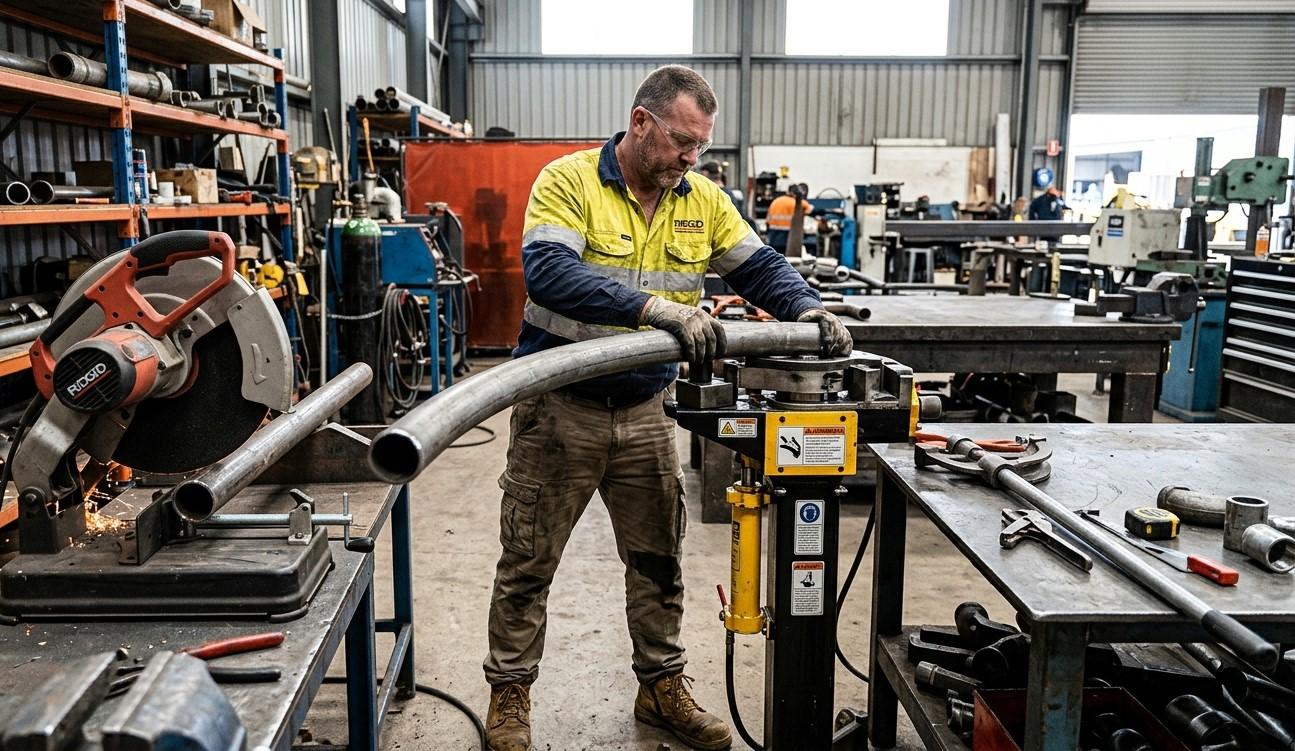
In industrial fabrication, plumbing, construction, maintenance, and engineering applications, accurate pipe cutting and bending are essential for producing reliable and properly fitted systems. Choosing the right equipment can improve productivity, reduce material waste, and ensure consistent results. Khokhawala Trading LLC, an experienced Industrial Tools Supplier in Dubai, provides a wide range of industrial tools and workshop solutions designed to support demanding cutting, bending, and fabrication operations.
From manual pipe cutters to heavy-duty bending equipment, the correct tool depends on factors such as pipe material, diameter, wall thickness, required bend angle, production volume, and working environment. Selecting tools based on these requirements helps businesses achieve cleaner cuts, accurate bends, and safer operations.
Why Choosing the Right Pipe Cutting and Bending Tools Matters
Pipes are used in many industrial systems, including hydraulic lines, oil and gas installations, water systems, HVAC applications, manufacturing equipment, and structural fabrication. Every application may require different cutting and bending techniques.
Using an unsuitable tool can result in:
- Uneven or rough pipe cuts
- Deformation of the pipe
- Incorrect bend angles
- Cracks or excessive stress
- Material wastage
- Increased setup and processing time
- Premature tool wear
- Safety risks for operators
The right pipe cutting and bending tools allow operators to work more efficiently while maintaining dimensional accuracy and product quality.
Understand the Pipe Material Before Selecting a Tool
One of the first factors to consider is the material of the pipe. Different materials have different hardness, flexibility, and cutting characteristics.
Steel Pipes
Steel is widely used in industrial construction and engineering applications. Cutting steel pipes requires durable blades or cutting mechanisms capable of handling high-strength materials. Heavy-duty pipe cutters, saws, and specialized cutting tools are commonly used depending on pipe thickness and diameter.
Stainless Steel Pipes
Stainless steel provides excellent corrosion resistance but can be more challenging to machine and cut. Tools must be sharp, durable, and suitable for stainless steel to minimize heat generation and work hardening.
Copper Pipes
Copper is softer and easier to cut and bend than steel. Tube cutters designed specifically for copper can provide clean cuts without excessive deformation. Copper tubing can also generally be bent using manual or mechanical tube benders.
Aluminum Pipes
Aluminum is lightweight and relatively soft, but improper cutting or bending can cause dents and deformation. Selecting a tool with appropriate support and cutting geometry helps maintain the pipe's shape.
Understanding the material helps determine the required industrial pipe cutting tools and bending equipment.
Consider Pipe Diameter and Wall Thickness
Pipe dimensions are among the most important factors when selecting cutting and bending equipment.
Small-diameter tubing may be handled efficiently with compact manual cutters and tube benders. Larger pipes, especially those used in industrial plants and construction projects, may require heavy-duty cutting machines and hydraulic or mechanical bending systems.
Wall thickness is equally important. Thin-wall tubing can be damaged by excessive force, while thick-wall pipes require tools capable of generating sufficient cutting or bending force.
Before purchasing a tool, check:
- Minimum and maximum pipe diameter
- Compatible wall thickness
- Maximum cutting capacity
- Maximum bending capacity
- Material compatibility
- Required bending radius
Matching the tool capacity to the pipe dimensions helps prevent equipment damage and poor-quality results.
Types of Pipe Cutting Tools
There are several types of pipe cutting tools available for industrial and workshop applications.
Manual Pipe Cutters
Manual pipe cutters are compact and easy to use. They are particularly useful for maintenance work, plumbing, and applications involving small- to medium-diameter pipes.
Their advantages include:
- Simple operation
- Low maintenance requirements
- Portable design
- Clean and controlled cuts
- Suitable for on-site work
Ratchet Pipe Cutters
Ratchet-style cutters use a controlled mechanical action to cut pipes with less continuous hand force. They are useful when working in confined spaces or when repetitive cutting is required.
Pipe Saws
Pipe saws are suitable for cutting larger or thicker pipes where manual rotary cutters may not be practical. Depending on the application, different saw designs can be used for workshop and industrial fabrication operations.
Abrasive Cutting Tools
Abrasive cutting equipment can be used for demanding applications involving tough materials and larger pipe sizes. However, operators should consider heat generation, sparks, cutting accuracy, and workplace safety before selecting this type of equipment.
Types of Pipe Bending Tools
The bending method should be selected according to pipe material, diameter, wall thickness, bend angle, and required bend radius.
Manual Pipe Benders
Manual pipe benders are suitable for smaller pipes and lower-volume applications. They are commonly used in maintenance, plumbing, electrical installations, and general workshop work.
They provide good control without requiring powered equipment.
Hydraulic Pipe Benders
Hydraulic pipe benders use hydraulic force to bend pipes with greater ease. They are particularly useful for larger or thicker pipes that would be difficult to bend manually.
Key advantages include:
- High bending force
- Reduced operator effort
- Better control
- Suitable for heavy-duty applications
- Improved productivity
Mechanical Pipe Benders
Mechanical bending systems use mechanical force to produce controlled bends. They can be suitable for workshop and fabrication applications where repeatability is important.
Tube Benders
Tube benders are designed for smaller-diameter tubing and are commonly used in hydraulic, automotive, HVAC, and engineering applications. They can produce accurate bends while minimizing flattening and deformation.
Check the Required Bend Angle and Radius
The desired bend angle is another critical consideration. Different applications may require 45-degree, 90-degree, or more complex bends.
A tool should provide sufficient control to achieve the required angle consistently.
The bend radius is equally important. A bend that is too tight for the material can cause:
- Cracking
- Flattening
- Wrinkling
- Wall thinning
- Reduced flow capacity
- Structural weakness
Always follow the manufacturer's recommended bending limits for the selected pipe material and size.
For applications requiring multiple identical bends, tools with adjustable guides, stops, or measurement systems can significantly improve consistency.
Consider Production Volume
The volume of work should influence your choice between manual and powered equipment.
For occasional maintenance work, a manual pipe cutter or bender may be the most economical option. These tools are easy to transport and require minimal setup.
For high-volume fabrication, powered or hydraulic equipment can provide faster production and reduce operator fatigue.
Consider:
- Number of pipes processed per day
- Required production speed
- Repetition of bending operations
- Available workforce
- Required dimensional accuracy
- Available workshop space
Choosing equipment according to workload prevents both underinvestment and unnecessary equipment costs.
Evaluate Tool Quality and Durability
Industrial tools are often exposed to demanding working conditions. Cutting blades, rollers, dies, handles, hydraulic components, and other parts must withstand repeated use.
When selecting industrial pipe tools, consider:
- Material quality
- Manufacturing standards
- Cutting blade durability
- Bending die strength
- Replacement-part availability
- Corrosion resistance
- Ergonomic design
- Manufacturer reputation
High-quality tools may have a higher initial cost, but they can provide better reliability and longer service life when properly maintained.
Choose the Correct Cutting Blade or Bending Die
Consumable and replaceable components directly affect performance.
For cutting tools, the blade or cutting wheel must be appropriate for the pipe material and thickness. A poorly matched blade can produce rough edges, excessive heat, or premature wear.
For bending tools, the die must match the pipe's diameter and bending requirements. Using an incorrect die can cause deformation or an inaccurate bend.
Always verify component compatibility before starting work.
Safety Considerations for Pipe Cutting and Bending
Safety should be a major consideration when selecting and using pipe fabrication tools.
Pipe cutting may generate sharp edges, sparks, noise, or metal particles, while bending operations involve significant mechanical or hydraulic forces.
Operators should:
- Wear appropriate eye protection
- Use suitable gloves when handling cut pipes
- Secure the pipe properly
- Inspect tools before use
- Keep hands away from cutting and bending points
- Follow manufacturer operating instructions
- Avoid exceeding tool capacity
- Keep the working area clean
- Use appropriate personal protective equipment
Proper training and tool selection can significantly reduce workplace accidents.
Maintenance Tips for Pipe Cutting and Bending Tools
Regular maintenance keeps industrial tools reliable and helps extend their service life.
Inspect Cutting Components
Check blades, rollers, cutting wheels, and other components regularly for wear or damage. Replace worn parts before they affect cutting quality.
Lubricate Moving Parts
Where recommended by the manufacturer, lubricate moving components to reduce friction and wear.
Check Hydraulic Systems
For hydraulic bending equipment, inspect hoses, fittings, cylinders, and fluid levels according to the manufacturer's maintenance schedule.
Keep Tools Clean
Remove metal chips, dirt, moisture, and other contaminants after use. Clean equipment is easier to inspect and less likely to develop corrosion.
Store Tools Properly
Store pipe cutting and bending tools in a dry, organized location. Protect precision components and cutting surfaces from impact and moisture.
Common Mistakes to Avoid When Selecting Pipe Tools
Businesses can avoid many equipment problems by avoiding common purchasing mistakes.
Choosing Based Only on Price
The cheapest tool may not provide the durability or accuracy required for industrial work. Consider total operating cost rather than initial purchase price alone.
Ignoring Pipe Specifications
Selecting a tool without checking pipe diameter, material, and wall thickness can result in poor performance or equipment damage.
Using One Tool for Every Application
Different jobs often require different cutting and bending solutions. A tool designed for small copper tubing may not be appropriate for heavy steel pipes.
Overlooking Replacement Parts
Before purchasing equipment, check whether blades, rollers, dies, seals, and other replacement components are readily available.
How to Select the Right Tool: A Quick Checklist
Before purchasing pipe cutting or bending equipment, ask the following questions:
- What material will be cut or bent?
- What are the pipe diameter and wall thickness?
- What cutting capacity is required?
- What bend angles are needed?
- What bend radius is required?
- How frequently will the tool be used?
- Is manual or hydraulic equipment more suitable?
- What level of accuracy is required?
- Are replacement components available?
- Does the tool meet the required safety and quality standards?
Answering these questions makes the selection process more practical and reduces the risk of purchasing unsuitable equipment.
Conclusion
Selecting the right pipe cutting and bending tools is essential for achieving accurate, efficient, and safe results in industrial fabrication, maintenance, construction, plumbing, and engineering applications. The best choice depends on pipe material, diameter, wall thickness, bending requirements, production volume, accuracy, and operating conditions.
For businesses looking for dependable industrial pipe cutting tools, bending equipment, and other workshop solutions, working with an experienced supplier can simplify the selection process. Khokhawala Trading LLC, a trusted Industrial Tools Supplier in Dubai, offers a broad range of industrial and engineering tools designed for professional applications. By selecting the correct pipe cutters, tube benders, hydraulic tools, and related accessories, businesses can improve productivity, reduce material waste, and maintain consistent quality across their operations.
Categories
Read More
According to the latest report published by Data Bridge Market Research, the Hysteroscopy Instruments Market The global hysteroscopy instruments market size was valued at USD 2.19 billion in 2024 and is expected to reach USD 3.96 billion by 2032, at a CAGR of 7.70% during the forecast period A top notch Hysteroscopy Instruments Market report has been designed after a thorough study of...

Travelers who apply for Vietnam visa online use an electronic visa process to request permission to enter Vietnam before their journey. For travelers from the United States, understanding the application requirements, passport information, travel details, processing considerations, and visa conditions can help explain what is involved in the process. Vietnam's electronic visa system provides...

The online rummy gaming sector in India has experienced remarkable growth over the past few years, with countless applications competing for players' attention. Among the many options available, Love Rummy APK has carved out a significant niche for itself by offering a combination of accessibility, variety, and attractive incentives. With the promise of a ₹151 welcome bonus and access to more...

The technology industry is built on innovation, disruption, and constant evolution. Every major financial event involving a leading technology company has the potential to influence market sentiment and reshape strategic priorities across the sector. The recent Alphabet $80B Sale has become one of the most discussed developments in the financial world, attracting attention from investors,...

Introduction Streetwear has become one of the most influential fashion movements of the modern era, blending comfort, Essentials Hoodies simplicity, and cultural identity into everyday outfits. Among the most iconic pieces leading this movement is the Essentials hoodie, known for its minimal design, relaxed fit, and premium casual aesthetic. It represents more than just clothing; it...