


GDS Full Form: Meaning, Salary, Eligibility, Job Profile & Selection Process
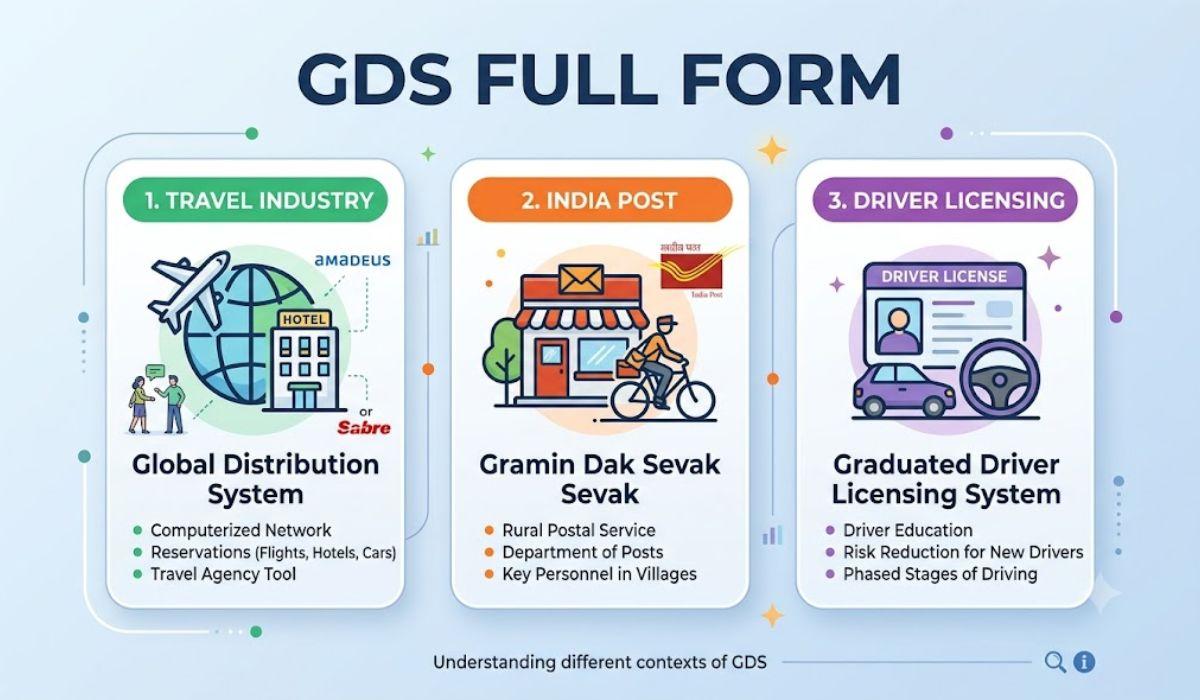
If you are searching for GDS Full Form, it stands for Gramin Dak Sevak. GDS is a popular employment opportunity associated with India Post and attracts candidates looking for postal-sector jobs across rural and semi-rural areas. The Salary Slip provides useful information about government and private-sector careers, including salary structures, eligibility, job profiles, and recruitment processes.
Understanding the GDS role is important for candidates who want to know about its duties, qualification requirements, salary, selection process, and career opportunities. This article covers everything you need to know about GDS in simple language.
What is the GDS Full Form?
The GDS Full Form is Gramin Dak Sevak. Gramin Dak Sevaks work with India Post and help provide postal services to people, particularly in rural areas. They contribute to the smooth functioning of Branch Post Offices and support various postal and customer-service activities.
GDS recruitment generally includes positions such as Branch Postmaster (BPM), Assistant Branch Postmaster (ABPM), and Dak Sevak. The responsibilities and working conditions can vary depending on the position.
According to The Salary Slip, candidates should carefully read the official recruitment notification because eligibility conditions, vacancies, and other requirements can vary between recruitment cycles.
GDS Job Profile and Responsibilities
The duties of a Gramin Dak Sevak depend on the position. A BPM may be responsible for managing the activities of a Branch Post Office, while an ABPM assists with postal operations and customer services.
Some common GDS responsibilities include:
-
Delivery of letters and parcels
-
Booking and distribution of postal articles
-
Handling customer queries
-
Maintaining post-office records
-
Supporting postal and financial services
-
Assisting with daily post-office operations
-
Promoting India Post services
-
Performing duties assigned by the postal department
GDS employees can therefore have both field-based and office-based responsibilities. The Salary Slip recommends checking the job description in the relevant recruitment notification before applying.
GDS Eligibility Criteria
Candidates interested in GDS recruitment should meet the educational and age requirements specified by India Post.
The basic educational qualification generally includes Class 10 pass, along with the subjects and local-language requirements prescribed in the recruitment notification. Applicants may also need to meet specific computer knowledge and other conditions depending on the recruitment cycle.
The eligibility criteria should always be verified from the latest official notification because recruitment rules can be updated.
GDS Age Limit
Age is another important eligibility requirement for GDS recruitment. The minimum and maximum age limits are mentioned in the official notification. Relaxation in the upper age limit may be available to eligible candidates belonging to reserved categories according to applicable government rules.
Candidates should calculate their age according to the cutoff date mentioned in the recruitment notification. The Salary Slip advises applicants to verify all age-related conditions before submitting an application.
GDS Salary and TRCA
One of the most searched topics after the GDS Full Form is the salary structure. GDS employees are generally paid under the Time Related Continuity Allowance (TRCA) system.
The applicable TRCA depends on the position and working hours. Eligible employees may also receive allowances and benefits according to the rules applicable to GDS employees.
Salary figures and allowances can change through departmental orders and recruitment notifications. Therefore, candidates should refer to the latest official India Post information rather than relying on outdated salary figures available online.
GDS Selection Process
GDS recruitment is different from many government jobs because the selection process for many recruitment cycles is primarily based on Class 10 marks rather than a conventional competitive written examination.
A typical recruitment process may include:
-
Online registration
-
Submission of application
-
Preparation of merit list
-
Shortlisting of candidates
-
Document verification
-
Final appointment
The exact procedure can vary, so applicants should carefully follow the instructions in the current notification.
For candidates researching government employment opportunities, The Salary Slip can also be useful for comparing different job profiles and salary-related information.
Documents Required for GDS Recruitment
Applicants generally need several documents during the application and verification process. These may include a Class 10 certificate, identity proof, photograph, signature, category certificate where applicable, and other documents mentioned in the official notification.
Candidates should ensure that all personal and educational details entered in the application form match their official documents. Any mismatch or incorrect information may create difficulties during verification.
Why is GDS a Popular Career Choice?
GDS positions attract many applicants because the minimum educational qualification is generally Class 10 and the recruitment process for many cycles is merit-based.
Some factors that make GDS an attractive option include:
-
Association with India Post
-
Opportunities in rural areas
-
Class 10-based eligibility
-
Merit-based selection in applicable recruitment cycles
-
Postal-sector work experience
-
Allowances and benefits according to applicable rules
However, candidates should understand the nature of GDS employment and its terms and conditions before applying. The Salary Slip recommends comparing the role with other career options based on location, working hours, responsibilities, and compensation.
Conclusion
The GDS Full Form is Gramin Dak Sevak, a postal position associated with India Post. GDS employees support important postal operations and customer services, particularly in rural communities. Candidates interested in this opportunity should understand the eligibility criteria, job responsibilities, salary structure, and selection process before applying.
Recruitment notifications can change from time to time, so applicants should always verify the latest information through official India Post sources. For more career and salary-related information, The Salary Slip offers helpful resources covering different government and private-sector job profiles.
Whether you are a Class 10 pass candidate exploring government employment or simply researching postal-sector careers, understanding the GDS role can help you make a more informed career decision.
Categories
Read More
SAINT PAUL, Minn. The Countrywide Hockey League's Minnesota Wild these days introduced it will host a Black Historical past Bash, furnished through TRIA Orthopedics, upon Monday, Feb. 2, Whilst the personnel hosts the Montreal Canadiens at 6:30 p.m. CT. The business will rejoice Black Background Thirty day period all through the sport, like innumerable of the inside-video game components:Not...

Shores of Connection v0.2 by RugPullStudios is a story-driven visual novel that focuses on meaningful choices, engaging character interactions, and an evolving narrative. Available on LustGames.to, the game invites players to explore a world where every conversation and decision can influence future events. With an immersive storyline and polished presentation, Shores of Connection is an...

The Internet of Things (IoT) has transformed the way businesses operate, devices communicate, and users interact with technology. From smart homes and industrial automation to healthcare monitoring and next-gen retail systems, IoT is powering innovation across every sector. As companies race to build intelligent, connected products, the need for reliable IoT product design and development...

Hiranandani Beach Queen Versova feels like one of those premium choices , you know , the kind homebuyers want when they’re chasing a higher sort of everyday living in Mumbai. It sits at Versova Beach , Mumbai, and the vibe is very luxury, with spacious 4 BHK residences, refined architecture, and those modern everyday comforts that make life feel, smoother, more sorted. Plus you’re...
Taj Mahal Tour by Train – The Smartest and Most Comfortable Way to Visit India’s Crown Jewel Why Choose a Taj Mahal Tour by Train? Planning a trip to the breathtaking Taj Mahal? Let me ask you something — would you rather spend hours stuck in traffic or glide smoothly across the countryside in a fast, air-conditioned train? Exactly. A Taj Mahal tour by train is hands...