


Madden 27 NCAA Edition Bundle — U4GM
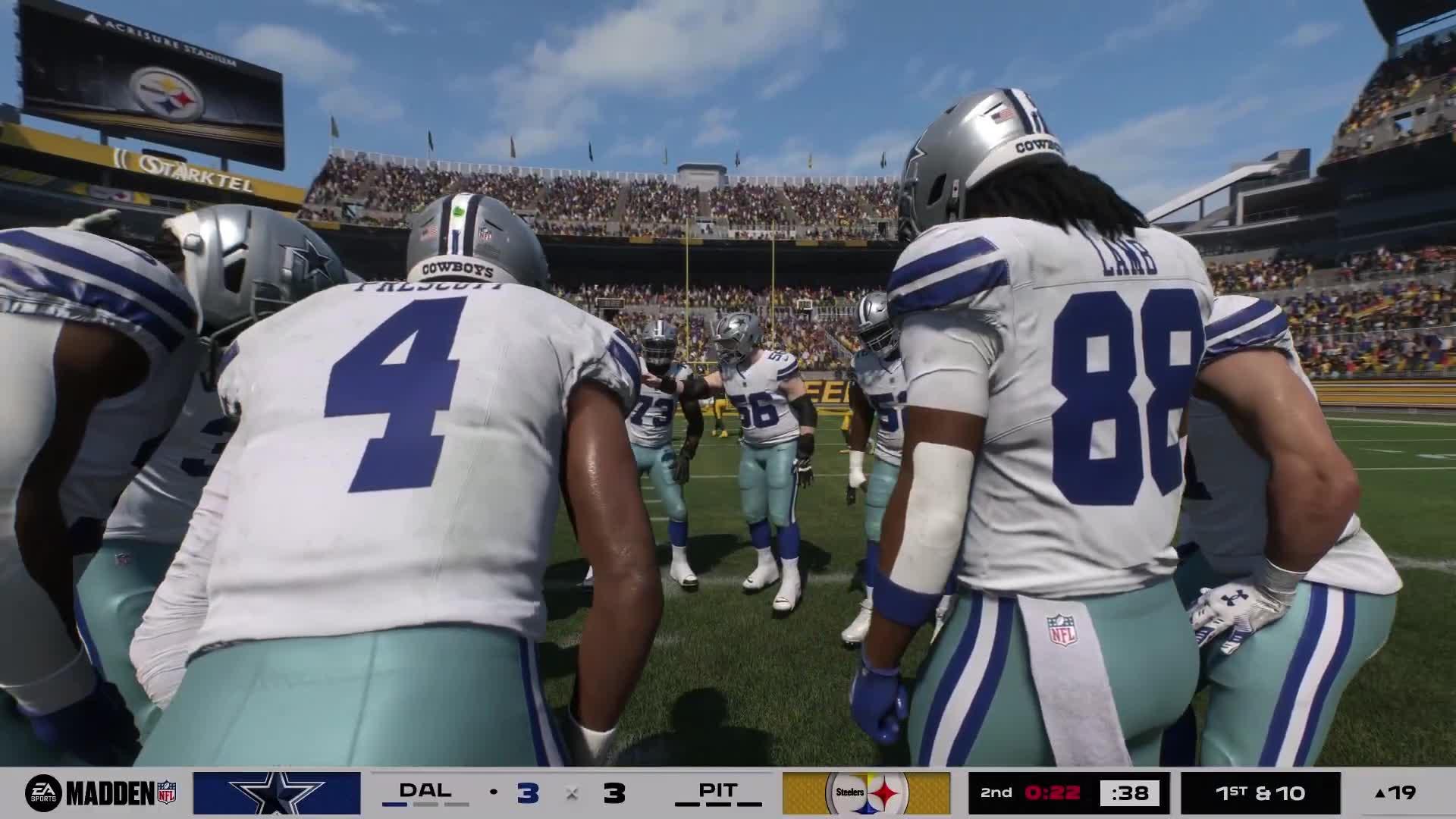
Football is often described as a game of inches, but it is equally a game of information. Coaches study formations, tendencies, personnel groupings, matchups, and player behavior in search of small advantages.
Mut 27 coins embraces that reality by shifting the emphasis of gameplay toward strategic decision-making.
The most important change is philosophical. Instead of rewarding players primarily for quick reactions and controller mastery, the game increasingly asks them to understand football concepts.
That begins before the snap.
Formations matter. Personnel matters. Defensive alignment matters. A player who recognizes these elements can make better decisions before the ball is even put into motion.
An offensive coordinator might notice that the defense has positioned its safeties unusually far from the line of scrimmage. That could suggest an opportunity for the running game. Alternatively, the defense may be inviting a run because it expects a particular tendency.
The player must interpret the information.
Once the ball is snapped, that mental process continues.
Madden NFL 27's improved defensive coverage system allows defenders to respond to complex offensive formations with more sophisticated checks. Stacks, bunches, and trips can force adjustments, making pre-snap recognition more important.
This helps eliminate the feeling that every play exists in isolation.
Football is a continuous conversation between offense and defense.
The offense presents a problem. The defense responds. The offense counters. The defense adjusts again.
That cycle is central to real football and increasingly central to Madden.
The trench system supports the same philosophy. Offensive line play now depends more heavily on leverage, weight, hand placement, and initial movement. As a result, the success of a play depends partly on how individual matchups develop.
That means players need to understand personnel.
A running back might have an excellent opportunity against one defensive front but face a difficult matchup against another. A quarterback may have time to throw against one pass rush but struggle against another.
These differences encourage users to study their opponents.
That is particularly valuable in competitive play.
When a game rewards one or two highly effective plays, players eventually memorize the solution. But if defensive behavior is more adaptive and line play is more dynamic, the opponent has greater freedom to respond.
The player therefore needs a larger strategic toolbox.
Team-building systems reinforce that approach. Instead of asking only which player has the highest overall rating, users can evaluate attributes based on the strategy they intend to employ.
Players interested in rapidly expanding their rosters may look for cheap Mut coins, but resources are most useful when they support a clear team-building strategy.
A speed-focused offense requires players who can create separation and attack vertically. A physical rushing attack requires offensive linemen capable of winning at the point of attack. A defensive scheme built around pressure requires pass rushers who can win one-on-one matchups.
The best roster is therefore contextual.
This idea also makes scouting more important.
Madden NFL 27's connection with PFF and Next Gen Stats provides another layer of information. Real-world performance can influence virtual ratings, making player evaluation an ongoing process.
A user who understands how real football performance translates into the game can potentially anticipate which players will become more valuable.
That creates a bridge between watching football and playing it.
The same thing happens with the game's catch mechanics. Timing-Based Catch forces users to judge not only whether a receiver is open but whether the throw is safe enough to attempt.
This is another form of football intelligence.
The player is effectively calculating risk.
A pass into tight coverage might produce a major gain or an interception. A safer checkdown may preserve possession but fail to generate enough yardage.
Those decisions become especially important in late-game situations.
With a lead, conservative decisions may be appropriate. When trailing, greater aggression may be necessary.
Madden NFL 27's systems allow these choices to have meaningful consequences.
The result is a game that rewards preparation.
Users who understand defensive concepts can recognize opportunities. Those who study personnel can exploit matchups. Those who understand blocking can find running lanes. Those who manage risk can avoid unnecessary turnovers.
This is much closer to the mental experience of football than simply reacting to what appears on the screen.
The transformation also changes what it means to be “good” at Madden.
Mechanical skill remains important. Players still need to control quarterbacks, runners, defenders, and receivers effectively.
But mechanical skill alone is not enough.
The strongest players need to combine execution with knowledge.
That combination is the foundation of football simulation.
Madden NFL 27's strategic direction may therefore have an impact beyond individual features. By making football intelligence more valuable, the game encourages users to engage with the sport at a deeper level.
Players may begin studying real formations, understanding defensive terminology, or paying closer attention to how NFL teams attack specific matchups.
The game becomes a gateway into football strategy.
Ultimately, that may be the most convincing form of hyperrealism. Realism is not simply about making the graphics look authentic. It is about making the player think like someone involved in the sport.
Madden NFL 27 increasingly demands exactly that.
Categorias
Leia Mais
Noise is part of everyday life in busy areas, but constant exposure to traffic, construction, rail movement, and industrial activity can make the surroundings difficult to manage. The problem becomes more noticeable near homes, offices, hospitals, and other places that need a quieter environment. Sound barriers provide a physical separation between the noise source and the surrounding area,...

Penile enhancement procedures have evolved significantly over the past few years, offering individuals more advanced, safer, and medically refined options than ever before. Modern techniques now focus not only on size enhancement but also on improving confidence, functionality, and overall patient satisfaction. In today’s medical landscape, innovative approaches are reshaping expectations...

Buy Snapchat Accounts Are you looking to boost your brand’s online presence? If so, you’ve likely considered various social media platforms. Among them, Snapchat has emerged as a powerful tool for businesses seeking to engage with younger audiences. But have you ever thought about the potential of buying Snapchat accounts? While this might sound unconventional, it can be a...

Pre-built gaming computers have become an excellent choice for players who want reliable gaming performance without assembling a system from individual components. Manufacturers now offer configurations for every budget, making it easier to find hardware that matches different gaming goals. Understanding the major components helps you compare systems with confidence. While appearance and...
Searching for the Scramjet’s location can mean several different things: finding a free vehicle on the map, locating its purchase listing, or retrieving one you already own. Players comparing GTA 5 Modded Accounts through U4GM should identify which question they actually need answered. Without that distinction, it is easy to follow a map marker tutorial when the relevant answer is a...