


How to Get a Real Estate Salesperson License NJ
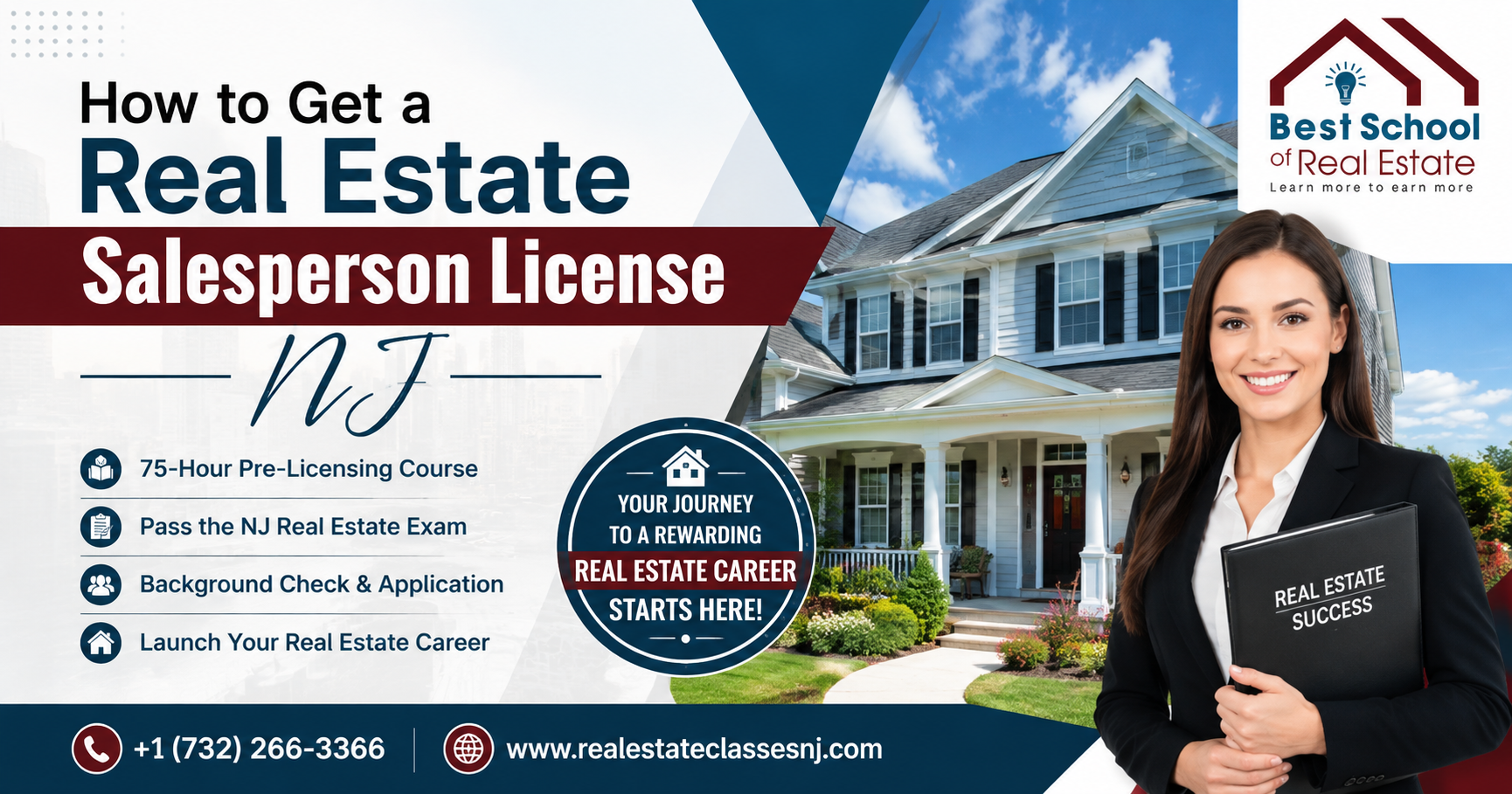
If you are considering a career in real estate, getting a real estate salesperson license NJ is the first major step toward working as a licensed real estate salesperson in New Jersey. The licensing process includes completing the required education, passing the state examination, finding a sponsoring broker, and submitting your license application.
Understanding each stage before you begin can make the process easier and help you avoid unnecessary delays. This guide explains the general steps involved in obtaining a New Jersey real estate salesperson license.
What Is a New Jersey Real Estate Salesperson License?
A New Jersey real estate salesperson license allows an individual to perform licensed real estate activities under the supervision of a New Jersey-licensed broker.
Salespersons may work with buyers, sellers, landlords, and tenants while assisting with real estate transactions. They can also develop a career in residential or commercial real estate, depending on their interests and the opportunities available through their brokerage.
Step 1: Meet the Basic Eligibility Requirements
Before starting the licensing process, you should make sure you meet New Jersey's basic eligibility requirements.
Applicants generally need to:
- Be at least 18 years old
- Have a high school education or equivalent
- Complete the required New Jersey real estate education
- Pass the state licensing examination
- Complete the required application process
- Be associated with a licensed New Jersey broker
Meeting these requirements is important before investing time in the licensing course and examination process.
Step 2: Complete the Required Pre-Licensing Education
One of the most important steps toward obtaining a real estate salesperson license NJ is completing the state-required salesperson pre-licensing education.
New Jersey requires prospective salespersons to complete a 75-hour pre-licensing course through an approved real estate school.
The course introduces students to important areas of real estate, including:
- Real estate principles and practices
- New Jersey real estate laws
- Contracts
- Agency relationships
- Property ownership
- Financing
- Real estate mathematics
- Fair housing
- Ethics and professional responsibilities
The education requirement is designed to give future salespersons a foundation before they begin working with clients and participating in real estate transactions.
Step 3: Choose a Real Estate School
Choosing the right school can make a difference in how well you understand the material and prepare for the licensing examination.
When comparing real estate schools, consider factors such as:
- Instructor experience
- Class schedule
- Online and in-person learning options
- Exam preparation
- Practice tests
- Student support
- Course flexibility
A school that provides clear instruction and practical examples can help you become more comfortable with the material covered on the licensing examination.
Step 4: Pass the New Jersey Real Estate Licensing Exam
After completing the required education, you will need to pass the New Jersey real estate salesperson examination.
The exam tests your understanding of real estate concepts, laws, regulations, and practices. Preparing before the examination can improve your confidence and help you identify areas where additional study may be necessary.
Practice questions, review materials, and structured exam preparation can be useful tools during this stage.
Step 5: Find a Sponsoring Broker
Passing the examination is an important achievement, but you still need to complete the licensing process with a New Jersey broker.
A new salesperson must work under the supervision of a licensed broker. Therefore, choosing a brokerage is an important career decision.
When interviewing potential brokers, ask about:
- Training and mentorship
- Commission structure
- Office support
- Lead generation
- Marketing resources
- Technology
- Transaction support
- Opportunities for professional development
Your first brokerage can have a significant influence on your early experience in the real estate industry.
Step 6: Complete the License Application
Once you have completed the education and examination requirements and selected a sponsoring broker, the remaining licensing steps can be completed through the appropriate New Jersey process.
Your application must contain accurate information and meet the state's requirements. Your sponsoring broker plays an important role in this part of the process.
Because licensing rules and procedures can change, it is important to check the current requirements with the New Jersey Real Estate Commission before submitting your application.
How Long Does It Take to Get a New Jersey Real Estate License?
The timeline varies from person to person.
Your total time can depend on:
- How quickly you complete the 75-hour course
- Your class schedule
- How much time you spend preparing for the examination
- When you take the licensing exam
- How quickly you find a sponsoring broker
- How long the application process takes
Students who maintain a consistent study schedule and prepare carefully for the examination can generally move through the process more efficiently.
How Much Does a Real Estate Salesperson License NJ Cost?
The total cost can vary because obtaining a license involves more than one expense.
Potential costs may include:
- Pre-licensing education
- Licensing examination
- License application
- Background or administrative requirements
- Other required licensing fees
Course prices also vary between schools. Before enrolling, review the school's current tuition and determine which services and study resources are included.
What Can You Do After Getting Your License?
Once you obtain your real estate salesperson license NJ, you can begin building your career under the supervision of your sponsoring broker.
Many new salespersons start by focusing on residential transactions, while others eventually develop interests in commercial property, investment real estate, leasing, or other areas.
Success in real estate usually depends on more than simply obtaining a license. Building relationships, learning the local market, developing communication skills, understanding contracts, and providing dependable service are all important parts of becoming an effective real estate professional.
Start Your New Jersey Real Estate Career
Getting a real estate salesperson license NJ involves several important steps, but the process becomes easier to understand when you approach it one stage at a time. Start by confirming your eligibility, complete the required 75-hour education, prepare for and pass the state examination, select a sponsoring broker, and complete the licensing process.
If you are serious about starting a real estate career in New Jersey, choosing quality education and preparing properly for the licensing exam can give you a stronger foundation for your next step.
Κατηγορίες
Διαβάζω περισσότερα
Yahoo Account Providers for Professionals In the competitive digital ecosystem of 2026, the success of your online business operations, search engine optimization campaigns, and multi-channel marketing initiatives depends heavily on the strength of your foundational infrastructure. Whether you are running complex outreach funnels, managing brand profiles, or scaling a digital agency, relying on...

Buy Old Facebook Accounts: Security Risks, Privacy Concerns & Safe Social Media Management Guide 2026 🚪🚀💬📞📩 We’re always ready to help you 24/7! ➥ ➥🎁✔️💼 ➥🎁✔️💼 Telegram: @getpvatop ➥🎁✔️💼 ➥🎁✔️💼 WhatsApp: +1(873)710-7167 ➥🎁✔️💼 ➥🎁✔️💼 Email: getpvatop@gmail.com➥🎁✔️💼 ➥🎁✔️💼 Discord: account service➥🎁✔️💼 ➥🎁✔️💼our company https://getpvatop.com/🔥⚡️🚀💬 FAST RESPONSE •...

As more people work, study, and manage daily responsibilities from home, back pain caused by poor desk setup has become increasingly common. Long hours of sitting with improper posture or inadequate furniture can place excessive strain on the spine, muscles, and joints, leading to ongoing discomfort. Managing Back Pain at Home in Dubai often begins with improving the home workspace to support...

Buy Old Gmail Accounts | 100% Aged & Instant Delivery - smmpvaio.com https://smmpvaio.com/product/buy-old-gmail-account/ Aged & High-Trust Profiles: Get long-standing, pre-tested old Gmail accounts from smmpvaio.com that feature high trust scores and exceptional stability to prevent sudden locks. Contact Channels: 📧 Email Support: smmpvaio@gmail.com (Send us your...