

RO Plant Installation Mistakes Pakistan Homeowners Must Avoid
RO Plant Installation Mistakes Pakistani Homeowners Keep Repeating Silently
Installing a water purification system feels like the responsible thing to do — and it genuinely is. However, the gap between installing an RO plant and actually getting safe, clean drinking water from it is wider than most Pakistani households realize. Across cities and towns, families invest real money into purification systems and then unknowingly undermine that investment through installation errors, wrong placements, incorrect configurations, and maintenance habits that quietly erode system performance from day one. The result is a household that believes it is protected when it actually is not.
The Next Rex, one of Pakistan's most respected digital content and technology service companies, has consistently delivered consumer-focused guidance on subjects that genuinely affect Pakistani daily life. Supported by powerful AWS and GCP cloud infrastructure and driven by a team skilled in research and consumer education, The Next Rex brings the same precision to water safety guidance that it applies across its expanding portfolio of digital services. Water purification decisions deserve this level of seriousness — and the information in this blog reflects exactly that standard.
This guide focuses specifically on the installation and setup mistakes that Pakistani homeowners most commonly make with their water purification systems, why those mistakes matter, and how to avoid or correct them before they cost you money or compromise your family's health. Secure your clean water supply!
Mistake One: Installing the System Without Testing Your Feed Water First
This is the single most widespread and consequential mistake Pakistani homeowners make when setting up a home water purification system. They purchase a system based on what their neighbor owns, what the salesperson recommends, or what seems popular — without ever testing what their specific water supply actually contains.
Pakistan's water contamination profile is not uniform. A household in Lahore's older city neighborhoods faces primarily biological contamination and lead from corroded pipelines. A household drawing borewell water in central Punjab may face high nitrate and arsenic concentrations that are invisible, tasteless, and odorless but cause serious long-term health damage. A household in coastal Karachi may deal with elevated salinity and chloride levels alongside biological threats.
Each of these contamination profiles requires a differently configured system to address it effectively. Buying a generic three-stage system for a high-arsenic borewell supply, for example, delivers inadequate protection regardless of how well the system is installed. A basic TDS meter costs under a thousand rupees from any electronics market in Pakistan and tells you instantly whether your feed water is within normal range or demands higher-specification treatment. A professional water quality test from a PCSIR or private laboratory costs between two and five thousand rupees and provides a complete contamination profile that removes all guesswork from system selection.
The investment in testing before purchasing is always smaller than the cost of buying the wrong system, replacing it prematurely, or dealing with health consequences from inadequate treatment.
Mistake Two: Placing the System Where Temperature and Pressure Work Against It
Where you physically install your RO plant affects its performance more directly than most homeowners appreciate. Pakistani households frequently make placement decisions based purely on convenience — wherever the system fits physically — without considering the temperature and pressure conditions at that location.
RO membranes perform within specific temperature ranges. Installations directly under a sink that receives direct sunlight through a south-facing window, or in a utility area adjacent to a kitchen stove, expose the system to temperatures that accelerate membrane aging and promote bacterial growth in the storage tank. Ideal placement keeps the system in a cool, shaded location with stable ambient temperature year-round.
Feed water pressure is equally critical. Most domestic RO systems are designed to operate between 40 and 80 PSI of inlet water pressure. Pakistani municipal water pressure frequently fluctuates below this range, particularly during peak morning demand hours and in multi-storey buildings where upper floors receive significantly reduced pressure. A system operating at chronically low pressure produces dramatically less purified water per day, increases the waste-to-pure ratio, and stresses the membrane in ways that shorten its service life.
Installing a pressure gauge on the feed water line during setup costs very little and tells you immediately whether your system is operating within its designed pressure range. If pressure consistently reads below 40 PSI, a small inline pressure booster pump resolves the issue permanently.
Mistake Three: Skipping the Initial Flush Before Using Purified Output
New RO membranes arrive from the manufacturer immersed in a preservation solution — typically a food-safe sodium bisulfite compound — that prevents biological growth during storage and shipping. This solution must be completely flushed out of the system before the purified output water is considered safe and pleasant for drinking.
Most installation guides mention this flushing requirement, but a significant proportion of Pakistani homeowners skip it or perform it incompletely, then complain that their new system produces water with an unusual chemical taste. The solution is not a defective system — it is an incomplete commissioning process.
Proper initial flushing requires filling and completely draining the storage tank at least two to three times before drinking any of the purified output. This process takes several hours given the typical flow rate of a domestic system but is non-negotiable for both taste quality and safety. Each tank cycle pushes preservation solution residue further out of the membrane and associated tubing until concentration drops below detectable levels.
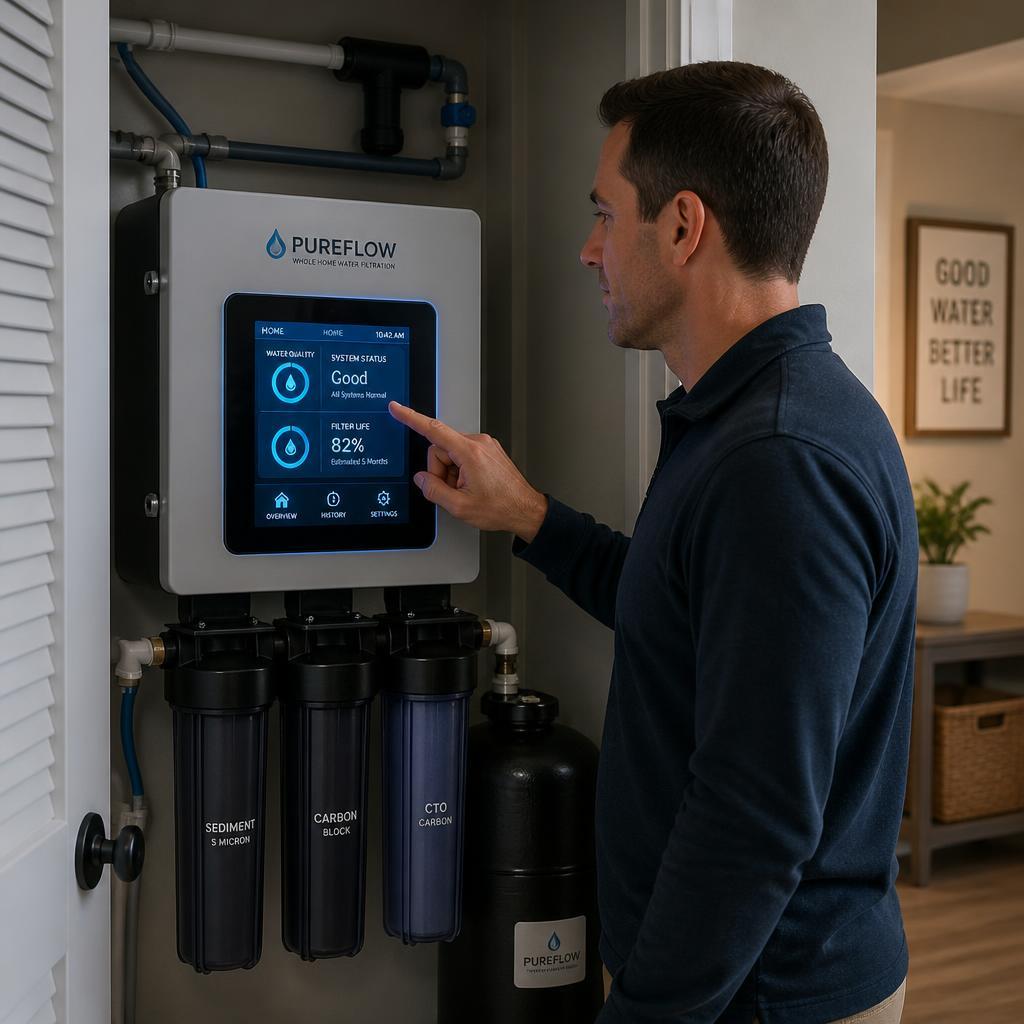
A Reverse Osmosis Plant that has been properly flushed during commissioning produces noticeably cleaner-tasting water from the very first use, confirming that the system is correctly set up and ready for daily household consumption.
Mistake Four: Connecting to Hot Water Lines or Incorrect Feed Sources
This mistake sounds obvious until you learn how frequently it occurs, particularly when homeowners handle installation independently without professional guidance. RO membranes are designed to process cold water only. Feed water temperatures above 35 degrees Celsius permanently damage membrane polymer structure, irreversibly reducing rejection capability and in severe cases causing complete membrane failure within weeks.
In Pakistani kitchens where hot and cold supply lines run parallel under the sink, connecting the RO feed to the wrong line is a straightforward physical error that installation guides specifically warn against but that still happens regularly. Always verify that feed water temperature from your connected supply line does not exceed 30 degrees Celsius before commissioning the system.
Similarly, connecting the feed water intake to a line that runs through a water softener creates a different compatibility issue. Water softeners exchange hardness minerals for sodium ions, producing water with elevated sodium concentration. Standard RO membranes partially reject sodium but less effectively than they reject calcium and magnesium. Households with specific low-sodium dietary requirements should be aware of this interaction and configure their system supply lines to bypass the softener before reaching the RO intake.
Mistake Five: Ignoring the Drain Line Elevation Requirement
Every RO plant system includes a drain line that carries reject water away from the membrane to the household drain. This line has a specific installation requirement that is consistently overlooked in DIY installations: the drain line saddle clamp must be attached above the drain's P-trap, and the drain line must not be submerged in standing water at any point along its path.
When the drain line is incorrectly positioned — particularly when it dips below the P-trap water level — back pressure from the drain prevents proper reject water flow from the membrane. This back pressure increases effective operating pressure on the membrane beyond its designed range, reducing purified output volume, increasing the waste ratio, and stressing membrane material in ways that accelerate failure.
Additionally, a drain line that sits below the water level in a sink trap creates a pathway for drain water contamination to migrate back toward the membrane during periods of zero flow. This biological contamination pathway is invisible during normal operation but can introduce fecal bacteria into the system during extended periods when the purifier is not in use, such as during family travel or Ramadan schedule changes.
How the RO Water Plant Setup Connects to Long-Term System Performance
Every installation decision made at setup establishes the baseline conditions under which the RO Water Plant will operate for its entire service life. Correct placement, proper feed water connection, complete initial flushing, appropriate pressure conditions, and correct drain line routing collectively determine whether the system performs at its rated specification or operates at a chronic deficit from day one.
Pakistani homeowners who invest fifteen minutes in verifying each of these setup conditions before first use protect their membrane investment, ensure genuine water quality from the start, and avoid the frustrating experience of a new system that underperforms or fails prematurely. The installation process is not a formality — it is the foundation on which years of reliable water quality either stands firmly or gradually crumbles.
Selecting the Right System Before Installation Even Begins
Before any installation question arises, the system selection decision determines the ceiling of achievable performance. The drinking water RO plant category in Pakistan offers options across every budget bracket, and understanding what each tier genuinely delivers helps buyers avoid both overspending on unnecessary features and underspending on systems that cannot handle their specific water conditions.
The RO Plant Water filter systems that consistently deliver the best long-term value in Pakistani conditions are five-stage units from suppliers who can provide verifiable membrane specifications and whose replacement cartridges are readily available in your city. This practical availability consideration is often overlooked during purchase but becomes critically important at the three-month mark when pre-filters need their first replacement.
The RO Water Plant price in Pakistan bracket between twelve and twenty thousand rupees for a five-stage domestic system represents the strongest value position for most urban Pakistani households. Systems in this range combine verified component quality, adequate stage count for complex contamination profiles, and accessible replacement cartridge supply chains that make ongoing maintenance realistic rather than inconvenient.
What Good Maintenance Looks Like After a Correct Installation
A correctly installed filtration plant that receives timely, appropriate maintenance delivers consistent water quality protection across a three to five year service life before any major component replacement becomes necessary. The maintenance actions that matter most are not complicated — they simply require scheduling discipline and the habit of monthly TDS testing.
Sediment pre-filter replacement every six to eight weeks in standard Pakistani municipal water conditions prevents the most common cause of membrane stress. Carbon filter replacement every two to three months maintains chlorine protection for the membrane. Annual storage tank sanitization prevents biological accumulation during warm months. Membrane performance monitoring through monthly TDS testing catches degradation early, before it becomes a health issue.
A Reverse Osmosis Water filter that is correctly installed and properly maintained quickly becomes one of the most reliable appliances in the Pakistani household — one that works silently, costs relatively little to operate, and delivers a health benefit that compounds quietly with every cup of water the family drinks.
The Water filtration plant for home investment Pakistani families make deserves the installation care and ongoing maintenance attention that keeps it performing at its best. The Reverse Osmosis filtration system category as a whole delivers on its promise only when set up and maintained correctly — and now you know exactly how to make that happen.
Frequently Asked Questions
Q1: How long should I flush a new RO system before drinking the purified output?
A new RO system should be flushed through at least two to three complete storage tank cycles before the purified output is considered safe and taste-appropriate for daily drinking consumption.
Q2: What water pressure is needed for a domestic RO plant to work properly in Pakistan?
A minimum inlet pressure of 40 PSI is required for reliable domestic RO operation, and a pressure booster pump should be installed if your household supply consistently falls below this threshold.
Q3: Can I install an RO system on a rooftop tank supply line in Pakistan?
Rooftop tank supply works for RO installation provided water pressure at the system inlet meets the minimum 40 PSI requirement, which often requires a booster pump given typical gravity-fed rooftop pressures.
Q4: Why does my RO system make noise during operation and is it normal?
A gentle gurgling or flowing sound during purification and drain cycling is completely normal, but a loud rattling or high-pitched noise typically indicates a loose fitting, pressure fluctuation, or a component requiring inspection.
Q5: How do I know if my RO system's automatic shut-off valve is working correctly? When your storage tank is full, water flow from the purified tap should stop completely within a few seconds of opening it, indicating the shut-off valve is operating and the membrane is not under continuous pressure.
Κατηγορίες
Διαβάζω περισσότερα
Il be the to start with toward acknowledge that this wasn a Good 7 days for the Guardians. Likely 2-5 previously mentioned the very last 7 days, finishing with a tie inside yesterday sport, isn how oneself need toward get started the time. Continue to, the favourable information is that not how theye setting up the year considering the fact that it hasn actually started off however. Spring...

"Regional Overview of Executive Summary North America Cleanroom Particle Counters Market Market by Size and Share The North America cleanroom particle counters market size was valued at USD 85.99 billion in 2025 and is expected to reach USD 161.53billion by 2033, at a CAGR of 8.20% during the forecast period The strategies encompassed in the North America...

Chemical exfoliation is a popular skin rejuvenation treatment designed to improve texture, tone, and overall skin clarity. One of the most common questions people ask before undergoing the procedure is how long the results will actually last. The answer depends on several factors, including the type of peel used, skin condition, lifestyle habits, and skincare routine after treatment....

Streetwear Asset Evolution The high-end fashion market is shifting as contemporary collectors view exclusive garments as legitimate financial investments. Modern consumers prioritize long-term wardrobe value over temporary trends by focusing heavily on brand equity and construction. Iconic labels leverage precise craftsmanship and cultural relevance to maintain a premium status across...