


Enhancing Safety Standards Through Accurate Scientific Evaluation
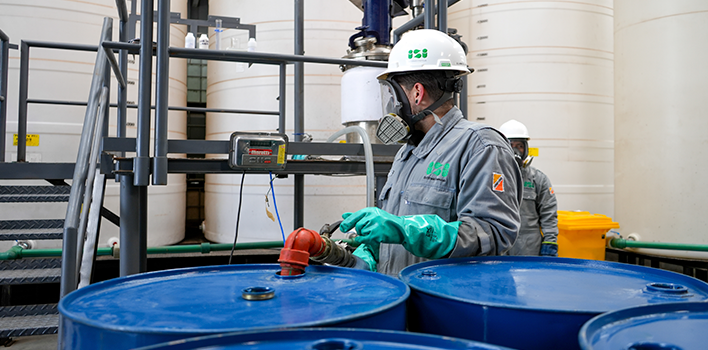
In industries where precision determines the difference between operational success and catastrophic failure, the role of accurate scientific evaluation cannot be overstated. Nowhere is this reality more apparent than in the oil and gas sector, where the integrity of materials, fluids, and processes directly influences both personnel safety and environmental protection. Oilfield Laboratory Services sit at the heart of this effort, providing the technical foundation upon which modern safety standards are built and continuously improved.
The connection between laboratory science and field safety is direct and consequential. When engineers and operators make decisions about drilling fluids, cement formulations, reservoir conditions, or pipe integrity, those decisions are only as reliable as the data behind them. A miscalculation rooted in inaccurate testing can lead to blowouts, leaks, equipment failures, or worse. This is why regulatory bodies and industry organizations around the world place heavy emphasis on rigorous, standardized scientific evaluation as a prerequisite to field operations.
The Foundation of Accurate Scientific Evaluation
At its core, accurate scientific evaluation depends on three pillars: validated methodologies, calibrated instrumentation, and qualified personnel. Each element reinforces the others, and a weakness in any one area compromises the entire evaluation process.
Validated methodologies ensure that the procedures used to test a sample or material have been verified against known standards. In the context of Oilfield Laboratory Services, this often means following API (American Petroleum Institute) standards or ISO-certified protocols for testing everything from drilling fluid rheology to formation water chemistry. These standards exist precisely because the industry recognized decades ago that inconsistent testing practices led to inconsistent safety outcomes.
Calibrated instrumentation guarantees that the tools used in testing provide readings that reflect actual physical conditions. Pressure gauges, viscometers, pH meters, and spectroscopic analyzers must all be regularly maintained and calibrated against traceable reference standards. Drift in instrument accuracy, even at a small scale, can produce data that appears plausible but leads to incorrect conclusions about material behavior under downhole conditions.
Qualified laboratory personnel bring the interpretive capacity that instruments alone cannot provide. Experienced analysts understand not just how to run a test, but how to recognize anomalous results, identify potential sample contamination, and contextualize findings within the broader operational picture. Their expertise transforms raw data into actionable safety intelligence.
How Laboratory Services Directly Enhance Safety Standards
Oilfield Laboratory Services contribute to safety enhancement in several distinct and practical ways.
First, they enable early hazard identification. Laboratory analysis of drilling fluids, for example, can detect signs of gas influx, formation incompatibility, or chemical degradation before these issues escalate into wellbore instability or kicks. By catching these signals early, operators have the opportunity to adjust their programs before dangerous conditions develop.
Second, laboratory evaluations support the design and verification of well integrity systems. Cement slurry testing is a prime example. Before a cement blend is pumped downhole to seal the annular space around a casing string, Oilfield Laboratory Services verify its compressive strength, thickening time, free water content, and fluid loss characteristics. A cement formulation that fails under simulated downhole temperature and pressure conditions in the lab can be reformulated before it is deployed in the field, preventing zonal isolation failures that could allow hydrocarbons to migrate to surface.
Third, accurate laboratory data underpins regulatory compliance. Regulatory frameworks governing oil and gas operations require documented evidence that materials and procedures meet defined safety thresholds. Laboratory test reports serve as the official record of compliance, and their accuracy is subject to audit. Errors or gaps in laboratory documentation can expose operators to regulatory penalties and, more importantly, signal that safety-critical criteria may not have been properly verified.
Fourth, laboratory services support incident investigation and learning. When accidents do occur, forensic analysis conducted by specialized laboratories helps identify root causes. Whether examining a failed tubular for stress corrosion cracking or analyzing a fluid sample from a contaminated zone, post-incident laboratory work generates the understanding needed to prevent recurrence.
The Evolving Role of Technology in Laboratory Safety Evaluation
Modern Oilfield Laboratory Services are increasingly leveraging advanced analytical technologies to deepen the accuracy and scope of their evaluations. High-pressure, high-temperature (HPHT) testing equipment now simulates the extreme conditions encountered in deepwater and ultra-deep formations, producing data that was simply impossible to generate a generation ago. Digital automation in sample handling and data recording reduces human error and improves reproducibility. Spectroscopic and chromatographic techniques provide molecular-level insight into fluid composition, enabling more nuanced hazard assessments.
Furthermore, integration between laboratory data systems and field operations software allows test results to be incorporated into real-time drilling decision support systems. This connectivity shortens the loop between scientific evaluation and operational response, meaning that laboratory findings translate more quickly into safety-protective adjustments on the rig.
The Broader Impact on Industry Safety Culture
Beyond the technical outputs they produce, Oilfield Laboratory Services play a cultural role in the industry's relationship with safety. Organizations that invest in rigorous laboratory evaluation signal a commitment to evidence-based decision making. This commitment filters through operational teams, reinforcing the principle that safety standards are not bureaucratic formalities but practical safeguards grounded in verified scientific reality.
As the oil and gas industry continues to operate in increasingly challenging environments and faces mounting expectations from regulators, investors, and communities, the importance of accurate scientific evaluation will only grow. Oilfield Laboratory Services represent one of the most direct and reliable mechanisms through which the industry can meet those expectations, turning laboratory precision into field-level safety performance.
Категории
Больше
What Makes Felpa Stussy Different From Regular Hoodies? Hoodies have evolved from basic sportswear into essential pieces of modern streetwear fashion. Originally designed for comfort and warmth, they are now widely used as style statements across global fashion culture. This transformation has been driven by youth culture, music, and urban lifestyle influences. In this growing fashion space,...

Many dog owners believe that feeding premium dog food is enough to cover every nutritional need. Others add multiple supplements daily for joints, skin, digestion, and immunity. So the real question is: do dogs actually need supplements if they already eat quality food? The honest answer is sometimes yes, sometimes no. A well-balanced, high-quality diet is the foundation of a healthy dog. But...

Blocked pipes and leaking drains can quickly turn into a major problem if they are ignored for too long. Professional drain repairs help keep your home clean, safe, and free from water damage. Whether your sink is draining slowly, your toilet keeps backing up, or you notice bad smells coming from the pipes, fast action can save you time and money. Skilled plumbers use modern tools to find the...
With guests to get settled in, filled up fast. Following the screening of the first two episodes, which elicited multiple rounds of applause throughout, the spilled back upstairs for an after party. In that context, creative change carries heightened financial stakes. brands are relying on a smaller number of customers, If you lose them by Hermes dramatically changing the creative direction, it...