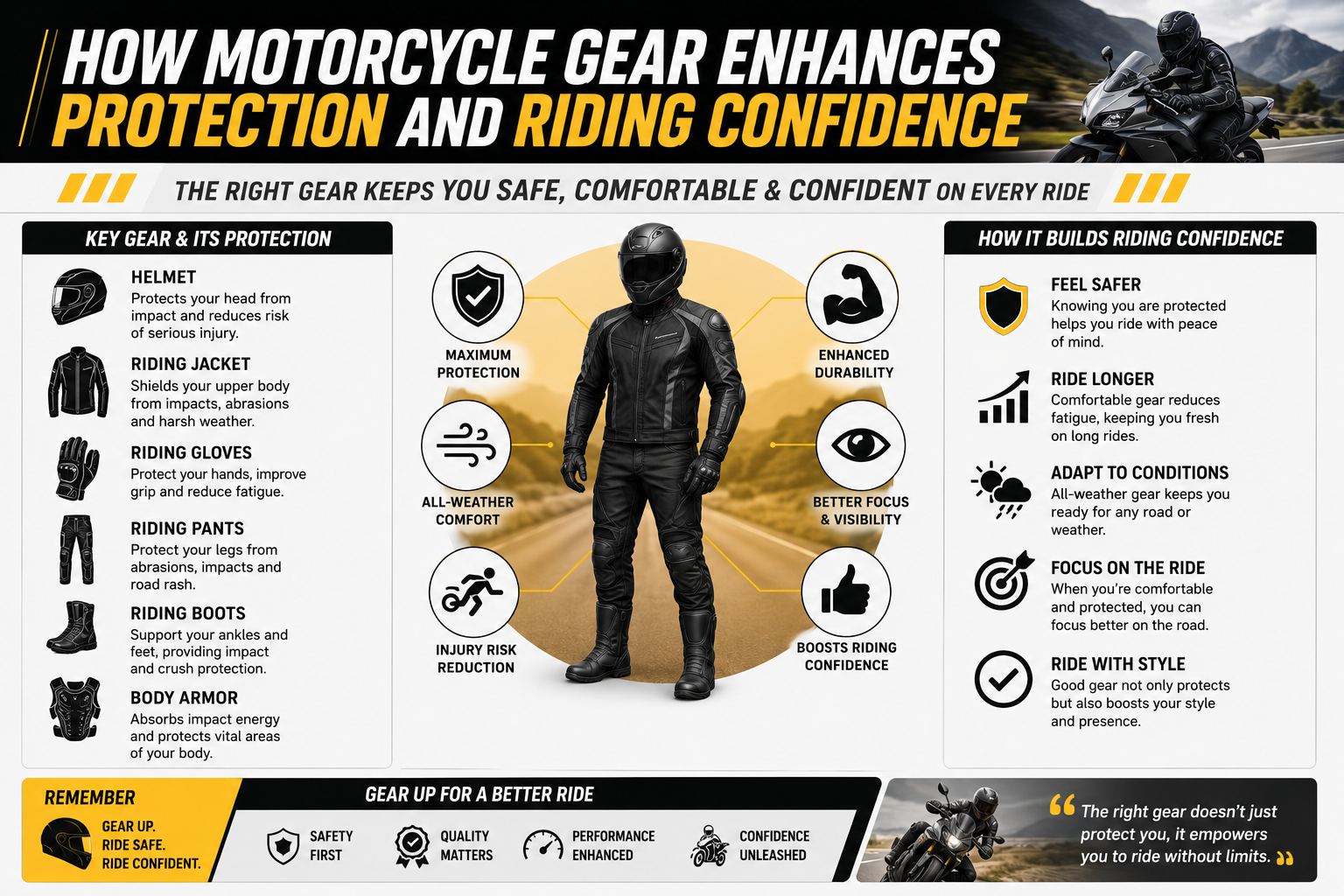
Motorcycling combines freedom, skill, and responsibility. While rider ability plays a critical role in safety, protective equipment remains one of the most important factors in reducing injury risks and improving rider confidence on the road. Modern motorcycle gear is engineered to provide impact protection, abrasion resistance, weather protection, visibility enhancement, and long-distance comfort, all of which contribute to a safer riding experience.
According to information published by the Wikipedia article on Motorcycle Personal Protective Equipment, motorcycle gear is specifically designed to protect riders from injuries associated with crashes, environmental conditions, and road hazards. Professional riders, safety trainers, and experienced touring enthusiasts consistently emphasize that quality protective equipment is not merely an accessory—it is an essential component of responsible riding.
This article explores how motorcycle gear enhances rider protection, improves confidence, and supports safer riding practices across various riding environments.
Understanding the Purpose of Motorcycle Gear
Motorcycle gear refers to specialized protective apparel and equipment designed to safeguard riders from impact forces, abrasion injuries, weather exposure, and visibility-related risks.
Unlike ordinary clothing, motorcycle-specific gear is engineered using materials and construction methods intended to withstand the unique demands of riding. These products typically undergo testing for abrasion resistance, tear strength, impact absorption, and durability.
Core motorcycle gear includes:
- Helmets
- Jackets
- Vests
- Gloves
- Riding pants
- Boots
- Eye protection
- Reflective equipment
Each component serves a specific protective function while contributing to overall rider comfort and control.
The Relationship Between Protection and Riding Confidence
Confidence on a motorcycle is often linked to preparedness. Riders who understand that they are equipped with appropriate protective gear generally experience greater peace of mind during rides.
This confidence stems from several factors:
- Reduced fear of injury
- Improved comfort during long rides
- Better protection from weather conditions
- Enhanced visibility in traffic
- Greater focus on riding techniques
When concerns about environmental conditions or minor road hazards are minimized through proper gear, riders can devote more attention to situational awareness, traffic patterns, and hazard recognition.
How Motorcycle Jackets Improve Rider Safety
Among all motorcycle apparel, jackets remain one of the most important protective layers.
Abrasion Resistance
Road surfaces can cause severe skin injuries during slides. Motorcycle jackets are designed to resist abrasion significantly better than ordinary clothing.
High-quality jackets often utilize:
- Full-grain leather
- Top-grain leather
- Reinforced textile materials
- Kevlar-reinforced panels
- Impact-resistant armor inserts
These materials help reduce the severity of injuries during accidents.
Impact Protection
Many motorcycle jackets incorporate armor in critical areas such as:
- Shoulders
- Elbows
- Forearms
- Back
Impact protectors absorb and distribute crash forces, helping reduce localized injuries.
Weather Protection
Weather conditions can affect rider concentration and reaction times.
Motorcycle jackets help protect against:
- Wind fatigue
- Rain exposure
- Cold temperatures
- UV radiation
Maintaining body comfort enables riders to remain alert and focused for longer periods.
The Importance of Men's Leather Jackets
Professionally designed Men's Leather Jackets continue to be among the most trusted forms of motorcycle protection. Leather has long been valued for its exceptional abrasion resistance, durability, and ability to withstand demanding riding conditions.
Many experienced riders choose leather jackets because they provide:
- Long-term durability
- Superior slide protection
- Wind resistance
- Timeless motorcycle styling
- Compatibility with protective armor systems
These characteristics make leather jackets a preferred choice for cruiser riders, touring enthusiasts, and many professional riders.
The Protective Role of Motorcycle Vests
Motorcycle vests serve a different but valuable purpose within a rider's gear system.
Additional Core Protection
Many modern motorcycle vests include reinforced construction that adds another protective layer over riding apparel.
Benefits include:
- Additional abrasion resistance
- Storage for riding essentials
- Improved visibility options
- Layering flexibility
Comfort and Mobility
Vests allow riders to maintain freedom of movement while still benefiting from protective materials.
This makes them particularly popular among:
- Cruiser riders
- Touring riders
- Group riders
- Warm-weather riders
Why Men's Leather Vests Remain Popular
High-quality Men's Leather Vests continue to play an important role in motorcycle apparel. They offer durability, versatility, and additional protection while allowing riders to customize their riding setup.
Professional riders often appreciate leather vests for:
- Layering over jackets or shirts
- Added storage capacity
- Long-lasting durability
- Enhanced riding comfort
- Distinctive motorcycle culture traditions
Helmets: The Foundation of Motorcycle Safety
Helmets remain the single most important piece of motorcycle safety equipment.
Impact Energy Management
Motorcycle helmets are engineered to:
- Absorb crash energy
- Reduce skull injuries
- Minimize brain trauma risks
- Protect the face and eyes
Safety certifications commonly include:
- DOT (Department of Transportation)
- ECE (Economic Commission for Europe)
- Snell certification standards
These standards evaluate impact performance, retention systems, and overall helmet integrity.
Rider Confidence Benefits
Knowing that the head is protected often allows riders to maintain better focus and composure during challenging riding situations.
Motorcycle Gloves and Hand Protection
Hands are frequently among the first body parts to contact the ground during a crash.
Quality motorcycle gloves provide:
- Abrasion resistance
- Knuckle protection
- Improved grip
- Weather protection
- Vibration reduction
Maintaining secure control of handlebars contributes directly to rider confidence and vehicle management.
Riding Pants and Lower Body Protection
Lower-body injuries are common in motorcycle accidents.
Purpose-built riding pants include:
- Abrasion-resistant materials
- Hip armor
- Knee protectors
- Reinforced seams
These protective features help reduce injury severity while improving rider comfort during long-distance travel.
Motorcycle Boots and Control Enhancement
Motorcycle boots provide more than foot protection.
They also improve:
- Gear shifting precision
- Brake control
- Ankle stability
- Weather resistance
Professional rider training programs frequently recommend motorcycle-specific footwear due to its role in both protection and vehicle control.
Visibility: A Critical Yet Overlooked Safety Factor
Many motorcycle accidents involve visibility issues rather than rider skill deficiencies.
Modern gear often includes:
- Reflective panels
- High-visibility colors
- Retroreflective materials
- Integrated lighting compatibility
Improved visibility helps other road users identify motorcycles more quickly, particularly during low-light conditions.
How Proper Gear Reduces Rider Fatigue
Fatigue can significantly affect reaction times and decision-making.
Motorcycle gear helps combat fatigue through:
Temperature Regulation
Advanced ventilation systems assist with:
- Airflow management
- Moisture control
- Heat reduction
Wind Management
Protective apparel minimizes:
- Wind pressure
- Muscle strain
- Rider exhaustion
Weather Resistance
Protection from rain and cold helps riders maintain concentration and physical comfort over extended distances.
Industry Standards That Define Quality Motorcycle Gear
Professional riders and safety experts often evaluate gear based on recognized testing standards.
Common standards include:
CE Certification
CE-certified armor is tested for:
- Impact absorption
- Energy transmission limits
- Protective performance
Abrasion Testing
Manufacturers assess materials for:
- Slide resistance
- Tear resistance
- Seam strength
Material Durability
Premium gear undergoes testing to ensure long-term performance under real-world riding conditions.
Best Practices for Selecting Motorcycle Gear
Experts generally recommend the following approach:
Prioritize Fit
Properly fitted gear performs more effectively than oversized or undersized equipment.
Verify Safety Certifications
Always confirm applicable certification standards.
Match Gear to Riding Style
Different riding disciplines require different equipment:
- Touring
- Cruising
- Adventure riding
- Commuting
- Sport riding
Consider Layering Systems
Layered protection often provides greater versatility across changing weather conditions.
Inspect Gear Regularly
Routine inspections help identify:
- Worn stitching
- Cracked armor
- Material degradation
- Fastener failures
Common Motorcycle Gear Misconceptions
"Regular Clothing Provides Enough Protection"
Ordinary clothing is not designed for motorcycle crashes and generally offers limited abrasion resistance.
"Experienced Riders Need Less Gear"
Experience does not eliminate accident risks. Professional riders typically use comprehensive protective equipment regardless of skill level.
"Motorcycle Vests Replace Jackets"
Vests and jackets serve different purposes. Many riders use both as part of a layered protection system.
"Comfort and Protection Cannot Coexist"
Modern motorcycle gear is increasingly designed to balance comfort, mobility, and protective performance.
Frequently Asked Questions
1. Why is motorcycle gear important even for short rides?
Many motorcycle accidents occur close to home. Protective gear helps reduce injury risks regardless of trip length.
2. Do leather motorcycle jackets provide better protection than regular jackets?
Yes. Motorcycle-specific leather jackets are designed with abrasion-resistant materials and reinforced construction intended for riding environments.
3. Are motorcycle vests considered protective gear?
Yes. Motorcycle vests can provide additional abrasion resistance, storage, visibility options, and layering benefits when used appropriately.
4. What makes leather a popular material for motorcycle apparel?
Leather offers durability, abrasion resistance, wind protection, and long-term performance under demanding riding conditions.
5. How often should motorcycle gear be replaced?
Replacement depends on wear, damage, manufacturer recommendations, and crash history. Damaged gear should generally be replaced immediately.
6. Is expensive motorcycle gear always safer?
Not necessarily. Safety depends on construction quality, certifications, materials, and proper fit rather than price alone.
7. What certifications should riders look for in helmets?
Common certifications include DOT, ECE, and Snell standards.
8. Can motorcycle gear improve riding confidence?
Yes. Proper gear often increases rider comfort, preparedness, and focus, which can contribute to greater confidence on the road.
9. Why is fit so important in motorcycle gear?
Protective features perform most effectively when gear fits correctly and remains properly positioned during riding and potential impacts.
10. Should motorcycle gear be worn in hot weather?
Yes. Modern ventilated gear is specifically designed to provide protection while improving airflow and heat management.
11. Are motorcycle boots necessary for casual riders?
Motorcycle-specific boots help improve protection, stability, and vehicle control regardless of riding frequency.
12. Can layered gear improve overall protection?
Layering systems often enhance comfort, adaptability, and protective performance across different riding conditions.
Conclusion
Motorcycle gear serves a critical role in both rider protection and confidence. From helmets and gloves to specialized jackets, vests, boots, and riding pants, every piece contributes to a comprehensive safety system designed to reduce injury risks and improve riding comfort.
Protective apparel helps riders manage environmental challenges, maintain focus, reduce fatigue, and respond more effectively to road conditions. High-quality Men's Leather Jackets and Men's Leather Vests remain particularly valuable components of this system due to their durability, abrasion resistance, and long-standing reputation within the motorcycling community.
As motorcycle technology and safety standards continue to evolve, properly selected gear remains one of the most effective investments riders can make to support safer, more confident riding experiences on every journey.