Liquid Packaging Solutions for Growing US Brands
Liquid Packaging Solutions for Growing US Brands
Somewhere between developing a product you're proud of and getting it consistently onto retail shelves or into your customers' hands, there's a manufacturing gap that trips up a lot of brands. The formula is dialed in. The packaging design is done. The purchase orders are starting to come in faster than you expected.
And then the question hits: how, exactly, does this get made and packaged at scale without you building a factory?
The answer for most consumer brands — and for a lot of industrial, automotive, household, and specialty chemical brands — is a contract packaging partnership. Not as a stopgap or a shortcut, but as a deliberate, strategic choice to put manufacturing in the hands of people who do it every day while you focus on the things that grow your brand.
The trick is finding the right partner. And that means understanding what liquid product packaging actually demands.
Why Liquid Products Require Specialized Manufacturing
Not all contract packaging is created equal. Dry goods, powders, solid-form products — each category has its own manufacturing complexity. But liquid products carry a specific set of challenges that require genuine expertise to manage well.
The chemistry matters. A cleaning product, an automotive fluid, a pool treatment chemical, a pet care solution — each formulation has properties that interact with containers, closures, and labeling in specific ways. A formulation that's incompatible with its container doesn't show up as a problem during a short-run test. It shows up six months after retail placement, when containers are deforming or closures are failing. Managing that risk requires both filling capability and formulation knowledge — and the two need to be operating in close coordination.
Liquid packaging at commercial scale also demands precision in fill volume accuracy, line speed optimization, and closure application torque. These aren't concerns you can approximate. They're specifications that have to be hit consistently across every run, every SKU, every season — and that means your manufacturing partner needs equipment capability and operational discipline that's earned through years of experience, not just claimed in a sales pitch.
The Container and Closure Decision
One of the first meaningful decisions in a liquid packaging engagement is container selection — and it's one that benefits enormously from having a partner who's navigated it hundreds of times across diverse product categories.
Container options span a wide range of materials — HDPE, PET, glass, aluminum, and specialty materials for more demanding formulations — as well as shapes, sizes, and structural features. What's right for a 128-ounce household cleaning product is different from what's right for a concentrated 4-ounce automotive additive or a premium 32-ounce personal care liquid.
Closure selection adds another layer. Caps, lids, sprayers, misters, pumps, dispensers — each serves a different end-user need and creates different filling and assembly requirements on the production line. A partner with the equipment and expertise to work across a wide range of closure types gives you flexibility as your product line evolves, without forcing you to re-source manufacturing every time you add a SKU.
Labeling: Where Brand Presentation Meets Production Reality
Talk to any brand that's had a labeling problem at scale and you'll understand quickly why this part of the process deserves serious attention. A label that looks perfect on a prototype can bubble, wrinkle, misalign, or fail to adhere properly when it hits an automated line at high volume — or when temperature and humidity conditions in a warehouse aren't exactly what the artwork department assumed.
Contract packaging partners with genuine labeling expertise have solved these problems before. They know which label stock and adhesive combinations work reliably on which container materials. They understand how wrap angles, label seams, and print bleed specifications affect how a label applies at speed. And they have the capability to support the full range of labeling formats — front/back labels, three-panel configurations, wrap labels, shrink sleeves — rather than accommodating only the easiest option.
For brands selling into multiple retail channels, labeling flexibility is particularly important. What a club store wants on a label is different from what a regional grocery chain requires, which is different again from what a direct-to-consumer shipment needs. A manufacturing partner that can accommodate those variations without a separate production run for each channel is a significant operational advantage.
Secondary Packaging and the Retail-Ready Reality
Getting a liquid product into its primary container is step one. Getting it ready for retail — or for distribution, or for e-commerce fulfillment — is a different challenge, and one that trips up brands who underestimate its scope.
Secondary packaging encompasses a wide range of configurations: shrink-wrapping individual units or multipacks, building end-cap retail displays, constructing full or mini pallet displays, kitting products into combination packs, tray packs for club or warehouse retail, chipboard boxes for specific retail programs. Each of these has its own structural and aesthetic requirements, and retailers typically have detailed specifications that have to be met precisely to avoid chargebacks or compliance failures at their receiving docks.
Working with a contract packaging partner who handles secondary packaging in-house — rather than outsourcing it to a separate vendor or asking you to manage it yourself — keeps the entire process under one quality umbrella. When primary and secondary packaging are handled by the same team, in the same facility, under the same quality management system, the opportunity for handoff errors drops significantly.
Quality Certification: What Those Letters on the Facility Wall Actually Mean
ISO 9001. ISO 14001. EPA Registered. Halal certified. Kosher certified. These credentials aren't marketing decoration — they're evidence of a manufacturing operation that has been through rigorous third-party evaluation and maintains ongoing compliance with documented standards.
For brands, this matters for multiple reasons. In regulated categories — household pesticides, pool treatments, certain automotive products — EPA registration is a legal requirement for the manufacturing facility handling your product. Halal and Kosher certifications open market segments that would otherwise be closed to you. ISO certification provides assurance about the quality management and environmental management systems that govern everything that happens in the facility.
When you're evaluating a contract packaging partner, ask specifically which certifications they hold and how recent their last audits were. A well-run facility will have clear, current answers.
Bi-Coastal Capacity and What It Means for Your Supply Chain
For U.S. brands operating at meaningful scale, the geography of your manufacturing partner matters in ways that aren't always obvious at the outset. Having access to manufacturing capacity on both the West Coast and East Coast isn't a luxury — it's supply chain resilience.
West Coast manufacturing capacity gives you proximity to Pacific Rim import infrastructure and efficient access to Western U.S. retail and distribution networks. East Coast capacity opens efficient access to Southeastern and Northeastern markets, as well as Atlantic port logistics. A co-manufacturer with genuine capacity in both regions gives you the flexibility to optimize distribution costs and the resilience to absorb a regional disruption without shutting down your supply entirely.
Finding a Liquid Co-Packer Worth the Long-Term Commitment
There's a version of the co-manufacturing search that focuses almost exclusively on price per unit. It's understandable — margin matters. But brands that make their decision on price alone often find that what they saved on the manufacturing line, they spent several times over in quality issues, supply disruptions, communication failures, and the operational cost of managing a partner who's not truly invested in their success.
The better question is: what does this relationship look like in three years? Does this partner have the capacity to grow with you? Do they have the institutional knowledge — the chemistry expertise, the formulation experience, the regulatory familiarity — to handle the complexity that comes with scale? Do they build relationships the way a long-term partner does, or do they manage you like a transaction?
A liquid co-packer with over a century of experience, multiple production facilities, integrated capabilities from raw material procurement through distribution, and a culture built around long-term customer relationships is answering those questions with its track record — not just its sales materials.
Your liquid product deserves a manufacturing partner that's invested in its success.
Goodwin Company has been building trusted contract packaging partnerships since 1922. Our fifth-generation family-owned facilities in Garden Grove, CA and Lawrenceville, GA bring full-service liquid packaging capabilities — from chemical blending and filling to labeling, secondary packaging, warehousing, and distribution — under one quality-certified roof.
Start the conversation today at goodwininc.com/capabilities/liquidpackaging or reach us directly at Sales@goodwininc.com.
Kategorien
Mehr lesen
Modern lifestyles often require people to spend long hours sitting at desks, driving, or working on computers. While sitting may seem harmless, remaining in the same position for extended periods can affect blood circulation in the legs. Although sitting alone does not directly cause varicose veins, it can increase the risk of developing them, especially when combined with other factors such as...

Buy Naver Accounts In the digital age, where online presence dictates success, having a robust platform to connect with users is essential. For those seeking to tap into the vibrant South Korean market, Buy Naver accounts can be a game-changer. As one of Korea’s leading search engines and social platforms, Naver offers unparalleled access to millions of active users. But what makes it so...

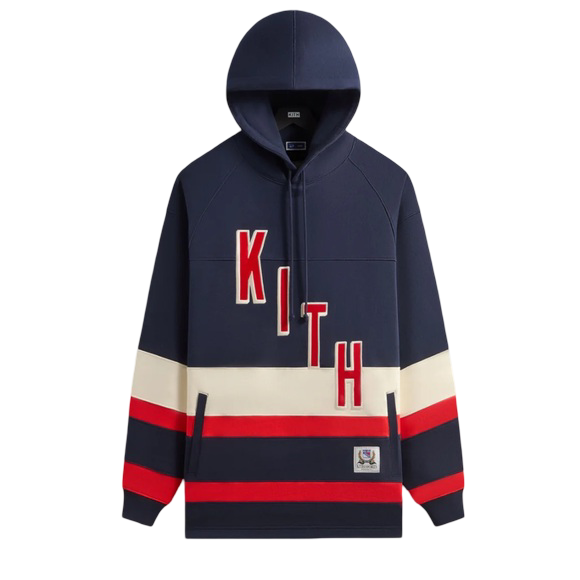
Introduction For anyone exploring premium streetwear for the first time, kith is a name that often stands out. The brand has earned worldwide recognition by combining modern fashion with high-quality craftsmanship and everyday comfort. Instead of chasing short-lived trends, it focuses on timeless designs that remain stylish year after year. From simple T-shirts to premium hoodies and outerwear,...
When you have a need to contact a call girl in Abu Dhabi, you can book one through this website for some enjoyment and entertainment. Independent Escorts Girls in Abu Dhabi will treat you the way you want. They can hang out with you in public places, join you for dining and of course serve as your professional masseur and lover in bed. The good thing about escorts is that they will not ask...