


How Sustainable Architecture Firms Build for 2030
How Sustainable Architecture Firms Build for 2030
There's a date that serious players in the U.S. design and construction industry are working toward: 2030. That's the year the American Institute of Architects 2030 Commitment calls for all new buildings to achieve net-zero carbon in their operations. It's an ambitious goal — and for the companies developing, owning, and occupying buildings today, it has real implications for how projects should be designed right now.
Because the buildings being designed and constructed in 2025 and 2026 will still be operating well past 2030. The design decisions being made on projects currently in schematic design will determine whether those buildings are assets or liabilities in a low-carbon economy — and whether the companies that occupy them can credibly meet their own ESG commitments a decade from now.
This is the context in which the best sustainable architecture firms are operating. Not chasing a certification. Building for where the world is heading.
The Difference Between Certification and Commitment
If you've spent any time evaluating green building services, you've probably noticed that almost everyone claims sustainability expertise. It's become a default checkbox rather than a differentiator. Which is why it's worth digging into what commitment actually looks like in practice.
Certification programs like LEED, WELL, and Fitwel are valuable — they provide structured frameworks for evaluating and improving building performance across energy, water, indoor air quality, occupant health, and other dimensions. A firm with accredited professionals in these programs brings genuine technical knowledge to the certification process. But certification is a tool, not a philosophy.
The firms that have made sustainability a genuine organizational commitment are the ones that belong to the U.S. Green Building Council not because it's a marketing credential but because membership connects them to the evolving standards and research that shape best practice. They've signed the AIA Materials Pledge, which means they're making considered, documented choices about the products and finishes they specify — tracking embodied carbon and material health even when clients aren't asking them to.
That internal discipline is what produces sustainable outcomes consistently across a portfolio, not just on the high-visibility projects where everyone is paying attention.
Embodied Carbon: The Sustainability Metric Most People Miss
Ask most clients what makes a building sustainable and they'll point to operational energy — solar panels, efficient HVAC, smart building controls. Those things matter enormously. But they represent only part of a building's total carbon footprint.
Embodied carbon — the emissions generated by manufacturing, transporting, processing, maintaining, and disposing of building materials — can account for 50% or more of a building's lifetime carbon impact, especially as grid electricity becomes cleaner and operational emissions decline. For industrial and commercial projects with material-intensive construction systems, that number can be even higher.
The most rigorous sustainable architecture firms are incorporating embodied carbon analysis into early design phases, when decisions about structural systems, cladding, insulation, and finishes are still open for discussion. Choosing a lower-carbon concrete mix, selecting timber or mass timber over steel in applications where it performs equivalently, specifying products with Environmental Product Declarations — these are the kinds of decisions that move embodied carbon numbers meaningfully, but only if they're made during design development rather than after construction documents are complete.
This is one of the clearest ways to evaluate whether a firm is doing deep sustainability work or surface-level sustainability work: do they talk about embodied carbon, and do they have the tools and methodology to actually analyze it during design?
Site Development and the Sustainable Landscape
Sustainable buildings don't exist in isolation. They sit on land that has its own ecological relationship with the broader environment — and how a project is sited, graded, paved, landscaped, and connected to infrastructure can either reinforce or undermine the sustainability goals of the building itself.
Civil engineering services are integral to this part of the sustainability equation. Thoughtful stormwater management design — bioswales, permeable paving, retention basins — reduces the burden on municipal drainage systems and supports groundwater recharge. Minimizing impervious surface coverage reduces heat island effect and surface runoff. Strategic grading decisions can reduce earthwork and the associated carbon footprint of moving material on and off site.
For large-scale commercial and industrial projects in particular, the site work often represents a significant portion of total project cost and environmental impact. A firm that integrates civil engineering expertise with its sustainability practice can make smarter tradeoffs at the site planning stage — decisions that affect stormwater compliance, utility coordination, and long-term site performance in ways that an architect working with a separate civil engineer as a subconsultant will almost always miss.
Designing for Human Health, Not Just Energy Efficiency
One of the important evolutions in sustainable design over the past decade has been the recognition that a healthy building is about more than how much energy it uses. Indoor air quality, acoustic comfort, access to daylight and views, thermal comfort, circadian lighting design — these factors have measurable effects on how people feel and perform in buildings, and they're increasingly part of what sophisticated clients are asking sustainable architecture firms to address.
The WELL Building Standard and Fitwel framework formalize this human health focus into structured certification pathways. But the best firms incorporate these principles whether or not a project is formally pursuing certification — because good design means designing for the people who will occupy the space, and that includes their physical and cognitive wellbeing.
This is particularly important for corporate office, science and technology, and healthcare projects, where occupant wellbeing has a direct relationship to organizational performance. Workplace strategy and sustainable design are converging in interesting ways — a building that keeps its occupants healthy, comfortable, and cognitively engaged is genuinely more productive, and measurably so.
What the Southern California Market Reveals About the Future
California is often where the rest of the country's building industry sees where regulatory and market expectations are heading. Title 24 energy code requirements in California are among the most rigorous in the country, and they continue to tighten with each successive code cycle. Local jurisdictions across Southern California have been adding requirements that go beyond state code — embodied carbon thresholds, all-electric mandates, water efficiency standards that respond to the ongoing realities of regional drought.
Navigating this regulatory landscape requires firms that have been working in California for decades and understand not just what the code requires today but how requirements are evolving — and how to design projects today that will remain compliant and competitive through multiple future code cycles.
For clients evaluating architecture firms san diego ca and the broader Southern California market, the firms with the deepest local regulatory experience combined with genuine sustainability expertise are the ones best positioned to deliver projects that perform over the long term, not just at the time of permit approval.
Integration Across Disciplines Produces Better Outcomes
One of the structural advantages that full-service design firms have in sustainability is integration. When architecture, interior design, civil engineering, MEP engineering, structural engineering, and sustainability consulting are all operating within the same firm — sharing project information, coordinating design decisions in real time, and working toward the same performance goals — the outcome is fundamentally different from a fragmented team of specialists working in silos.
Energy modeling decisions that affect MEP system sizing. Structural choices that affect embodied carbon. Site development decisions that affect energy use intensity. These disciplines don't operate independently, and the project teams that recognize that — and are structured to act on it — produce buildings that perform at a higher level and with greater consistency than teams assembled project by project from disconnected consultants.
The strongest sustainable architecture firms are the ones that have built integrated service delivery as an organizational capability, not just a project-by-project aspiration. That's what makes sustainable outcomes repeatable — and it's what clients should be looking for when they evaluate firms for complex commercial and industrial projects.
2030 is closer than it looks. Your next project should be designed for it.
Ware Malcomb is a full-service design firm with dedicated sustainability expertise — LEED, WELL, and Fitwel-accredited professionals, embodied carbon analysis capabilities, integrated civil engineering, and a commitment to the AIA 2030 Commitment and Materials Pledge. With offices across the U.S. including San Diego, we bring the depth and integration to deliver sustainability outcomes that hold up over time.
Visit waremalcomb.com/expertise/sustainability to learn more and connect with our team.
Categorias
Leia Mais
Joy Street feels like it’s kind of reshaping the commercial real estate scene in Lucknow, not in a small way, more like a bold move. It brings in a premium high-street retail and office place in the lively area of Gomti Nagar. Built by Urban Axis Lucknow, this big, noticeable project is designed for businesses , retailers, investors, entrepreneurs and brands, you know the kind of folks...

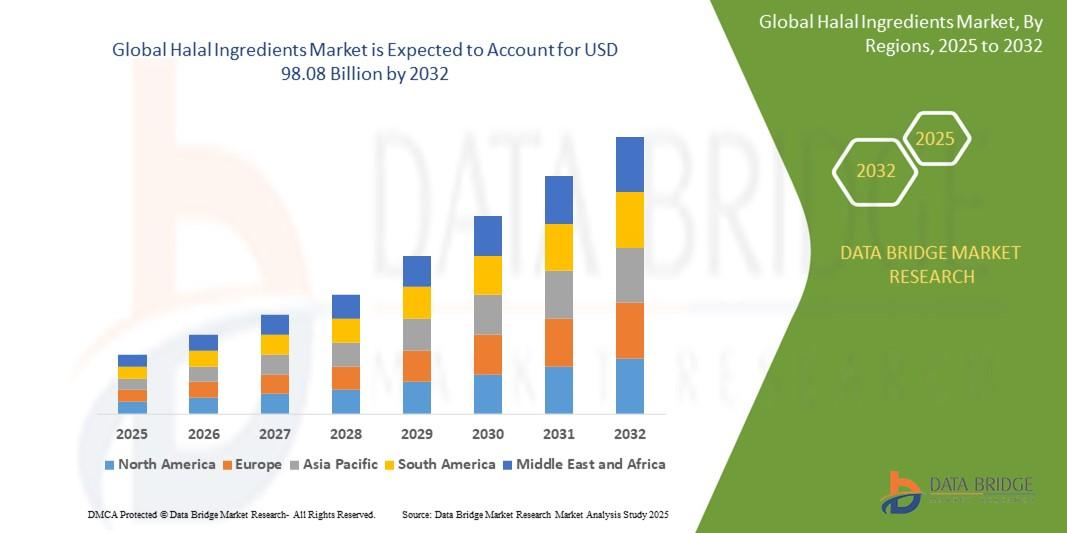
According to the latest report published by Data Bridge Market Research, the Halal Ingredients Market CAGR Value The global halal ingredients market size was valued at USD 61.30 billion in 2024 and is expected to reach USD 98.08 billion by 2032, at a CAGR of 6.05% during the forecast period Halal Ingredients Market report endows with the...
A flat tire can happen at any time, whether you’re driving in the city, on a highway, or in a rural area. It often occurs without warning and can feel stressful or even dangerous if you are not prepared. Knowing how to respond calmly and safely can prevent accidents and reduce damage to your vehicle. In some cases, professional help such as an Auto repair shop in Lubbock County, Texas may...