lucknow.blogsubmission.in
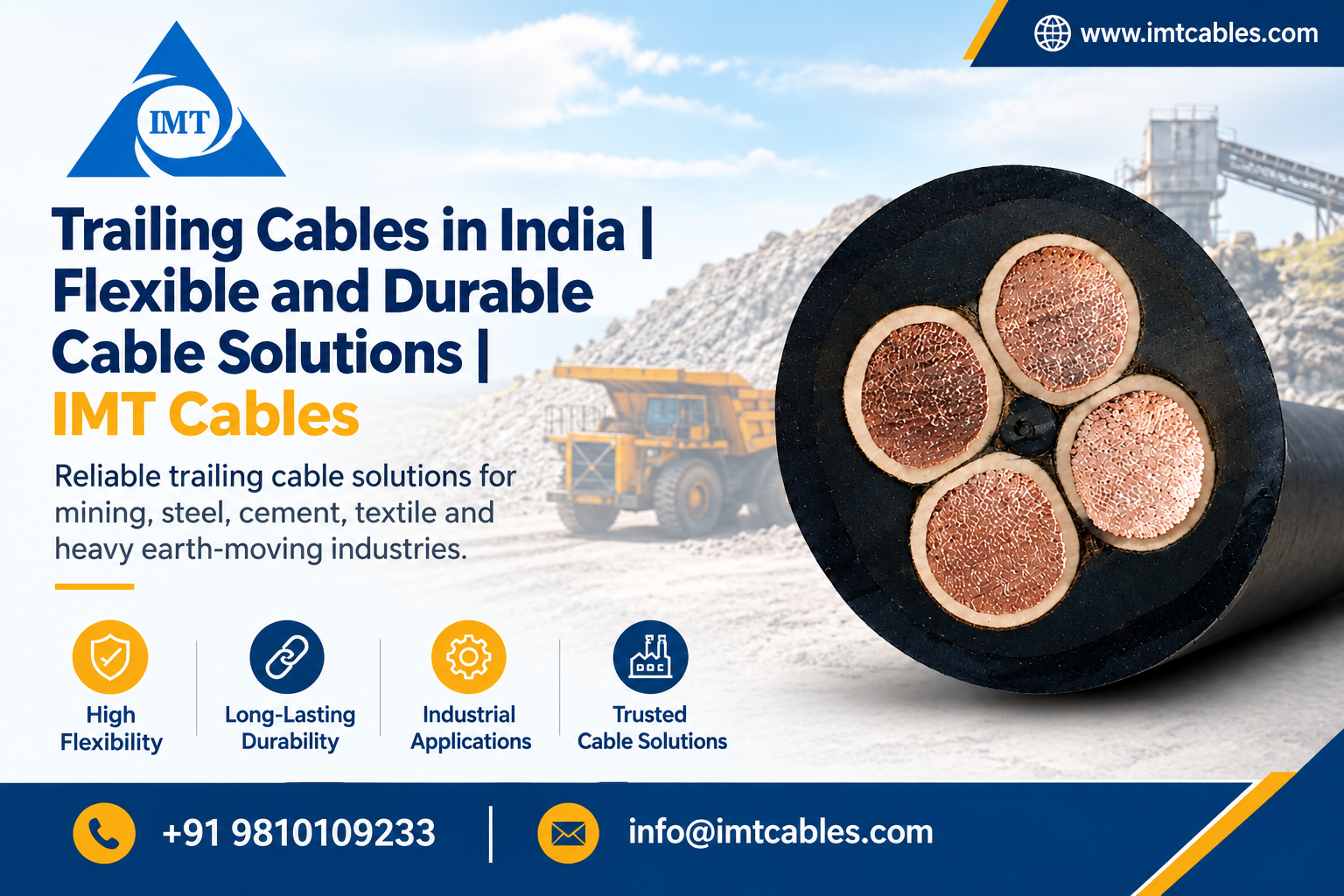
Industrial facilities across India rely on machinery that moves — cranes travel along gantries, mining shovels dig and reposition, and conveyor systems shift with the load. Keeping power flowing to this moving equipment safely and reliably is not a job for ordinary wiring. This is where Trailing Cables come in. Designed to handle continuous flexing, bending and mechanical stress, Trailing Cables are a critical but often overlooked component of industrial power infrastructure. As Indian industries such as steel, mining, cement and textiles continue to scale up operations, choosing the right cable solution has become essential for minimizing downtime and maintaining safe, uninterrupted power supply. This article explains what Trailing Cables are, where they are used, and what to consider when selecting them for your industrial application. What Are Trailing Cables? Trailing Cables are specially constructed power cables designed to supply electricity to machinery and equipment that moves during operation. Unlike fixed installation cables, which stay in one position once laid, Trailing Cables are built to be repeatedly flexed, dragged, coiled and uncoiled as the connected equipment travels. Their core purpose is straightforward: deliver consistent electrical power to mobile or semi-mobile machinery without failing under the physical strain of constant movement. Because of this, flexibility and durability aren’t optional extras for these cables — they are fundamental design requirements. A cable that cracks, frays or loses conductivity after a few weeks of movement can bring an entire production line or excavation site to a halt. This makes Industrial Trailing Cables fundamentally different from standard wiring, and it’s why industries with heavy machinery movement specifically look for cables engineered for this purpose. Key Features of Trailing Cables When evaluating Trailing Cable Solutions for an industrial setting, a few core characteristics matter most: Flexibility for moving equipment – The cable construction must allow repeated bending and flexing cycles without damaging internal conductors or insulation. Durability for demanding industrial environments – Trailing Cables are often exposed to dust, oil, moisture, abrasion and temperature variations, and need to withstand these conditions over time. Suitability for repeated movement – Whether it’s a crane traveling back and forth or a mobile crusher repositioning on site, the cable must tolerate ongoing mechanical stress without premature wear. Reliable power transmission – Consistent, uninterrupted electrical supply is essential to avoid equipment downtime or safety hazards. Application-specific cable selection – Not every trailing cable is suited to every environment; the right choice depends on the equipment, movement pattern and site conditions. These features work together to ensure that Flexible Trailing Cables perform safely over the operational life of the connected machinery, rather than needing frequent replacement. Industrial Applications of Trailing Cables Trailing Cables are used wherever machinery needs to move while remaining powered. Some of the most common sectors include: 1. Steel Industries Steel plants use overhead cranes, ladle cars and other mobile handling equipment that require a continuous power connection while traveling along fixed or semi-fixed paths. Trailing Cables help maintain this connection despite frequent motion. 2. Mining Industries Mining is one of the most demanding applications for cable performance. Excavators, draglines, continuous miners and conveyor shifting equipment all depend on Trailing Cables for Mining that can handle abrasive conditions, vibration and long cable runs across active sites. 3. Cement Industries Cement plants often involve mobile stacking, reclaiming and material handling equipment. Reliable power delivery through appropriately rated Trailing Cables supports consistent plant operation. 4. Textile Industries In textile manufacturing, certain machines and material handling systems move along production lines, requiring cables that can flex repeatedly without interrupting power supply. 5. Heavy Earth Movers Earth-moving equipment used in construction and mining — such as mobile crushers and shovels — depends on power cables engineered to endure constant repositioning, harsh terrain and outdoor exposure. Across each of these applications, the common thread is the same: equipment moves, and the cable powering it must be built to move with it, reliably and safely. Trailing Cables in India – Choosing the Right Cable Solution Selecting the right Trailing Cable Solutions isn’t a one-size-fits-all decision. Several factors should guide the selection process: Equipment movement and operating conditions – How far and how frequently does the equipment travel? What kind of flexing or dragging will the cable experience? Required cable length – Longer runs may involve different handling and support considerations than shorter ones. Electrical requirements – Voltage, current rating and load characteristics of the connected machinery. Environmental conditions – Exposure to dust, moisture, chemicals, temperature extremes or abrasive surfaces. Applicable standards – Compliance with relevant Indian and international cable standards relevant to the application. Client-specific requirements – Some installations call for custom lengths, configurations or additional protective features based on site needs. Because every industrial site is different, cable selection should always be based on the specific equipment and application in question, ideally in consultation with an experienced cable manufacturer, rather than choosing a generic option. Why Choose IMT Cables for Trailing Cable Solutions? IMT Cables manufactures Trailing Cables designed for industrial use across sectors that depend on moving machinery. The company’s cables are supplied for trailing applications in steel, mining, cement, textile and heavy earth-moving industries — sectors where dependable, flexible power delivery is essential to daily operations. IMT Cables’ Trailing Cables are manufactured as per BIS 9968 Part I & II and BIS 14494, tailored according to client requirements. This standards-based approach allows the cables to be configured for the specific demands of different industrial environments and equipment types. For businesses evaluating Heavy-Duty Trailing Cables for their operations, reviewing detailed product information can help in making an informed choice. You can find more details on IMT Cables’ Trailing Cable Solutions page. Benefits of Using Suitable Trailing Cables Choosing cables that are properly matched to your equipment and environment offers several practical advantages: Supports operational reliability – A cable built for the intended movement pattern is less likely to fail unexpectedly during operation. Reduces cable-related interruptions when properly selected – Matching cable specifications to actual site conditions helps avoid avoidable downtime