


Premium IPTV: Complete Guide to the Best Services in 2026
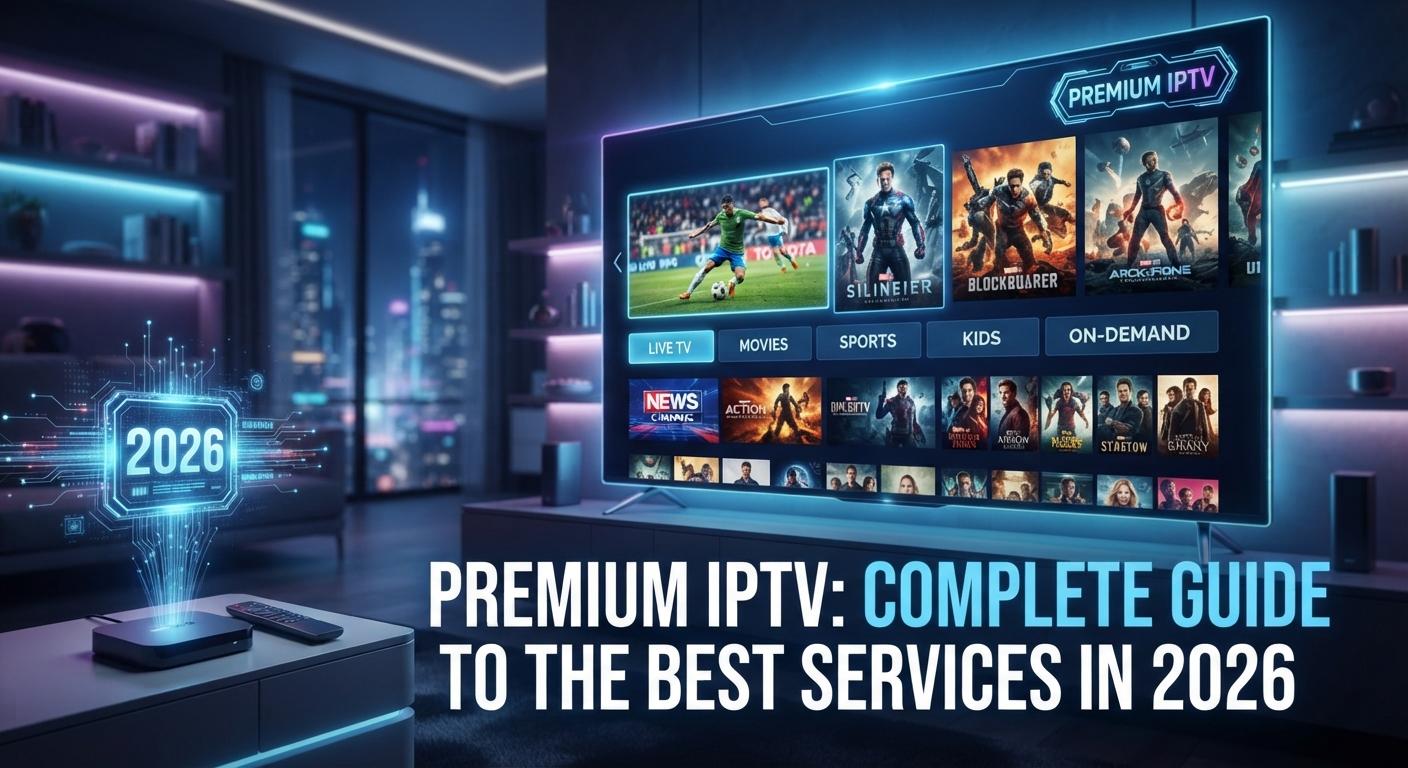
Finding the right Premium IPTV service in 2026 can be confusing. With hundreds of providers promising thousands of channels, Full HD streaming, 4K content, and reliable performance, it is difficult to know which features actually matter.
This guide explains how Premium IPTV works, what to look for before subscribing, which devices and players are commonly compatible, and how M3U and Xtream Codes setup methods work. It also covers internet-speed requirements, VPN considerations, streaming stability, and the importance of using services that have the appropriate broadcasting rights.
Whether you are new to IPTV or looking to replace an existing service, this guide will help you understand the technology and make a more informed choice.
What Is Premium IPTV?
IPTV stands for Internet Protocol Television. Instead of delivering television programming through traditional cable, satellite, or terrestrial signals, IPTV sends video content over an internet connection.
The word "Premium" generally refers to services that focus on better streaming quality, broader channel selections, reliable servers, electronic program guides, multiple device options, and additional features.
However, the term Premium IPTV does not automatically guarantee quality. Providers can use the same label while offering very different levels of service. For that reason, it is more useful to examine the actual features behind the name.
How Does Premium IPTV Work?
A typical IPTV service provides access to television channels, movies, series, or other video content through an internet-based platform. Depending on the provider, users may receive their service through an M3U playlist, Xtream Codes credentials, a dedicated application, or another supported method.
When you select a channel, the IPTV player connects to the provider's streaming server and receives the video data continuously. Your device then decodes and displays the content.
This process makes server performance extremely important. A fast internet connection alone cannot compensate for overloaded or unstable streaming servers.
Streaming Quality: HD, Full HD, and 4K
Picture quality is one of the first features people examine when choosing Premium IPTV.
Standard HD can provide a good viewing experience on smaller screens, while Full HD offers greater detail and is particularly noticeable on larger televisions. 4K provides even higher resolution, but it also requires suitable hardware, sufficient bandwidth, and a genuine 4K source.
A service advertising 4K does not necessarily mean every channel is available in native 4K. Some channels may only be available in HD or Full HD.
Therefore, look beyond marketing claims. Check whether the service clearly identifies its available resolutions and whether the streams remain stable during high-demand periods.
Server Stability Matters More Than Channel Numbers
A provider may advertise thousands of channels, but an enormous channel list has limited value if streams frequently buffer or disconnect.
Server stability affects the overall viewing experience. Good IPTV infrastructure should handle normal traffic without excessive interruptions, particularly during popular sporting events and major television broadcasts.
When comparing services, consider:
-
Stream loading speed
-
Buffering frequency
-
Server uptime
-
Performance during peak hours
-
Channel switching speed
-
Stability of HD and 4K streams
A smaller, well-maintained channel selection can sometimes provide a smoother experience than an enormous but poorly managed library.
EPG: A Small Feature With Major Benefits
EPG stands for Electronic Program Guide. It works much like a traditional television guide by showing information about current and upcoming programs.
A useful EPG can display program names, schedules, descriptions, and sometimes information about upcoming broadcasts. This makes it easier to browse channels without opening each stream individually.
For regular television viewers, accurate EPG information can significantly improve the usability of an IPTV service.
Device Compatibility
The best Premium IPTV service is only useful if it works properly on your preferred devices.
Commonly supported platforms include:
-
Android smartphones and tablets
-
Android TV devices
-
Smart TVs
-
Amazon Fire TV devices
-
Apple devices
-
Windows computers
-
Mac computers
-
IPTV-compatible set-top boxes
Compatibility can vary between providers and IPTV players. Before purchasing a subscription, check whether the service supports your operating system and preferred application.
Multi-device support is another useful feature, especially for households where television, phone, tablet, and computer viewing are all part of the routine.
Popular IPTV Players
An IPTV player is the software used to access and organize IPTV streams. The player itself usually does not provide television channels; it acts as the interface through which compatible IPTV credentials or playlists are loaded.
Depending on the platform, users may encounter players such as IPTV Smarters, TiviMate, VLC, and other IPTV applications.
Features can include favorites, channel categories, EPG integration, subtitles, multiple playlists, parental controls, and recording support.
The best player depends on the device and the features you actually need. A simple player may be sufficient for casual viewing, while advanced users may prefer stronger playlist management and customization options.
M3U and Xtream Codes Explained
Two common IPTV setup methods are M3U playlists and Xtream Codes.
An M3U playlist is a file or playlist address containing information about available streams. Once loaded into a compatible IPTV player, the application can organize the channels into categories.
Xtream Codes typically uses a server address, username, and password supplied by the IPTV provider. Compatible players can use these credentials to retrieve channel lists, EPG information, and other service data.
The setup process varies by application, but the general approach is straightforward: install a compatible player, select the appropriate login method, enter the credentials supplied by the provider, and allow the application to load the available content.
How Much Internet Speed Does IPTV Need?
Your internet connection should be fast enough to handle the stream without competing traffic causing interruptions.
As a general guide, around 5–10 Mbps may be suitable for many HD streams, while Full HD can require more consistent bandwidth. 4K streaming can require substantially more, often around 25 Mbps or higher depending on compression, stream quality, and provider infrastructure.
Speed is only part of the equation. Connection stability, latency, Wi-Fi quality, router performance, and network congestion can also affect playback.
For demanding 4K viewing, a wired Ethernet connection can often provide greater consistency than a congested wireless network.
Should You Use a VPN With IPTV?
A VPN, or Virtual Private Network, encrypts internet traffic between your device and the VPN server and can change the apparent location of your connection.
Some people use VPNs when accessing legitimate streaming services for privacy or network-management reasons. A VPN can also help in situations where an internet provider's routing causes connection problems.
However, a VPN does not make unauthorized streaming legal. Users should always verify that the IPTV provider has the necessary rights to distribute the content.
VPN performance can also vary. A distant or overloaded VPN server may reduce connection speed and create additional buffering.
Broadcasting Rights Are Essential
One of the most important considerations when selecting Premium IPTV is legality.
IPTV is simply a method of delivering television content over the internet. The technology itself is not inherently illegal. The important question is whether the provider has the appropriate rights or licenses to distribute the channels and content it offers.
Be cautious when a service promises premium channels, major sports packages, movies, and international networks at unusually low prices without explaining its licensing arrangements.
A legitimate provider should be able to provide reasonable information about the content it distributes and its authorization to offer that programming.
What Should You Check Before Choosing a Service?
Before subscribing, create a simple checklist:
-
Does it support your preferred device?
-
Are Full HD and 4K streams genuinely available?
-
How stable are the servers?
-
Is the EPG accurate and regularly updated?
-
Does the service offer an appropriate setup method?
-
Are customer support options available?
-
Are pricing and subscription terms clearly explained?
-
Does the provider have appropriate broadcasting rights?
-
Can your internet connection handle the advertised stream quality?
-
Are the advertised channels actually relevant to your viewing habits?
This approach is more reliable than choosing a provider based only on the number of channels advertised.
Final Thoughts
Premium IPTV has changed how many people think about television access, combining traditional channel-based viewing with the flexibility of internet streaming. Yet the quality of an IPTV experience depends on much more than a large channel list.
Streaming resolution, server stability, EPG accuracy, device compatibility, player support, internet performance, and legitimate broadcasting rights all deserve attention before choosing a service.
As IPTV technology continues to develop, viewers will likely have access to better interfaces, improved streaming quality, and more flexible viewing options. The more important question is whether providers can deliver those improvements while maintaining reliable infrastructure and proper content rights.
For anyone comparing Premium IPTV services in 2026, looking beyond the sales pitch and examining the technology, performance, and legality behind the service is the practical way to choose.
FAQs About Premium IPTV
What is Premium IPTV?
Premium IPTV refers to internet-based television services that typically emphasize features such as high-resolution streaming, extensive channel selections, EPG support, device compatibility, and server performance.
Is Premium IPTV legal?
IPTV technology is legal, but the legality of a particular service depends on whether it has the necessary rights to distribute its television channels and other content. Users should verify the provider's broadcasting authorization.
Can I watch Premium IPTV in 4K?
Some services offer 4K streams. However, 4K availability depends on the source content, provider infrastructure, compatible hardware, and sufficient internet bandwidth.
What is an M3U playlist?
An M3U playlist contains information that an IPTV-compatible player can use to organize and access streaming channels or other media sources.
What are Xtream Codes?
Xtream Codes is a commonly supported IPTV login method using credentials such as a server address, username, and password. Compatible players can use these details to load available content.
Does IPTV work on Smart TVs?
Many IPTV services and players support Smart TVs, but compatibility depends on the television's operating system, the IPTV application, and the provider.
Is a VPN required for IPTV?
A VPN is not inherently required to use IPTV. Some users choose one for privacy or network-routing purposes. A VPN does not replace the need to use a service that has appropriate content distribution rights.
How fast should my internet be for IPTV?
The required speed depends on stream quality and compression. HD may work with relatively modest bandwidth, while stable 4K streaming generally requires significantly more bandwidth and a reliable connection.
Why does IPTV buffer?
Buffering can result from insufficient bandwidth, Wi-Fi congestion, network instability, overloaded IPTV servers, distant routing, or problems with the source stream. Testing the same service on a stable wired connection can help identify whether the network or provider is responsible.
What makes a Premium IPTV service worth considering?
Look at the complete service rather than one feature. Reliable servers, suitable picture quality, accurate EPG data, device compatibility, useful player support, transparent pricing, responsive support, and appropriate broadcasting rights are all important factors.
Categorieën
Meer lezen
According to the latest report published by Data Bridge Market Research, the Organic Quinoa Flour Market Data Bridge Market Research analyses that the organic quinoa flour market was valued at USD 133.26 million in 2021 and is expected to reach the value of USD 212.40 million by 2029, at a CAGR of 6.00% during the forecast period. The large scale Organic Quinoa Flour Marketing report...

When businesses consider Waist Support products, the conversation can begin with a simple question: how should the product fit into real daily routines? Steriger develops support-oriented product concepts with attention to construction, materials, adjustability, appearance, and practical use. For buyers creating or expanding a product range, these elements can help shape a waist-support...

MB88 is an online entertainment and betting platform designed to provide users with a wide variety of exciting gaming options in one convenient place. The platform focuses on delivering a smooth, professional, and enjoyable experience for players who are interested in sports betting, live casino entertainment, card games, slot games, and other reward-based gaming activities. With a simple...

筛号平台的出现,看似只是账号交易市场的一次技术升级,但当我真正深入观察后,才意识到它正在悄悄改变内容生态的底层逻辑。过去,人们谈论账号买卖时,总带着一种“灰色地带”的刻板印象,仿佛那是一个隐秘、混乱、缺乏规则的市场。然而如今,筛号平台的兴起让这一行业逐渐呈现出一种更精细化、更数据化的趋势,甚至带着几分“产业化”的味道。了解更多 筛号平台 ,访问 nexcheck.net 我第一次接触筛号平台,是因为朋友想做短视频带货,却苦于新号没有流量。他随口提到:“现在都用筛号平台挑号,省心。”这句话让我产生好奇:挑号还能挑出什么门道?于是我开始研究这些平台的运作方式。...

Building a wardrobe that combines style, comfort, and practicality doesn't always require buying the latest fashion trends. Instead, it starts with choosing versatile, high-quality essentials that work together effortlessly. Two wardrobe staples that often go unnoticed—but make a significant impact—are a premium jersey and a quality pair of socks. Whether you're dressing for...