


Electronic Toll Collection Market Size and Growth 2035
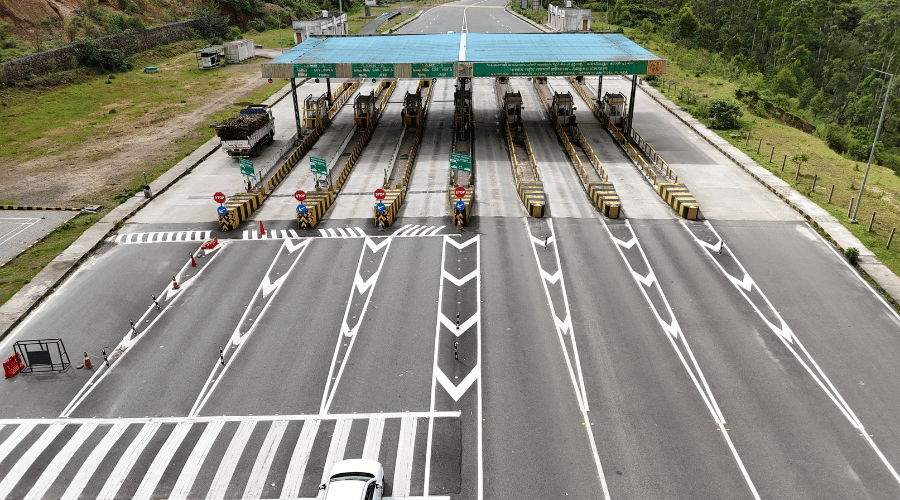
The electronic toll collection market is transforming how governments, highway operators and urban authorities collect road-use fees. Instead of requiring drivers to stop at conventional toll booths, electronic tolling uses technologies such as RFID, dedicated short-range communications (DSRC), GPS/GNSS and video analytics to identify vehicles, calculate charges and process payments digitally.
The global electronic toll collection market was valued at approximately USD 14.07 billion in 2025 and is projected to reach USD 31.52 billion by 2035, expanding at a CAGR of 8.40% between 2026 and 2035, based on the market figures provided for this analysis.
The importance of ETC extends beyond faster payments. Modern tolling systems can support free-flow traffic, congestion pricing, distance-based road charging, urban access management and more efficient transportation funding. They can also reduce the need for physical toll plazas, which can improve traffic throughput and lower some operating requirements.
Technology is also broadening the addressable market. RFID and DSRC remain important for vehicle identification, while GNSS enables distance- and location-based charging without requiring extensive roadside infrastructure. Video analytics and automatic number plate recognition can complement electronic tags by identifying vehicles that do not carry an onboard transponder.
As governments seek smarter ways to fund transportation infrastructure and manage congestion, electronic toll collection is evolving from a payment mechanism into a broader road-user management platform.
What Is Driving Growth in the Electronic Toll Collection Market?
Electronic toll collection is growing because transportation authorities need faster, more flexible and increasingly automated methods of collecting road charges. Urbanization, highway expansion, congestion management and the digitization of payments are all strengthening demand for ETC systems.
Traditional toll plazas require vehicles to slow down or stop, creating bottlenecks during periods of high traffic. Electronic tolling allows transactions to occur while vehicles continue moving, improving throughput and creating the foundation for all-electronic and multi-lane free-flow systems.
The U.S. Federal Highway Administration identifies electronic pricing and toll collection as part of advanced transportation technologies, including applications involving high-occupancy toll lanes and congestion pricing.
This flexibility is becoming increasingly important as governments move toward more sophisticated road-pricing models. Rather than applying a uniform charge, authorities can potentially vary fees according to road segment, time of day, vehicle category, congestion level or environmental characteristics.
Another important driver is the pressure to maintain transportation infrastructure. Fuel taxes have historically been a major source of road funding in many markets, but the growth of fuel-efficient and electric vehicles can weaken fuel-tax revenues. Digital road-user charging provides an alternative mechanism in which charges can be tied more directly to road usage.
The emergence of smart cities is creating another demand center. Urban authorities can use electronic tolling to manage access to congested areas, potentially integrating tolling with parking, traffic-management and public-transport systems.
Consequently, the ETC market is increasingly being evaluated not only on how efficiently it collects a toll, but also on how effectively it supports broader transportation policy.
How Is Free-Flow Tolling Changing Road Infrastructure?
Free-flow tolling allows vehicles to pass through tolling points without stopping at a conventional booth. Gantries or roadside equipment identify vehicles and record transactions as they travel at normal highway speeds.
The Federal Highway Administration's technology research describes electronic tolling as a system that can automate toll collection, improve throughput at checkpoints and reduce traffic incidents associated with stopping at toll facilities.
Multi-lane free-flow systems are particularly valuable on busy highways because they eliminate the need to channel vehicles into dedicated toll lanes. This can simplify road design and reduce the physical footprint of toll collection.
The transition also changes the technology requirements. A free-flow system needs accurate vehicle detection, classification, identification, transaction processing and enforcement. It must also handle exceptions, including vehicles without tags, incorrect vehicle classifications and unpaid charges.
This is why modern ETC deployments increasingly combine several technologies rather than relying on a single identification method.
How Do RFID, DSRC, GPS and GNSS Technologies Work Together?
RFID, DSRC, GPS/GNSS and video analytics serve different roles within electronic toll collection, and many advanced systems combine multiple technologies to improve accuracy, flexibility and enforcement.
RFID-based systems use electronic tags attached to vehicles and roadside readers to identify passing vehicles. The approach is well established and can support high-speed transactions without requiring drivers to stop. FHWA describes RFID tags and readers as core components of electronic tolling systems, with roadside cameras often used to capture license plates and validate vehicle identification.
DSRC uses short-range wireless communication between an onboard unit and roadside equipment. It has been widely used for tolling because it can establish rapid, reliable communication as a vehicle passes a tolling point.
GPS and GNSS-based tolling work differently. Instead of identifying a vehicle only when it passes a physical gantry, satellite positioning can determine where the vehicle travels and calculate charges based on distance, road category or geographic zones.
This distinction is commercially important. Kapsch TrafficCom describes GNSS tolling as a way to reduce the need for extensive roadside infrastructure while supporting charging models based on criteria such as road type, vehicle classification, axle count and emissions category.
Video analytics provides another layer. Cameras can capture license plates and classify vehicles, allowing authorities to charge vehicles without onboard tags or enforce transactions when electronic identification fails.
The result is a technology ecosystem in which RFID and DSRC can provide highly accurate point-based identification, GNSS can enable flexible location-based charging, and video systems can support enforcement and tagless transactions.
Why Are GNSS and Location-Based Tolling Becoming More Important?
GNSS-based tolling is gaining attention because it can support distance- and location-based charging with substantially less roadside infrastructure than traditional plaza-based systems. This makes it attractive for nationwide truck tolling, road-user charging and urban pricing schemes.
A conventional tolling network may require gantries, roadside readers, cameras and associated communications infrastructure at numerous locations. GNSS changes the equation by using satellite positioning and digital maps to determine where a vehicle travels.
This can be particularly useful for heavy commercial vehicles. A truck traveling across an extensive road network can potentially be charged according to distance, road category or vehicle characteristics without requiring toll plazas at every relevant section.
Kapsch's current GNSS solution supports both segment-based and distance-based charging and can incorporate data from dedicated onboard units, fleet telematics, smartphones and connected vehicles.
Location-based charging also creates opportunities beyond conventional highway tolls. Cities can establish charges for defined zones or specific time windows, potentially using pricing to influence traffic demand and improve air quality.
However, GNSS is not automatically superior to every other technology. Satellite positioning requires sophisticated mapping, rating and enforcement systems, and authorities must address positioning accuracy, privacy and data management. Hybrid approaches that combine GNSS with DSRC, cellular communications and video enforcement can therefore be more practical for complex environments.
How Are Highways and Urban Areas Expanding ETC Applications?
Highways remain the largest traditional application for electronic toll collection, but urban areas are becoming an increasingly important growth opportunity as authorities explore congestion pricing and controlled-access zones.
On highways, ETC improves transaction speed and supports the transition from conventional toll plazas toward all-electronic tolling. It can be deployed on bridges, tunnels, expressways and managed lanes, where reliable vehicle identification and rapid payment processing are particularly important.
The technology is also useful for heavy-vehicle charging. Truck tolling can be based on distance, vehicle weight, axle configuration or emissions characteristics, allowing charges to more closely reflect infrastructure use and environmental impact.
Urban tolling has a different objective. Instead of simply raising revenue to fund a road or bridge, cities may use electronic charging to influence when and where vehicles travel.
A congestion charge can be applied to a central business district during peak periods, for example, while lower or zero charges can apply at other times. Such systems require reliable vehicle detection and sophisticated back-office platforms capable of calculating charges and processing payments at large scale.
The European Commission recognizes electronic tolling as a mechanism capable of supporting flexible charging policies while emphasizing the importance of interoperability across national borders.
This makes ETC increasingly relevant to broader intelligent transportation strategies rather than merely toll-road operations.
How Can ETC Support Smart-City Transportation?
Electronic toll collection can become part of a larger smart-mobility platform by linking road pricing with traffic management, parking, public transportation and digital payment services.
The ability to identify vehicles digitally allows cities to create more targeted transportation policies. For example, a congestion charge could vary according to location and time, while electronic enforcement can operate without requiring physical toll booths.
The same digital infrastructure can also generate transportation data that helps authorities understand traffic flows and evaluate whether pricing policies are changing travel behavior.
However, smart-city ETC requires careful governance. Road-pricing data can be sensitive because it may reveal where vehicles have traveled. Strong data-security policies and clear retention rules are therefore essential.
How Is Interoperability Shaping the European Electronic Tolling Market?
Interoperability is one of the most important issues in electronic toll collection because drivers and commercial operators increasingly travel across multiple tolling jurisdictions. A system that works only within one national or regional network can create administrative complexity for users.
The European Union has developed the European Electronic Toll Service (EETS) specifically to address this challenge. The framework is intended to allow road users to use a single contract and onboard unit for electronic toll payments across participating toll domains.
This is especially important for freight transportation. A truck traveling across several European countries should ideally not require a separate tolling device or payment arrangement for every national system.
Interoperability is technically challenging because tolling authorities can use different technologies, pricing rules, enforcement processes and data formats. The onboard equipment must also meet the requirements of different toll domains.
Current industry solutions increasingly support hybrid onboard units capable of working with both GNSS and DSRC. Kapsch, for example, describes hybrid GNSS/DSRC onboard units designed to accommodate different national technical and certification requirements.
The European Commission has continued working on EETS implementation. In December 2025, the Commission issued guidance concerning fair remuneration for EETS providers, highlighting the commercial importance of creating a stable framework for interoperable tolling services.
Interoperability will therefore remain a major differentiator as tolling networks become more digitally connected.
What Are the Regional Trends in the Electronic Toll Collection Market?
North America has a mature electronic tolling ecosystem, Europe is emphasizing interoperability and cross-border services, while Asia Pacific offers substantial growth potential through highway expansion, urbanization and smart-transport investment.
What Is the Outlook for North America?
North America has extensive experience with electronic toll collection, particularly across toll highways, bridges, tunnels and managed lanes. The region has also been an important testing ground for all-electronic tolling and congestion-management applications.
The U.S. market increasingly connects ETC with broader transportation objectives, including high-occupancy toll lanes and variable pricing. Federal transportation programs explicitly support electronic pricing and toll collection technologies as part of advanced transportation systems.
The installed base of electronic tolling infrastructure provides a strong foundation for upgrades toward cloud-based back offices, improved video enforcement and more flexible payment services.
Why Is Europe a Key Market for Electronic Tolling?
Europe is strategically important because of its extensive cross-border road freight activity and diverse national tolling systems. This makes interoperability particularly valuable.
European regulations have established a framework for electronic road-toll interoperability and cross-border enforcement, while EETS aims to simplify toll payment through standardized service arrangements.
The region is also exploring increasingly sophisticated distance-based and emissions-related charging schemes, particularly for heavy vehicles. GNSS technology is well suited to such applications because it can calculate road usage without requiring a dense network of tolling gantries.
Why Does Asia Pacific Offer Strong Growth Potential?
Asia Pacific presents significant opportunities because of rapid urbanization, highway construction, expanding vehicle ownership and investment in intelligent transportation systems.
Large road networks require scalable tolling infrastructure, and electronic collection can improve throughput while reducing reliance on manual toll booths. Countries with extensive expressway networks can also use ETC to support nationwide digital road-payment ecosystems.
The region's rapid adoption of mobile payments and connected technologies creates additional opportunities to integrate toll payments with digital wallets, mobile applications and vehicle systems.
Latin America and the Middle East and Africa are also developing ETC opportunities as governments invest in highway infrastructure, concession-based road projects and smart-city transportation systems.
Who Are the Leading Companies in the Electronic Toll Collection Market?
The competitive landscape includes specialist tolling providers, transportation-technology companies, industrial technology groups and systems integrators. The ability to deliver complete solutions spanning roadside equipment, onboard units, software, enforcement and payment processing is becoming increasingly important.
The companies covered in the market include Kapsch TrafficCom AG, TransCore Holdings, Inc., Thales Group and Honeywell International, Inc., along with EFKON GmbH and other participants.
Kapsch TrafficCom has a broad tolling portfolio spanning tag-based systems, video tolling, multi-lane free-flow systems and GNSS-based charging. Its technology portfolio illustrates the industry's shift toward supporting multiple tolling architectures rather than depending on one identification method.
Thales brings expertise in transportation payment and transaction-management systems. Its tolling solutions emphasize free-flow transactions, combining roadside communication with high-performance transaction processing.
TransCore is another established participant in electronic tolling and intelligent transportation systems, while Honeywell contributes expertise in identification, sensing and automation technologies that can support transportation applications.
EFKON is also active in intelligent transportation and electronic tolling, particularly in systems integrating roadside equipment, communications and traffic-management functions.
Competition is increasingly centered on total system performance. Authorities want accurate vehicle identification, high transaction reliability, flexible pricing, strong cybersecurity and efficient enforcement. Vendors that can combine these capabilities into scalable platforms are well positioned to compete for large infrastructure projects.
What Challenges Could Restrain Electronic Toll Collection Market Growth?
The main challenges include high deployment costs, interoperability requirements, cybersecurity, privacy concerns, enforcement complexity and the need to maintain reliable transaction accuracy.
Although electronic tolling can reduce the need for staffed toll booths, sophisticated infrastructure is still required. Cameras, readers, gantries, communications networks, back-office systems and payment platforms all need to work together.
Enforcement can be particularly difficult when vehicles travel without valid tags or when license plates are obscured, incorrectly recorded or associated with outdated registration information. Video analytics can help, but it introduces additional data-processing and privacy considerations.
Interoperability is another persistent challenge. Different jurisdictions may use different technologies and pricing structures. The European Commission's work on EETS demonstrates that technical compatibility alone is insufficient; commercial and regulatory arrangements also need to be aligned.
Privacy is increasingly important as tolling systems collect information about vehicle movements. Authorities and operators need strong cybersecurity and data-governance frameworks to protect users while still enabling enforcement.
Finally, public acceptance matters. Road pricing can become politically sensitive, especially when users perceive tolls as an additional financial burden. Transparent pricing, reliable payment systems and visible reinvestment in transportation infrastructure can help improve acceptance.
What Is the Outlook for the Electronic Toll Collection Market Through 2035?
The electronic toll collection market is moving toward more flexible, infrastructure-efficient and data-driven road charging. Based on the supplied forecast, the market is expected to more than double from USD 14.07 billion in 2025 to USD 31.52 billion by 2035, representing an 8.40% CAGR.
The next phase of growth will likely involve the convergence of RFID, DSRC, GNSS, video analytics, cloud computing and connected-vehicle technologies. Instead of deploying one technology across every road, authorities can select combinations according to traffic patterns, road design, enforcement requirements and pricing objectives.
GNSS-based road-user charging is likely to receive particular attention because it can support nationwide and distance-based schemes without requiring extensive physical infrastructure. At the same time, DSRC and RFID will remain relevant where highly reliable point-based identification is required.
Connected vehicles could eventually reduce dependence on dedicated tolling hardware. As vehicles increasingly contain built-in connectivity and precise positioning capabilities, some tolling functions could potentially move into the vehicle itself.
The long-term opportunity extends beyond toll collection. Digital road pricing can become a tool for congestion management, environmental policy and transportation planning. Authorities can potentially charge according to location, time, vehicle type, distance or emissions rather than relying exclusively on fixed toll points.
Conclusion
The electronic toll collection market is evolving from a replacement for cash-based toll booths into a sophisticated digital platform for managing road usage. Its value increasingly lies not only in automating payments but also in enabling faster traffic movement, flexible pricing, congestion management and more efficient infrastructure funding.
The market's projected expansion from USD 14.07 billion in 2025 to USD 31.52 billion by 2035 reflects the growing need for scalable digital road-charging systems.
RFID and DSRC will remain important for established tolling environments, while GNSS is opening new possibilities for distance-based and location-based charging. Video analytics strengthens enforcement and provides a practical solution for vehicles without electronic tags.
Regional priorities will differ. North America is building on mature ETC infrastructure, Europe is focused heavily on interoperability and cross-border tolling, and Asia Pacific is creating opportunities through highway development and smart-transport investment.
The most important shift, however, is conceptual. Electronic tolling is becoming part of a broader intelligent transportation ecosystem. When combined with connected vehicles, cloud platforms, digital payments and traffic-management systems, ETC can help authorities move from simply collecting tolls toward actively managing how road networks are used.
Companies capable of delivering reliable identification, accurate charging, interoperable platforms, secure data management and flexible pricing will be best positioned to benefit as governments and transportation operators modernize road-user charging through 2035.
Catégories
Lire la suite
Facebook has become more than just a social media platform; it is a global space where people connect, share, and grow together. From building friendships to creating business opportunities, Facebook offers a powerful way to stay informed and engaged. It allows brands to reach audiences, communities to collaborate, and individuals to express their voices. With features like groups, marketplace,...

Black isn’t just a color—it’s a statement. In modern interiors, black doors suggest depth, intention, and a subtle luxury that doesn’t shout. From Haibo’s Interior Door Factory , black door designs are crafted to bring that quiet edge into real homes, not just showrooms. The question many homeowners ask is: Will black doors make my space feel too heavy? And...

Bathroom Fittings Supplier is one of the most common (and most avoidable) renovation headaches and it almost always traces back to one decision: choosing the wrong bathroom fittings supplier. Taps, showers, faucets, and fixtures aren't just accessories; they're used multiple times a day, every single day, for years. A poor choice doesn't just cost money — it costs comfort, water, and...

Buy Telegram Accounts Buy Telegram accounts can be a game-changer for businesses looking to expand their digital footprint. With millions of active users, Telegram offers an unparalleled platform for marketing and audience engagement.When you invest in these accounts, you’re not just acquiring profiles; you’re gaining access to established networks. This means instant connections...

Hinjewadi has rapidly transformed into one of Pune’s most preferred residential destinations. Known as the city’s major IT and business hub, this location attracts thousands of professionals and families looking for modern homes with excellent connectivity and lifestyle amenities. With continuous infrastructure development, premium residential projects, and growing investment...