

What Are the Least Damaging Hair Extensions? 7 Gentle Options for Healthier Hair
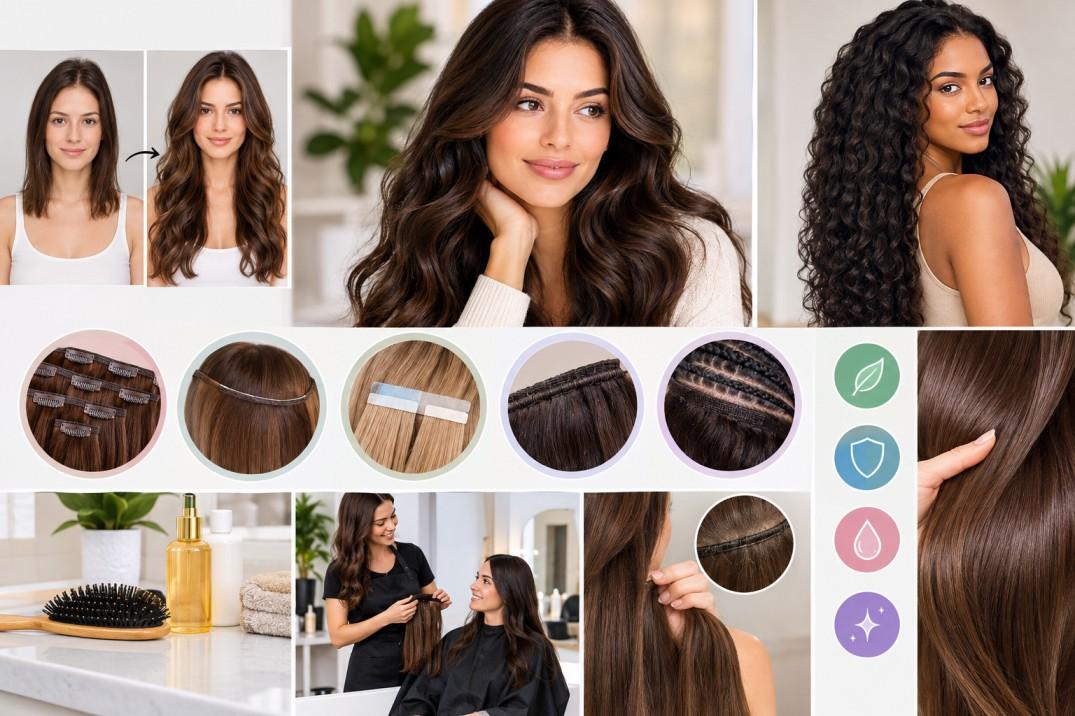
Hair extensions can transform short, fine, or lackluster hair into something stunning almost instantly—but the wrong method can leave your natural hair stressed, brittle, or broken. The good news? You don't have to sacrifice hair health for beautiful length and volume.
In this guide, you'll discover what are the least damaging hair extensions, which extension methods are gentlest on natural hair, what makes extensions damaging, and how to choose and maintain extensions for a healthy, radiant finish.
What Makes Hair Extensions Damaging?
Before choosing the least damaging option, it's important to understand what can put your natural hair under pressure.
Hair extensions themselves aren't necessarily damaging. The problem usually comes from excessive tension, improper installation, heavy extensions, poor-quality hair, or leaving extensions in too long.
Extensions can become especially problematic when they're attached tightly to fragile strands. Constant pulling may contribute to breakage, while excessive heat and chemical processing can weaken the hair shaft.
Your natural hair deserves tender treatment, so the goal is to find an extension method that adds length and volume without placing unnecessary stress on your roots.
What Are the Least Damaging Hair Extensions?
Generally, the least damaging hair extensions are those that are lightweight, properly installed, correctly maintained, and removed without pulling or cutting natural hair.
Here are some of the gentlest options to consider.
1. Clip-In Hair Extensions
Clip-ins are often considered one of the least damaging hair extensions because you can remove them whenever you want.
Instead of remaining attached to your hair continuously, clip-ins can be worn for a special occasion and removed before sleeping. This gives your natural hair a peaceful break.
They're particularly useful for people who want temporary length or volume without committing to a long-term installation.
Best for: Occasional wear, beginners, special events, and people concerned about long-term tension.
2. Halo Hair Extensions
Halo extensions use a nearly invisible wire or band that sits around the crown of your head, with the extension hair falling underneath.
Because the hair isn't individually bonded, taped, or tightly braided to your strands, there's generally less direct pulling on individual hairs. The result can be a graceful transformation with relatively little manipulation.
Halo extensions can be especially appealing for fine or delicate hair, provided the band fits comfortably.
Best for: Fine hair, temporary volume, beginners, and quick styling.
3. Tape-In Hair Extensions
Tape-ins are another popular option because the extension hair is distributed across wider sections rather than concentrated on a few individual strands.
When installed correctly and matched to the density of your natural hair, this distribution can create a seamless appearance while reducing concentrated pulling.
However, tape-ins aren't automatically damage-free. Poor installation, excessive weight, aggressive removal, or leaving them in beyond their recommended maintenance period can still cause problems.
Best for: People seeking semi-permanent extensions with a natural appearance.
4. Hand-Tied Wefts
Hand-tied wefts are thin, lightweight extension pieces designed to sit relatively flat against the head.
When installed by an experienced professional, they can provide luxurious volume without requiring excessive amounts of extension hair.
The key is proper tension. Even a lightweight method can become damaging if the wefts are installed too tightly or overloaded with hair.
Best for: Adding volume and length while maintaining a lightweight feel.
5. Sew-In Extensions
Sew-ins can be a good option for people with sufficiently strong, healthy hair, particularly when they're installed correctly by an experienced stylist.
The extension hair is typically attached to braided sections of natural hair, creating a secure installation without relying on adhesives.
However, tight braiding can create significant tension. If you experience persistent soreness, headaches, or scalp discomfort after installation, the extensions may be too tight.
Best for: Coarser or stronger hair types that can comfortably support the installation.
Which Hair Extension Method Is Best for Fine Hair?
Fine hair requires extra delicate care because individual strands generally have less structural strength and may not tolerate heavy extensions or excessive tension.
For many people with fine hair, clip-ins or halo extensions can be excellent choices because they don't need to remain attached continuously.
If you're interested in semi-permanent extensions, lightweight tape-ins may also work when they're properly matched to your hair's density and installed by a qualified professional.
A simple rule is worth remembering: the finer your natural hair, the lighter your extensions should be.
Are Human Hair Extensions Less Damaging?
High-quality human hair extensions can provide a beautiful and natural-looking result, but being made from human hair doesn't automatically make an extension method damage-free.
Damage depends more on the installation technique, extension weight, tension, maintenance, removal process, and your natural hair's condition.
Human hair extensions can be particularly useful because they can generally be styled and blended more naturally with your own hair.
However, repeatedly applying high heat to extensions can still create dryness and breakage.
Real-Life Example: Choosing Extensions for Fine Hair
Imagine Sarah has shoulder-length, fine hair and wants long waves for an upcoming wedding.
Instead of choosing a heavy permanent installation, her stylist recommends lightweight clip-ins. Sarah wears them for the wedding, enjoys silky waves throughout the evening, and removes them before going to bed.
Because the extensions aren't continuously pulling on her natural hair, she can enjoy the transformation without making long-term commitment part of the equation.
The lesson is simple: the best extension is the one that suits both your desired look and your natural hair's needs.
How to Make Hair Extensions Less Damaging
Even relatively gentle extensions require proper care. Your maintenance routine can make a dramatic difference.
Follow these golden rules:
- Choose extensions appropriate for your natural hair density.
- Avoid extensions that feel excessively heavy.
- Have permanent or semi-permanent extensions installed by an experienced professional.
- Never ignore scalp pain, excessive pulling, or persistent discomfort.
- Brush gently, starting from the ends and working upward.
- Use appropriate heat protection before styling.
- Avoid excessive heat whenever possible.
- Follow the recommended maintenance and removal schedule.
- Don't sleep with removable extensions such as clip-ins.
- Give your natural hair regular breaks when appropriate.
- Keep your scalp and natural hair clean according to your extension method.
- Replace worn-out extension pieces rather than continuously using damaged hair.
What Hair Extensions Should You Avoid If Your Hair Is Fragile?
If your hair is already experiencing noticeable breakage, severe dryness, or thinning, heavy or tightly attached extensions may not be the wise choice.
Methods that place substantial tension on individual strands deserve particular caution.
Likewise, extremely long extensions can be surprisingly heavy. Just because a dramatic length looks glamorous doesn't mean your natural hair can comfortably support it.
If your hair is fragile, consider temporary options or speak with a qualified stylist before committing to a long-term installation.
How Often Should You Give Your Hair a Break From Extensions?
There isn't one universal schedule because extension type, installation technique, hair density, and individual hair condition all matter.
However, your natural hair should never be treated as an unlimited foundation for extensions.
Pay attention to warning signs such as unusual shedding, breakage around attachment points, scalp tenderness, or difficulty styling your natural hair.
Healthy hair should remain the priority, even when you're chasing extra length and volume.
The Best Hair Extensions Are the Ones Your Hair Can Handle
There's no single extension method that's perfect for everyone.
For one person, clip-ins may be the gentlest solution. Someone with stronger, thicker hair may prefer a professionally installed sew-in, while another person may find lightweight tape-ins more suitable.
The secret isn't simply asking, "Which hair extensions are least damaging?"
A better question is: "Which extension method creates the look I want while placing the least unnecessary stress on my natural hair?"
That shift in thinking can help you make a much more confident choice.
FAQ: Least Damaging Hair Extensions
1. What are the least damaging hair extensions for thin hair?
Clip-in and halo extensions are often good choices for thin or fine hair because they can be removed and don't need to remain attached continuously. Lightweight tape-ins may also work when professionally installed and properly matched to your hair density.
2. Can hair extensions damage your natural hair?
Yes, hair extensions can contribute to breakage when they're too heavy, installed too tightly, poorly maintained, or removed incorrectly. Proper installation, suitable extension weight, gentle care, and timely removal can significantly reduce unnecessary stress.
3. Are clip-in extensions better for hair health?
Clip-ins can be one of the gentler options because they're temporary and can be removed before sleeping. However, repeatedly attaching them to the same area, using overly heavy pieces, or pulling them out roughly can still cause unwanted breakage.
Conclusion
So, what are the least damaging hair extensions? Clip-ins, halo extensions, lightweight tape-ins, hand-tied wefts, and properly installed sew-ins can all be relatively gentle when they're appropriate for your hair and maintained correctly.
Ultimately, healthy extensions start with healthy choices: choose the right weight, avoid excessive tension, work with an experienced stylist, and listen to your hair and scalp.
Ready to transform your look? Choose hair extensions that complement your natural hair rather than compromise it—and enjoy beautiful length, volume, and confidence with every style.
Категории
Больше
تُعتبر مدينة دبي وجهة عالمية رائدة في مجال الطب التجميلي والعناية بالجسم، حيث تضم مئات المراكز والعيادات المتخصصة التي تقدم أحدث العلاجات غير الجراحية للتخلص من الدهون العنيدة. مع هذا التنوع الكبير والخيارات المتعددة، يقف الكثيرون في حيرة حول كيفية اختيار العيادة الأنسب والأكثر أمانًا لتحقيق نتائج تجميلية مضمونة. وتُعد تقنية إبر إذابة الدهون في دبي من أكثر الإجراءات الإقبالاً ونموًا، والتي...

Buy Old GitHub Accounts – A Fresh Perspective on Developer History, Security, and Long-Term Value Introduction ═══════✮➤═══════✮➤═══════✮ ═══════✮➤Telegram➜❯ @smmhubpva ═══════✮➤Email➜ smmhubpva@gmail.com ═══════✮➤Discord➜❯ smmhubpva ═══════✮➤Telegram➜❯ @smmhubpva ═══════✮➤═══════✮➤═══════✮ GitHub has become an essential part of the modern software development ecosystem....

A laser carbon peel is a popular non-invasive treatment that leaves the skin feeling cleaner, smoother, and more radiant. While the procedure itself provides immediate improvements in skin texture and clarity, proper aftercare plays a crucial role in maintaining these results. Following the right skincare routine helps protect your skin, supports the healing process, and maximizes the...