Dental Crowns: When Does a Damaged Tooth Need One?
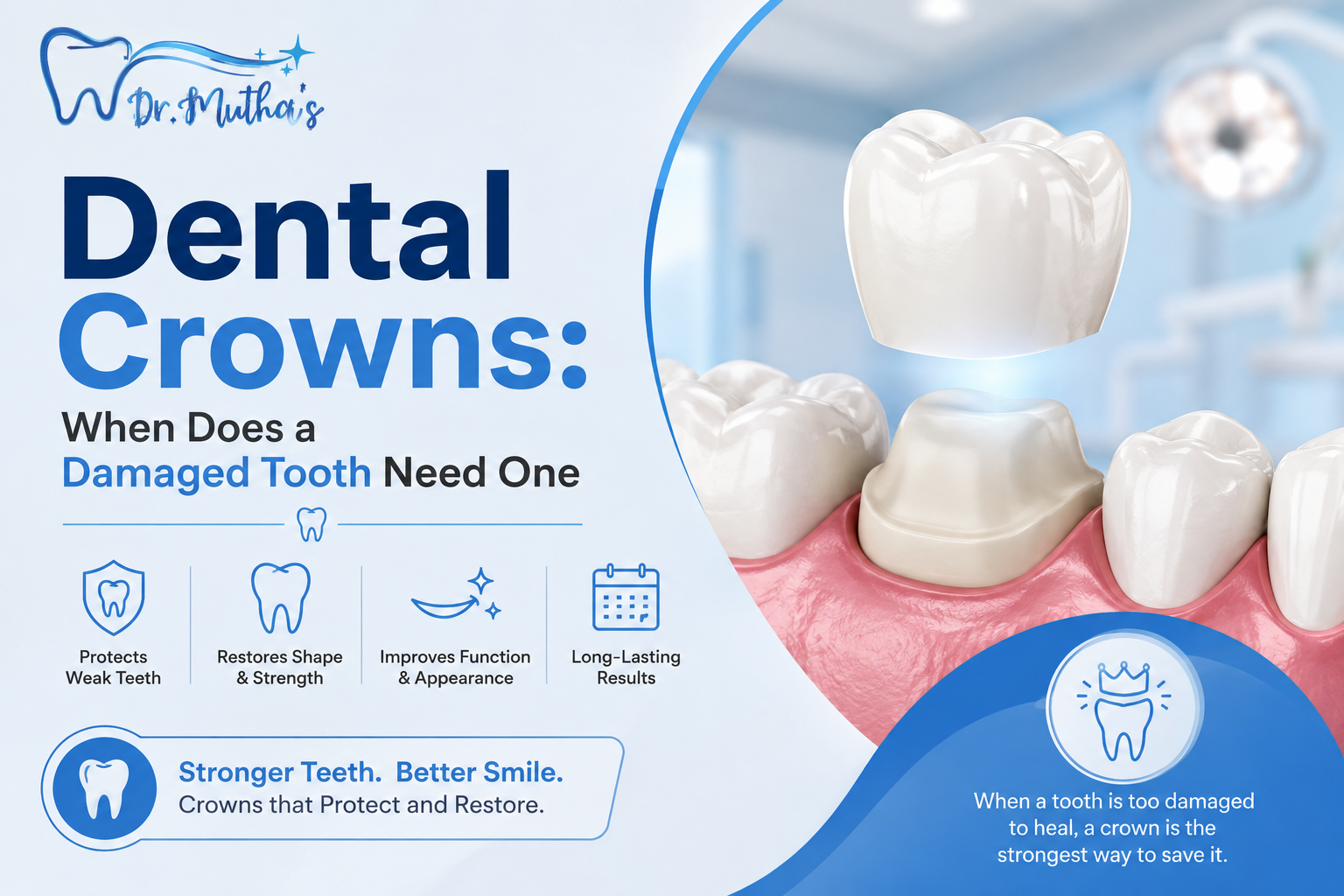
A damaged tooth does not always have to be removed. In many situations, the natural tooth can still be restored when enough healthy structure remains. One treatment a dentist may consider is a dental crown, which covers and protects a tooth that has become weakened by decay, a fracture, a large filling, or previous dental treatment.
Patients visiting a dental clinic in Chinchwad with a broken, cracked, or weakened tooth may be advised to consider a crown after the dentist evaluates the extent of the damage. Not every damaged tooth needs the same treatment, so a proper examination is important before deciding between a filling, crown, or another restorative option.
Understanding when dental crowns are recommended and what the treatment involves can make it easier to make an informed decision about your tooth.
What Is a Dental Crown?
A dental crown is a custom-made restoration that covers the visible part of a damaged or weakened tooth above the gum line.
It is designed to restore the shape and function of the tooth while protecting the remaining natural structure.
Dental crowns can be made using different materials, including:
- Ceramic
- Porcelain
- Zirconia
- Metal alloys
- Porcelain fused to metal
The choice of material depends on the position of the tooth, chewing forces, appearance, available tooth structure, and individual treatment requirements.
When Might a Damaged Tooth Need a Crown?
A small chip or cavity does not automatically require a crown. When enough healthy tooth remains, a filling or another conservative restoration may be sufficient.
A crown is more likely to be considered when a significant amount of tooth structure has been lost or the remaining tooth needs additional protection.
1. When a Large Cavity Has Weakened the Tooth
Small cavities can often be repaired with fillings. However, a large cavity can remove a considerable amount of natural tooth structure.
After the decay has been removed, the remaining walls of the tooth may be too weak to securely support a large filling.
In this situation, a crown may be recommended to cover the remaining tooth and provide additional protection during chewing.
The decision depends on the size and location of the cavity and the amount of strong natural tooth that remains.
2. When a Tooth Is Cracked or Fractured
A tooth can crack because of an injury, biting a hard object, teeth grinding, large existing fillings, or repeated pressure over time.
Cracks can vary considerably. Some affect only a small portion of the tooth, while others may extend deeper.
Possible symptoms of a cracked tooth include:
- Pain when biting
- Sensitivity to hot or cold
- Discomfort when chewing
- Occasional sharp pain
- A visible crack or broken area
When a crack has weakened the tooth but the tooth is still restorable, a crown may sometimes be used to protect the remaining structure.
However, deeper fractures, particularly those extending into the root, may require a different approach.
A dentist in Chinchwad can examine the tooth and determine how extensive the damage is before recommending treatment.
3. When a Large Filling Leaves Little Natural Tooth
Fillings depend on the surrounding natural tooth for support.
Over time, a tooth may undergo several fillings or have one particularly large restoration. As more natural tooth structure is replaced by filling material, the remaining walls may become thinner.
These weakened areas can sometimes fracture under chewing pressure.
A dentist may consider a crown when there is not enough strong tooth structure to predictably support another large filling.
This does not mean every tooth with a large filling needs a crown. The condition of the remaining tooth should determine the treatment.
4. After Root Canal Treatment
Root canal treatment is performed when the tissue inside a tooth becomes infected or inflamed.
The root canal itself treats the problem inside the tooth, but the tooth may already have lost significant structure because of decay, previous restorations, or fractures.
For this reason, some root canal-treated teeth need additional protection afterward.
Back teeth in particular experience considerable chewing forces, and a crown may be considered when the remaining structure is weakened.
However, not every root canal-treated tooth automatically requires a crown. The location of the tooth, amount of remaining structure, existing restorations, cracks, and bite should all be evaluated.
5. When a Tooth Has Broken
A tooth may break after an accident, while eating something hard, or because it has been weakened by decay or an old filling.
A very small chip may sometimes be managed without a crown.
When a larger section has broken away, the dentist needs to determine whether enough healthy tooth remains for restoration.
If the tooth is still suitable for treatment, a crown may help restore its shape and protect the weakened structure.
A broken tooth should be assessed even when it is not painful. Lack of pain does not necessarily mean that the damage is minor.
6. When a Tooth Is Severely Worn
Teeth naturally experience some wear, but excessive grinding, clenching, bite problems, and other factors can cause more significant damage.
Severe wear may reduce the height of the tooth, alter its shape, or affect chewing.
Depending on how much structure has been lost, crowns may sometimes form part of a broader restorative treatment plan.
It is also important to investigate why the teeth are becoming worn. Restoring a tooth without addressing ongoing grinding or other contributing factors may leave the restoration exposed to the same excessive forces.
What Signs Suggest That a Damaged Tooth Needs Attention?
Symptoms alone cannot tell you whether you need a dental crown.
However, certain changes suggest that the tooth should be examined.
These include:
- Pain when biting or chewing
- Sensitivity to hot or cold
- A visible crack
- Part of the tooth breaking away
- A loose or damaged filling
- Rough or sharp tooth edges
- Food repeatedly becoming trapped around the tooth
- Intermittent discomfort while chewing
Some damaged teeth cause little or no pain, particularly in the early stages.
This is why visible damage should not be ignored simply because the tooth feels comfortable.
How Does a Dentist Decide Whether a Crown Is Needed?
The dentist needs to determine whether the tooth is restorable and how much protection it requires.
During an examination, several factors may be considered:
- Amount of healthy natural tooth remaining
- Size and location of decay
- Presence and extent of cracks
- Condition of existing restorations
- Previous root canal treatment
- Gum health
- Bite and chewing forces
- Condition of the root
- Support around the tooth
Dental X-rays may also be recommended when additional information about the tooth, root, or surrounding structures is required.
If you want a more detailed explanation of the situations in which crown treatment may be considered, you can learn when a damaged tooth may need a dental crown before discussing the appropriate restoration with your dentist.
The final decision should still be based on a clinical examination because two teeth that appear similarly damaged may require different treatment.
Dental Crown or Filling: How Are They Different?
A filling replaces a damaged portion of the tooth. It is often appropriate when the affected area is relatively limited and enough strong natural structure remains.
A crown covers most or all of the visible prepared tooth and may be considered when greater protection is required.
Neither option is automatically better.
The aim is to choose a restoration that is suitable for the amount and location of damage while preserving healthy natural tooth structure whenever possible.
What Happens During Dental Crown Treatment?
The exact procedure can vary depending on the tooth and the type of crown being used.
Tooth Examination
The dentist first examines the tooth, gums, and surrounding area. Decay, infection, or other problems may need to be treated before crown placement.
Tooth Preparation
The tooth is carefully shaped so that there is enough space for the crown to fit properly.
Impression or Digital Scan
An impression or digital scan is taken to record the prepared tooth and surrounding teeth.
This information helps create a crown that fits appropriately and works with the patient's bite.
Temporary Crown
If the final crown is being made separately, a temporary crown may be placed over the prepared tooth.
Patients are usually given instructions about caring for the temporary restoration.
Permanent Crown Placement
When the final crown is ready, the dentist checks its fit, bite, contacts with nearby teeth, and appearance.
Necessary adjustments are made before the crown is securely attached to the prepared tooth.
Does Dental Crown Treatment Hurt?
Local anesthesia is generally used while preparing the tooth, which helps minimize discomfort during treatment.
After the procedure, some people may experience temporary sensitivity or mild soreness around the gum.
This usually needs to be distinguished from persistent or increasing pain. If discomfort becomes severe, continues, or worsens, the dentist should be contacted for an evaluation.
Can Every Damaged Tooth Be Saved With a Crown?
No. Although crowns can restore many damaged teeth, they cannot save every tooth.
A crown needs an appropriate foundation of healthy, restorable tooth structure.
Treatment may be more difficult or unsuitable when there is:
- A deep fracture extending into the root
- Extensive decay below the gum line
- Significant loss of supporting structure
- Severe problems affecting the tooth root
- Insufficient support around the tooth
If a crown is not appropriate, the dentist can explain the other treatment options available.
How Should You Care for a Dental Crown?
A crown covers the tooth, but the natural tooth underneath and around its margins still needs regular care.
Good oral hygiene remains important.
Brush twice daily and clean between the teeth regularly. Attend dental check-ups as recommended so that the crown, surrounding gums, and natural tooth can be monitored.
Avoid using crowned teeth to bite extremely hard objects. People who grind or clench their teeth should also discuss this habit with their dentist.
If a crown becomes loose, damaged, or uncomfortable, arrange an examination rather than waiting for the problem to worsen.
Frequently Asked Questions
1. How do I know if my damaged tooth needs a crown?
You cannot reliably determine this from symptoms alone. A dentist needs to assess how much healthy tooth remains, the extent of the damage, and whether a filling or crown would provide appropriate restoration.
2. Does every root canal-treated tooth need a crown?
No. The need for a crown depends on the location of the tooth, remaining tooth structure, previous restorations, cracks, and chewing forces.
3. Can a crown be used for a cracked tooth?
A crown may protect certain cracked teeth when the tooth remains restorable. Deep fractures extending into the root may require another treatment approach.
4. Can cavities develop around a dental crown?
Yes. The crown material itself does not develop tooth decay, but the natural tooth around the crown margin can still develop cavities. Good oral hygiene and regular dental examinations remain important.
5. Should I get a broken tooth checked even if there is no pain?
Yes. A broken or cracked tooth can require treatment even when it does not hurt. Early examination can help determine the extent of the damage.
Protect a Damaged Tooth Before the Problem Progresses
A dental crown may help restore and protect a tooth weakened by a large cavity, fracture, extensive filling, severe wear, or previous root canal treatment. However, the decision to use a crown depends on the condition of the individual tooth and how much healthy structure remains.
Ignoring a cracked or weakened tooth may allow the damage to become more extensive and potentially make restoration more difficult.
Have a cracked, broken, heavily filled, or weakened tooth? Dr. Mutha's Dental Specialty Centre, Chinchwad, can examine the tooth and explain whether a dental crown, filling, or another restorative option may be appropriate. Schedule a dental consultation to have the problem assessed and understand the treatment options available for your tooth.
Catégories
Lire la suite
The Tigers are a person of individuals groups that Phillies enthusiasts possibly put ont believe that around a great deal. They dress int consist of a lot of a historical past collectively, and there arent that several outstanding avid gamers who incorporate ideal up for the two groups. Lance Parrish and Nick Castellanos are the initial 2 that occur toward thoughts. Nor consist of the Tigers...

Buy Yahoo Accounts from getpvasmm.com In today’s digital age, having an online presence is more crucial than ever. Yahoo accounts are a gateway to numerous services, from email communication to news and social networking. But managing just one account can be limiting, especially for professionals or businesses that require multiple profiles. This is where the option to buy Yahoo accounts...

SummaryEA Sports FC 27 is bringing a major shift to the football experience with the introduction of The Grounds. But how will this new social football world affect the way players earn, manage, and spend FC 27 Coins? As players prepare for a new Ultimate Team season, understanding the changing in-game economy could be the key to building stronger squads faster. The Grounds Creates New Ways to...

BuyUSAacc is a Google-certified marketplace offering reliable, premium, bulk-aged email, social, banking, and ad accounts, all delivered securely. When you choose to buy aged Google Ads accounts from our verified platform, you secure stable, pre-warmed assets that bypass common restrictions, allowing entrepreneurs and agencies to scale advertising campaigns with maximum confidence and...