


How Professional Basement Waterproofing Services Protect Your Home From Moisture Damage
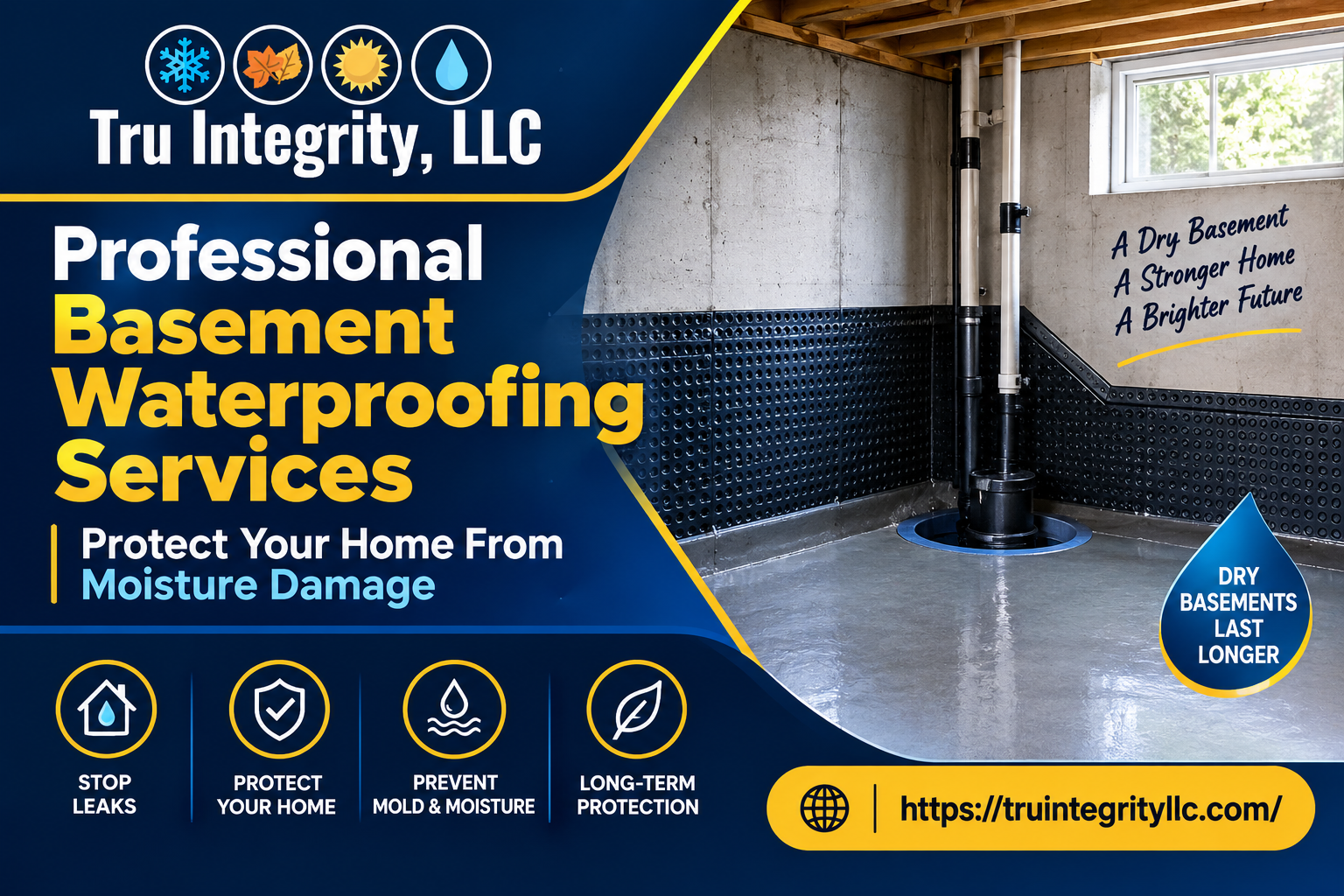
A basement can be one of the most useful areas of a home, but it can also become a hidden source of trouble when moisture starts getting inside. A damp smell, a small water stain, peeling paint, or a wet spot after heavy rain may seem minor at first. Over time, however, recurring moisture can affect walls, flooring, stored belongings, and the overall condition of the foundation.
The challenge is that basement water rarely has just one cause. Groundwater pressure, foundation openings, poor drainage, surface runoff, condensation, and plumbing issues can all contribute to the problem. That is why simply wiping up water or applying a quick patch may not provide a lasting answer.
Professional waterproofing takes a more complete approach. It focuses on identifying where water is coming from, understanding how it moves around the property, and choosing solutions that address the underlying conditions.
Why Basement Moisture Deserves Attention
Not every basement becomes visibly flooded. In fact, some of the most troublesome moisture issues develop gradually.
You may notice:
- Musty odors that return even after cleaning
- Damp or discolored sections of basement walls
- Peeling paint or deteriorating finishes
- Water marks near floor-wall joints
- Efflorescence or white mineral deposits on masonry
- Persistent humidity
- Small puddles after storms
- Cracks that appear to become larger over time
These signs can indicate ongoing basement moisture problems rather than a one-time incident.
Water can also move through porous masonry and concrete without creating obvious standing water. That makes regular inspection important, particularly when a basement repeatedly feels damp or develops new stains.
How Professional Waterproofing Addresses Moisture at the Source
One of the biggest advantages of Professional Basement Waterproofing Services is that the solution can be matched to the actual source of the water.
A professional assessment may consider the basement walls, floor, foundation openings, drainage conditions, grading, and areas where water tends to collect. Instead of treating every wet basement the same way, the goal is to determine what is allowing moisture to enter and how it can be managed.
Depending on the property, a waterproofing strategy may involve drainage improvements, sump pump systems, wall or floor protection, crack repair, sealing, or a combination of methods.
This source-focused approach is important because controlling one symptom does not necessarily solve the larger water-management issue.
Protecting Foundation Walls From Water Pressure
Your basement walls are exposed to the soil surrounding your home. When the ground becomes saturated, water can exert pressure against those walls and look for weak points through which it can enter.
Existing cracks and openings can become pathways for seepage. Water entering through these areas can contribute to continued dampness and may worsen an already vulnerable section of the foundation.
That is where foundation crack repair becomes an important part of a broader moisture-control strategy. Cracks should be evaluated based on their size, location, pattern, and other conditions rather than automatically treated as a simple cosmetic issue.
Addressing appropriate cracks can help reduce water entry while allowing professionals to determine whether additional foundation or drainage work is necessary.
Managing Water Before It Reaches the Basement
Water management does not begin at the basement wall. It starts outside the structure.
Rainwater can collect around a property when runoff does not have an effective path away from the home. Saturated soil near the foundation can increase the amount of water surrounding basement walls, creating additional opportunities for seepage.
Well-designed basement drainage solutions can help redirect or manage unwanted water before it becomes a recurring basement problem. Depending on site conditions, drainage may involve channels, pipes, collection systems, or other methods designed to move water away from vulnerable areas.
The important point is that drainage should be based on how water actually moves around the property. A solution that works well for one home may not be appropriate for another.
The Role of Moisture Sealing
Water management and surface protection can work together.
Once the source of moisture has been addressed, moisture sealingcan provide an additional layer of protection for appropriate surfaces. Sealing can help limit the impact of moisture on floors or other vulnerable areas and may also make surfaces easier to maintain.
However, sealing should not be viewed as a substitute for correcting a serious water-entry problem. If water is actively entering through a foundation crack or accumulating because of inadequate drainage, simply coating a surface may only hide the symptom temporarily.
The strongest approach is to address the underlying moisture condition first and then use appropriate sealing or protective treatments where they make sense.
Helping Reduce Mold and Musty Odors
A consistently damp basement creates an environment where mold and mildew can become concerns. Even when there is no major flood, elevated moisture can contribute to persistent odors and deterioration of certain materials.
Keeping the basement dry can help create a less favorable environment for moisture-related growth. It can also make the space more comfortable and easier to maintain.
This is particularly important for homeowners who use their basement for storage, recreation, laundry, or living space. A dry environment provides a better foundation for maintaining the room over the long term.
Waterproofing Can Help Prevent Costly Repairs
The financial impact of water damage is not always obvious when the first sign appears.
A small leak may eventually affect drywall, flooring, insulation, trim, stored possessions, or other finished materials. Continued moisture can also create conditions that require additional repairs.
Preventive waterproofing does not guarantee that a home will never experience water intrusion, but addressing known vulnerabilities early can reduce the chance that a manageable moisture issue develops into a much larger repair project.
For homeowners, this means thinking beyond the immediate puddle. The more useful question is: Why is the water getting here, and what can be done to keep it from returning?
Why a Professional Assessment Matters
DIY products can be useful for minor maintenance, but basement water problems can be difficult to diagnose from the inside alone.
For example, water appearing in one area may have entered through another location before traveling along a wall or floor. Similarly, a crack may be related to water intrusion, foundation movement, or another condition that requires further evaluation.
A professional assessment can help connect these clues and determine which improvements are appropriate.
Tru Integrity LLC approaches basement protection through services that include waterproofing, drainage, foundation crack repair, sump pump installation, and moisture-related solutions. The company's service pages emphasize evaluating basement and foundation conditions before applying solutions suited to the property.
A Dry Basement Starts With a Complete Strategy
Basement waterproofing is not simply about stopping water that is already on the floor. Effective moisture management considers the entire path water takes—from rainfall and surrounding soil to drainage, foundation walls, cracks, and interior surfaces.
That is why combining the right solutions can make a significant difference. Drainage can help manage incoming water, crack repair can address vulnerable openings, and sealing can provide additional surface protection where appropriate.
Homeowners who notice recurring dampness should avoid waiting until a minor issue becomes a visible repair project. A timely inspection can provide a clearer picture of what is happening and what steps can help protect the basement.
Frequently Asked Questions
1. What are the most common signs of basement moisture?
Common signs include musty odors, damp walls, water stains, peeling paint, mineral deposits, visible seepage, condensation, and puddles after rainfall. Some moisture problems may be subtle, so recurring humidity or odors should not automatically be dismissed.
2. Does basement waterproofing only help with flooding?
No. Waterproofing can address different forms of water intrusion and moisture exposure. Depending on the property's condition, solutions may focus on drainage, foundation openings, interior water management, sealing, or other areas contributing to moisture.
3. Can foundation cracks cause basement moisture?
Yes, certain foundation cracks can provide a pathway for water to enter. However, not every crack has the same cause or risk. Its location, appearance, size, and surrounding conditions should be considered before determining the appropriate repair.
4. How do drainage systems help protect a basement?
Drainage systems are designed to manage excess water and direct it away from vulnerable areas. Proper drainage can reduce water buildup around the foundation and help limit conditions that contribute to basement seepage.
5. Is moisture sealing enough to solve a wet basement?
Not necessarily. Sealing may help protect appropriate surfaces, but it does not replace correcting an active water source. If water is entering through cracks, accumulating around the foundation, or coming from another drainage issue, that underlying problem should be addressed.
6. When should a homeowner consider professional waterproofing?
Consider an inspection when moisture repeatedly appears, especially after rain, or when you notice water stains, persistent dampness, musty odors, seepage, or foundation-related concerns. Early evaluation can help identify the source before the problem becomes more extensive.
Final Thoughts
A dry basement is more than a cleaner-looking space. It is part of maintaining the condition, usability, and long-term protection of the home.
When moisture keeps returning, treating the visible water alone may not be enough. Understanding the source and combining appropriate waterproofing, drainage, crack repair, and moisture-control measures can provide a more practical path toward lasting protection.
For homeowners dealing with recurring basement moisture, professional evaluation can be the first step toward understanding the problem and choosing a solution that fits the property.
Kategorien
Mehr lesen
Stows Waste Management has been operating for over 120 years, providing dependable waste management in Melbourne services for businesses, properties, and organisations across the region. With extensive industry experience, Stows delivers practical waste collection and management solutions designed to meet the needs of different commercial and industrial environments. Professional...

The India Decarbonization HVAC Market was valued at USD 2031.48 million in 2025 and is expected to grow at a strong CAGR of around 18.45% during the forecast period (2026-2034F), The decarbonization HVAC market in India has reached a high-growth stage, with the cooling systems taking center stage in the energy transition, sustainable infrastructure, and long-term building efficiency policies....

Buy Snapchat Accounts Are you looking to boost your brand’s online presence? If so, you’ve likely considered various social media platforms. Among them, Snapchat has emerged as a powerful tool for businesses seeking to engage with younger audiences. But have you ever thought about the potential of buying Snapchat accounts? While this might sound unconventional, it can be a...

Graft-Versus-Host Disease (GVHD) Treatment Market Market By Treatment (Medication and Therapy), Type (Chronic GVHD, Acute GVHD, and Prophylactic), Gender (Female and Male), Age (Adults and Pediatric), Method of Administration (Oral, Intravenous, Topical, and Others), End User (Hospitals, Transplant Centers, Institutes, and Specialty Centers), Distribution Channel (Direct Tender, Retail...

Why Chemistry Needs Focused Learning Chemistry is an important subject that combines theory, equations, practical concepts, and problem-solving skills. Many students find it difficult because they need to understand physical, organic, and inorganic chemistry together. Joining chemistry tuition classes in Gurgaon helps students build strong fundamentals through structured lessons and...
