


Private Old and New Delhi City Tour
Private Old and New Delhi City Tour
A Private Old and New Delhi City Tour is one of the best ways to experience the many sides of India's capital in a single day. Delhi is not one city in the simple sense of the word. It is a layered destination where ancient settlements, Mughal monuments, colonial avenues, religious landmarks, busy markets, modern neighborhoods, and government buildings exist alongside one another.
A private tour allows you to explore these contrasting areas at your own pace instead of following a rigid group itinerary. You can start from your hotel, travel comfortably between attractions in a private air-conditioned vehicle, and spend more time at the places that interest you most. With a knowledgeable local guide, the experience becomes more than a collection of photographs because you can understand the history behind the monuments and the cultures that shaped Delhi.
The appeal of combining Old Delhi and New Delhi is the contrast. Old Delhi introduces you to the historic heart of the Mughal capital, with landmarks such as the Red Fort, Jama Masjid, Chandni Chowk, and Raj Ghat. New Delhi presents a different chapter, with India Gate, Rashtrapati Bhavan, Parliament-related areas, Humayun's Tomb, Qutub Minar, and broad planned avenues reflecting later periods of the city's development.
Why Choose a Private Delhi City Tour?
A private tour gives you something that large group tours often cannot: flexibility.
If you are fascinated by architecture, you can spend longer exploring a monument. If you are traveling with children, you can take breaks when necessary. If photography is your priority, your itinerary can be adjusted around the best opportunities.
Transportation is another major advantage. Delhi is a large and busy city, and moving between Old Delhi and New Delhi can take time. Having a dedicated driver means you do not need to repeatedly search for taxis or negotiate transportation between attractions.
A private guide can also provide context throughout the day. Delhi's history spans centuries, and without background information, it can be difficult to understand how the city's different monuments and neighborhoods relate to one another.
Instead of simply seeing Delhi, you get a story that connects the places together.
Old Delhi and New Delhi: Two Different Experiences
The name Old Delhi generally refers to the historic area associated with Shahjahanabad, the Mughal-era city established by Emperor Shah Jahan in the 17th century. Its streets, bazaars, mosques, havelis, and monuments preserve traces of a much older urban landscape.
New Delhi, by contrast, was developed during the British colonial period as the imperial capital and was formally inaugurated as India's capital in the early 20th century. Its broad avenues, government buildings, landscaped areas, and monumental architecture reflect a very different urban vision.
The contrast is fascinating.
In Old Delhi, you may move through narrow lanes filled with shops, pedestrians, street food, rickshaws, and historic buildings. In New Delhi, the roads are generally broader, the spaces more open, and the architecture often more monumental and formal.
A private city tour allows you to experience both sides without treating them as separate destinations.
Red Fort
The Red Fort is one of the most important landmarks on an Old Delhi itinerary. Built by Shah Jahan as part of his new capital, the fort is a powerful symbol of Mughal Delhi.
Its massive red sandstone walls immediately communicate the scale and ambition of the Mughal Empire. Inside, however, the experience becomes more detailed, with palaces, halls, gardens, decorative work, and spaces that reveal how the imperial complex functioned.
UNESCO recognizes the Red Fort Complex as a World Heritage property and describes it as an outstanding example of Mughal architecture and planning. Its design combines architectural traditions associated with Persian, Timurid, and Indian influences.
A private guide can explain the difference between the fort's defensive appearance and the refined interiors that once formed part of the imperial residence.
For first-time visitors, the Red Fort is an essential Old Delhi stop.
Jama Masjid
Not far from the Red Fort stands Jama Masjid, one of Delhi's most prominent historic mosques.
The mosque was commissioned by Shah Jahan and forms part of the architectural landscape of Shahjahanabad. Its scale, courtyards, domes, and minarets make it one of the most recognizable religious buildings in Old Delhi.
Visiting Jama Masjid also gives travelers an opportunity to understand the relationship between religion, architecture, and the historic city.
Visitors should dress respectfully and follow the site's current visitor requirements. Photography rules and access arrangements can change, so your guide can help you navigate the visit appropriately.
The mosque is especially striking when viewed from the surrounding streets of Old Delhi, where the monumental architecture contrasts with the density and activity of the neighborhood.
Chandni Chowk
No Old Delhi tour feels complete without experiencing Chandni Chowk.
This historic market area is famous for its narrow streets, shops, food, religious sites, traditional businesses, and energetic atmosphere. It is not simply a place to buy souvenirs; it is part of Delhi's living history.
Walking through Chandni Chowk can feel completely different from visiting a monument. Here, the city is active around you. Shopkeepers, residents, visitors, street vendors, cyclists, and rickshaws create a constantly changing scene.
A private tour can include a short rickshaw ride through selected parts of Old Delhi, depending on the itinerary.
Food lovers can also explore traditional Delhi snacks and sweets, although visitors should choose food stops carefully and communicate any dietary restrictions to their guide.
Raj Ghat
Raj Ghat is a memorial dedicated to Mahatma Gandhi, located near the historic heart of Delhi.
The site is notably different from the crowded atmosphere of Chandni Chowk. Its open and peaceful surroundings encourage visitors to pause and reflect.
Including Raj Ghat in an Old Delhi itinerary adds an important modern historical dimension to the tour. Gandhi played a central role in India's independence movement, and the memorial has become one of Delhi's significant places of remembrance.
Because it is a memorial rather than a conventional sightseeing attraction, visitors should approach the site respectfully.
A guide can provide context about Gandhi's life and the independence movement without turning the visit into a rushed stop between other monuments.
India Gate
Moving into New Delhi, India Gate provides one of the city's most recognizable landmarks.
The monument stands along a broad ceremonial axis and is surrounded by open spaces that contrast sharply with the dense streets of Old Delhi.
India Gate was designed as a war memorial and commemorates Indian soldiers who died during the First World War and other conflicts associated with the period.
For many visitors, the monument is particularly impressive from a distance because of its scale and relationship with the surrounding avenue.
A private Delhi tour allows you to stop for photographs and then continue toward other New Delhi landmarks without spending unnecessary time arranging transportation.
Rashtrapati Bhavan
Another major New Delhi landmark is Rashtrapati Bhavan, the official residence of the President of India.
The building forms part of the monumental government district designed during the British colonial period. Its architecture combines European planning traditions with Indian architectural elements.
Even when visitors do not enter the building, seeing the exterior and surrounding avenues helps explain the planned character of New Delhi.
The area also demonstrates how dramatically Delhi's architectural landscape changed during the transition from Mughal imperial capital to colonial capital and eventually to the capital of independent India.
Access to government buildings and specific areas can be subject to current security and visitor regulations, so itineraries should be planned around the rules applicable on the travel date.
Parliament Area
The Parliament area provides another perspective on modern India's political landscape.
The surrounding architecture reflects the ceremonial and administrative character of New Delhi. Depending on current access restrictions, visitors may be able to view the exterior surroundings but not enter restricted government buildings.
A private guide can explain the significance of the area while keeping the sightseeing practical.
Because government zones can have security restrictions, avoid assuming that every part of the area is accessible to tourists.
Humayun's Tomb
Humayun's Tomb is one of the finest additions to a New Delhi sightseeing itinerary.
Built in the 16th century, the tomb is associated with Mughal emperor Humayun and is widely recognized for its gardens, geometric planning, and architectural influence.
UNESCO describes Humayun's Tomb as a major Mughal monument and identifies it as an important precursor to the later development of Mughal architecture.
The monument is especially valuable for travelers who want to understand the architectural progression that eventually produced the Taj Mahal.
Its formal garden setting also provides a quieter experience after the busy streets of Old Delhi.
For architecture enthusiasts, Humayun's Tomb should be high on the list.
Qutub Minar
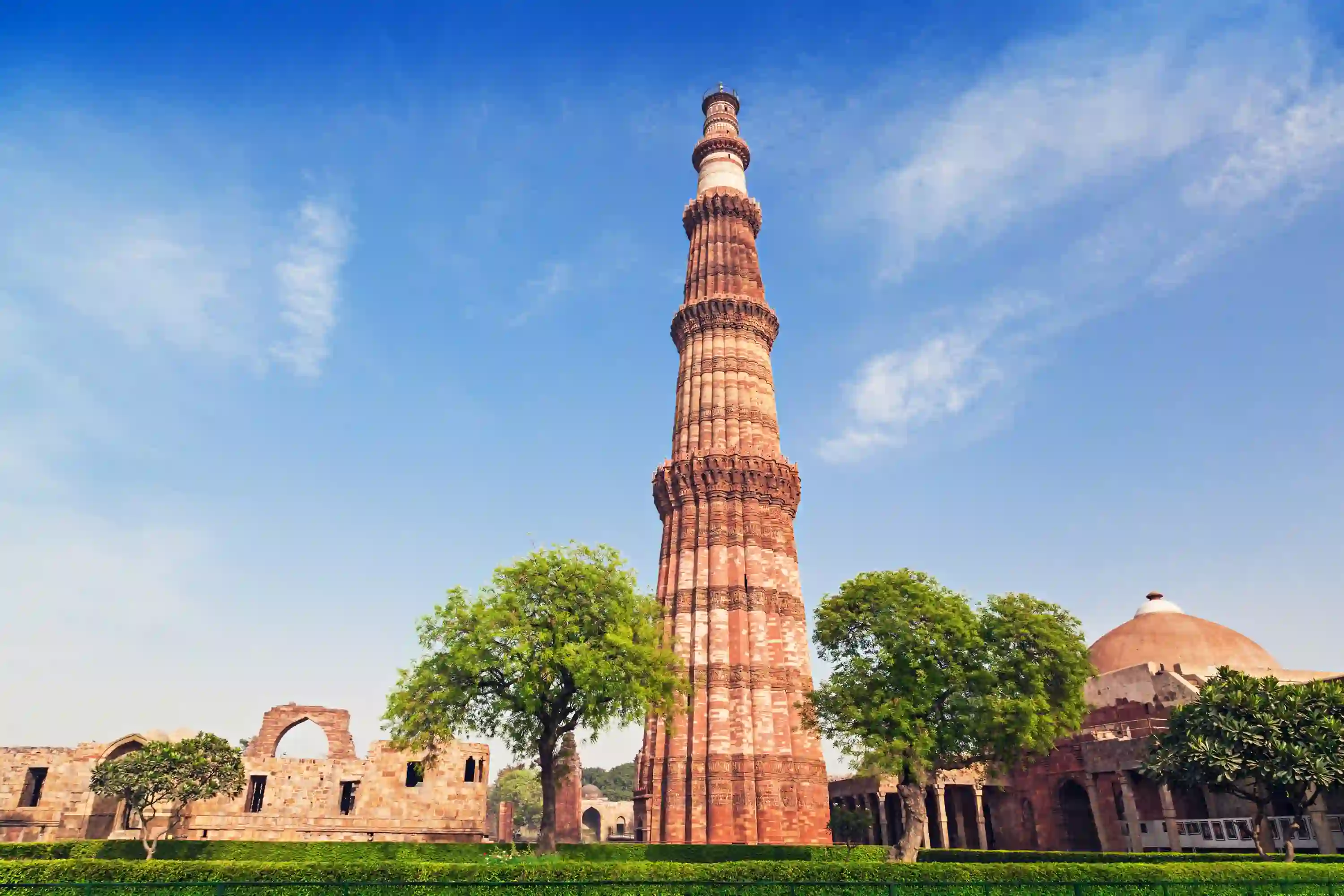
Qutub Minar is another essential Delhi landmark.
The soaring minaret dominates the surrounding archaeological complex and represents one of the city's most important early Islamic architectural monuments.
UNESCO recognizes the Qutb Minar and its associated monuments as a World Heritage property. The complex contains structures from different periods, making it more than simply a visit to the famous tower.
Exploring the site with a guide helps visitors understand the architectural details and historical changes represented throughout the complex.
If you have limited time, Qutub Minar and Humayun's Tomb can provide an excellent introduction to Delhi's architectural history outside the Mughal and colonial periods.
Lotus Temple
Depending on your interests and available time, Lotus Temple can be included in a private Delhi itinerary.
Its distinctive lotus-shaped design makes it one of the city's most recognizable modern religious buildings.
The site is associated with the Bahá'í Faith and welcomes visitors from different backgrounds.
The peaceful atmosphere contrasts with the intensity of Old Delhi, creating another example of the city's extraordinary diversity.
However, adding too many attractions can make a one-day tour exhausting. If your priority is historical architecture, you may prefer spending more time at Humayun's Tomb or Qutub Minar.
Akshardham Temple
Akshardham is another major Delhi attraction known for its elaborate architecture and large temple complex.
It can be impressive for travelers interested in Indian religious architecture, craftsmanship, gardens, and cultural presentations.
However, visitors should be aware that security rules can be strict and certain personal items may not be permitted inside. Current entry and photography policies should always be checked before planning the visit.
Because the complex can require significant time, it is generally better suited to a customized itinerary rather than trying to squeeze it between every major Old and New Delhi landmark.
Typical Private Old and New Delhi Tour Itinerary
A full-day itinerary can begin with pickup from your hotel in the morning.
Start in Old Delhi, visiting the Red Fort and Jama Masjid before exploring Chandni Chowk. Depending on your interests, a short rickshaw ride can provide an entertaining way to experience the historic market streets.
Continue to Raj Ghat before moving toward New Delhi.
After lunch, explore major New Delhi landmarks such as India Gate, Rashtrapati Bhavan, Humayun's Tomb, and Qutub Minar.
If time permits, add another attraction according to your interests.
The exact order should remain flexible because Delhi traffic can affect travel times.
The objective is to create a balanced day rather than simply collect as many attractions as possible.
Sample Full-Day Delhi Tour
A practical schedule might look like this:
Morning: Hotel pickup and Old Delhi sightseeing.
Morning: Red Fort and Jama Masjid.
Late morning: Chandni Chowk and optional rickshaw ride.
Afternoon: Raj Ghat and lunch.
Afternoon: India Gate and New Delhi government district.
Late afternoon: Humayun's Tomb or Qutub Minar.
Evening: Return to your hotel.
This is only a framework. A private tour can be customized around your interests and available time.
Private Delhi Tour by Car
A private car Delhi sightseeing tour is one of the easiest ways to move between Old Delhi and New Delhi.
The city is large, and attractions can be spread across different areas. Having a private air-conditioned vehicle means you can travel directly from one location to another without repeatedly arranging taxis.
Your driver can also help with parking and drop-off points near attractions.
This is particularly valuable during hot weather or when traveling with children and senior family members.
For international visitors, having a dedicated driver can also reduce the stress of navigating Delhi's busy streets.
Delhi Tour with a Professional Guide
A private vehicle solves transportation problems, but a professional guide adds the historical dimension.
Delhi's monuments span many centuries and several political eras. A guide can explain why different rulers built different monuments, how the city evolved, and how Old Delhi relates to New Delhi.
At the Red Fort, for example, the architecture makes more sense when you understand Shah Jahan's vision for Shahjahanabad.
At Humayun's Tomb, the garden layout and architectural design become more meaningful when you understand the development of Mughal tomb architecture.
At India Gate and the government district, historical context helps explain why New Delhi looks so different from Old Delhi.
Private Delhi Tour for Families
Families benefit from the flexibility of a private tour.
Children may enjoy the Red Fort, rickshaw ride, and colorful markets, while parents may prefer the historical monuments and quieter gardens.
You can take breaks whenever necessary and avoid forcing everyone to follow a rigid group schedule.
A family itinerary should generally prioritize a few major attractions rather than attempting to visit every famous site in Delhi.
Comfortable transportation, drinking water, snacks, and practical footwear can make a significant difference.
Private Delhi Tour for Couples
Couples can create a more relaxed itinerary around architecture, photography, markets, and food.
A private tour allows you to spend more time at places you enjoy instead of moving according to a large group's schedule.
Old Delhi can provide energetic street scenes and traditional food experiences, while New Delhi offers grand avenues and monumental architecture.
Couples who enjoy photography may want additional time at Humayun's Tomb, India Gate, and Qutub Minar.
Private Delhi Tour for Senior Travelers
Senior travelers should consider walking distances and weather when planning a Delhi sightseeing day.
A private vehicle allows you to minimize unnecessary walking between attractions. It also makes it easier to take breaks.
Rather than visiting ten locations, choose five or six meaningful stops.
Your guide can also adjust the pace according to your needs.
The goal should be to finish the day feeling that you experienced Delhi, not that you survived an exhausting sightseeing marathon.
Best Time for a Delhi City Tour
Delhi's weather varies significantly throughout the year.
Cooler months are generally comfortable for sightseeing, especially when you are walking through historic complexes and gardens.
During the hottest months, an early start can make outdoor sightseeing considerably easier.
Monsoon conditions can bring rain and humidity, so flexible scheduling is helpful.
Regardless of season, check the weather forecast before your tour and dress accordingly.
A private tour makes it easier to adjust the itinerary when weather conditions change.
What to Wear
Comfortable clothing is the most important consideration.
Choose breathable clothing during warm weather and layers during cooler months.
Comfortable walking shoes are essential because many attractions involve walking across large courtyards, gardens, pathways, and uneven surfaces.
When visiting religious sites, dress respectfully and follow any specific clothing requirements.
Sun protection can also be useful, particularly when visiting open monuments during the middle of the day.
What to Bring
For a full-day Delhi tour, pack light.
Useful items include:
-
Identification
-
Phone and power bank
-
Water
-
Sunglasses
-
Sun protection
-
Comfortable shoes
-
Camera
-
Any personal essentials
Avoid carrying unnecessary valuables.
Some attractions have security restrictions, so check current rules before visiting major monuments.
Delhi Street Food Experience
Food is an important part of understanding Delhi.
Old Delhi is particularly famous for its street food and traditional markets. Visitors can encounter dishes ranging from savory snacks to sweets and Mughlai-inspired cuisine.
However, food hygiene varies between vendors. Travelers with sensitive stomachs should choose reputable establishments and be cautious with unfamiliar street food.
A private guide can recommend established food stops according to your preferences.
If you have vegetarian, vegan, halal, allergy-related, or other dietary requirements, communicate them before the tour.
Shopping in Old Delhi
Old Delhi offers a completely different shopping experience from modern shopping centers.
Chandni Chowk and nearby markets contain shops selling textiles, jewelry, spices, clothing, traditional goods, wedding products, religious items, and more.
Shopping can easily consume several hours, so decide in advance whether it is a major part of your tour.
If your primary goal is sightseeing, limit shopping to a short stop.
If you are specifically interested in markets, create a customized itinerary that gives you enough time to browse without rushing to the next monument.
Photography on a Private Delhi Tour
Delhi is a dream destination for photographers because its visual character changes dramatically from one neighborhood to another.
Old Delhi provides crowded streets, historic façades, colorful markets, religious architecture, and street scenes.
New Delhi offers monumental avenues, government architecture, gardens, and large open spaces.
Humayun's Tomb and Qutub Minar are particularly rewarding for architectural photography.
A private tour allows you to spend additional time at locations that offer the best photographic opportunities.
Always follow the photography rules of individual monuments and religious sites.
How Much Does a Private Delhi City Tour Cost?
The price of a private Old and New Delhi tour depends on the vehicle, group size, guide service, duration, attractions, meals, and inclusions.
A small private tour may have a higher per-person cost than a large group tour, but it provides much greater flexibility.
When comparing prices, check whether the quotation includes:
-
Hotel pickup and drop-off
-
Private air-conditioned vehicle
-
Driver
-
Professional guide
-
Fuel
-
Parking
-
Toll charges
-
Monument entrance tickets
-
Lunch
-
Rickshaw ride
-
Additional attractions
A package that looks more expensive may actually be better value if it includes these services.
How to Choose the Right Private Delhi Tour
Start by deciding what you want from the day.
If history is your priority, focus on the Red Fort, Jama Masjid, Humayun's Tomb, and Qutub Minar.
If you want to experience local life, allocate more time to Chandni Chowk and Old Delhi.
If architecture and photography matter most, build the itinerary around the major monuments and allow enough time at each site.
If you are traveling with children or seniors, reduce the number of attractions and prioritize comfort.
A good private tour should adapt to you rather than forcing you into a fixed itinerary.
Is a Private Old and New Delhi Tour Worth It?
For first-time visitors, a private Old and New Delhi tour can be one of the most efficient ways to understand the capital.
The city is too diverse to be represented by one monument. You need to experience both its historic heart and its planned modern districts to understand how Delhi developed.
A private tour makes that possible in a single day.
You can walk through Mughal history at the Red Fort, experience the energy of Chandni Chowk, reflect at Raj Ghat, photograph India Gate, explore Humayun's Tomb, and stand beneath the towering Qutub Minar.
Each stop tells a different chapter.
Together, they create a much richer picture of Delhi.
Conclusion
A Private Old and New Delhi City Tour is an ideal choice for travelers who want to discover the capital's history, architecture, markets, religious landmarks, and modern identity in one carefully planned experience.
The strength of this tour lies in its contrast. Old Delhi gives you the atmosphere of historic Shahjahanabad, with the Red Fort, Jama Masjid, Chandni Chowk, and narrow market streets. New Delhi introduces another architectural world through India Gate, the government district, Humayun's Tomb, Qutub Minar, and other landmarks.
A private vehicle and professional guide make the experience significantly more comfortable. You can adjust the pace, choose which attractions matter most, take breaks, and spend more time exploring the places that capture your attention.
For a first visit, a balanced itinerary covering Red Fort, Jama Masjid, Chandni Chowk, Raj Ghat, India Gate, Humayun's Tomb, and Qutub Minar provides a strong introduction to Delhi. If your schedule is shorter, reduce the number of attractions rather than rushing through everything.
Delhi rewards curiosity. Look beyond the famous photographs and notice the details—the old walls beside modern roads, quiet gardens behind busy markets, ancient architecture surrounded by contemporary life, and the many cultures that continue to shape the city.
A private tour gives you the freedom to experience those contrasts at your own pace.
Frequently Asked Questions
1. How long does a private Old and New Delhi tour take?
A complete tour generally requires a full day if you want to cover major attractions in both parts of the city. A shorter half-day itinerary can focus on selected highlights, while a customized full-day tour provides enough time for Old Delhi, New Delhi, lunch, and several major monuments.
2. Which places are included in an Old and New Delhi tour?
Popular attractions include the Red Fort, Jama Masjid, Chandni Chowk, Raj Ghat, India Gate, Rashtrapati Bhavan, Humayun's Tomb, and Qutub Minar. The exact itinerary can be customized according to your interests and available time.
3. Is a private Delhi tour suitable for families?
Yes. Private tours are particularly convenient for families because the itinerary can be adjusted around children's needs. You can take breaks, reduce walking, and choose attractions that are suitable for your group.
4. Can I customize a private Delhi sightseeing tour?
Yes. Customization is one of the main advantages of a private tour. You can emphasize history, architecture, food, shopping, photography, religious sites, or local experiences depending on your interests.
5. Should I visit Old Delhi or New Delhi first?
Starting in Old Delhi is often a good choice because the historic attractions and markets are best experienced earlier in the day. You can then continue to New Delhi for landmarks such as India Gate, Humayun's Tomb, and Qutub Minar. However, the order can be adjusted based on your hotel location, traffic, opening hours, and personal interests.
Categories
Read More
According to the latest report published by Data Bridge Market Research, the Video Servers Market The global video servers market size was valued at USD 159.88 Million in 2025 and is expected to reach USD 692.05 Million by 2032, growing at a CAGR of 23.3% during the forecast period. Video Servers Marketing report makes available state-of-the-art information about the entire market...

Buy Glassdoor Reviews – Upgrade Your Digital Status & Drive Massive Conversions In the modern corporate marketplace, a business entity's digital footprint is its most critical financial asset. Before any enterprise partner signs a high-ticket contract or an expert software specialist submits an application, they execute a deep audit of your business profile on professional feedback...

Navigating the journey from Gatwick Airport (LGW) to the historic university city of Cambridge can feel daunting, especially after a long flight. Situated roughly 95 miles apart, this cross-country trek across the United Kingdom requires a transportation service that prioritizes punctuality, comfort, and peace of mind. While trains and buses involve exhausting transfers, dragging heavy luggage...

Podcast rental: Most guides to focus on packages and pricing, but the room itself- its shape, its treatment, its layout- is what actually determines how your episode sounds and feels. Two studios can charge the same hourly rate and produce wildly different results depending on how the physical space is built. It's worth understanding what you're actually looking at when you walk into...