


Predictive Analytics: The Ultimate Skill Set Separating Junior and Senior BAs

Walk into any corporate boardroom today, and you’ll notice a distinct shift in the types of questions leadership is asking. Executives are no longer satisfied with hearing about what went wrong last month. They don't want to just look at a historical chart showing a 12% dip in user retention or an unexpected spike in supply chain costs.
Instead, they are asking a much tougher, forward-looking question: "What is going to happen next quarter, and how do we prepare for it today?"
This single shift in executive expectations has drawn a clear line in the sand for data professionals. It is the defining boundary that separates junior Business Analysts from senior enterprise strategists.
Junior BAs excel at looking backward—a process known as descriptive analytics. They pull the historical logs, clean the data dumps, and present a clear picture of the past. Senior BAs, however, look through the windshield. They leverage predictive analytics to anticipate market trends, forecast consumer behavior, and mitigate operational risks before they ever hit the company's bottom line.
If you want to fast-track your progression from an entry-level order-taker to a high-value corporate advisor, mastering predictive capabilities is your golden ticket. Let’s explore why this skill set is non-negotiable and how you can develop it.
The Analytical Maturity Curve: Where Do You Sit?
To understand how predictive capabilities elevate your career, it helps to view business analysis as a maturity curve. As an analyst moves up this ladder, their value to the organization increases exponentially.
The Three Tiers of Business Analysis
| Analytical Stage | Core Question | BA Professional Level | Business Value |
| Descriptive | "What happened?" | Junior / Entry-Level | Low-Medium: Provides historical visibility but offers no future direction. |
| Diagnostic | "Why did it happen?" | Mid-Level / Associate | Medium: Identifies root causes and systemic bottlenecks in current workflows. |
| Predictive | "What will happen next?" | Senior / Principal Consultant | High: Empowers leadership to proactively exploit opportunities and avoid risks. |
While a junior analyst spends their week building a dashboard to show how many customers canceled their subscriptions last month, a senior analyst is building an early-warning churn model to identify which current customers are most likely to cancel their subscriptions next month. That is the difference between reacting to a crisis and preventing one entirely.
3 Areas Where Predictive Analytics Transforms a BA into a Strategist
Predictive analytics isn't just an abstract data science concept; it has massive, real-world applications across modern technology and business operations. Here is how senior BAs use it to drive measurable enterprise value:
1. Proactive Risk Mitigation
Every major business initiative carries inherent risk—whether it's launching a new software feature, entering a new regional market, or migrating to a cloud infrastructure. Junior BAs document the requirements for the migration. Senior BAs analyze historical system anomalies, user volumes, and infrastructure loads to predict potential system failures or cost overruns during peak usage periods.
2. Hyper-Accurate Demand Forecasting
In fields like e-commerce, retail, and supply chain logistics, inventory mismatches can cost millions. If you have too much stock, your capital is trapped; if you have too little, you lose customers. Senior BAs move beyond simple linear averages. They use time-series forecasting models that account for seasonality, historical economic indicators, and consumer behavior patterns to predict exact inventory needs with high precision.
3. Customer Lifetime Value (CLV) Optimization
Marketing and product teams constantly struggle with user acquisition costs. A senior BA uses predictive modeling to segment users based on their early interactions with an application. By identifying the specific behavioral indicators that predict a high-value, long-term user, they help the marketing team optimize their ad spend, targeting only the demographics that yield the highest return on investment.
Demystifying the Predictive Toolkit: You Don't Need a PhD
The most common reason mid-level BAs avoid stepping into predictive analytics is the "fear of math." There is a widespread misconception that to touch predictive models, you must be a data scientist with a doctorate in advanced statistics, capable of coding deep learning algorithms from scratch.
This is completely false.
The Modern BA Reality:
As a Business Analyst, your job isn't to build complex machine learning algorithms. Your job is to understand how to apply existing models to solve practical business problems, validate the model's outputs, and translate those insights into corporate strategy.
Modern analytics platforms have democratized predictive capabilities. You don't need to write thousands of lines of raw code. Instead, you need to master:
-
Regression Analysis: Understanding how independent variables (like pricing shifts or marketing spend) impact a dependent variable (like total sales volume).
-
Classification Models: Learning how to sort data into categories, such as predicting whether a loan applicant is a "high-risk" or "low-risk" borrower.
-
Time-Series Analysis: Recognizing how to identify long-term trends, cyclical movements, and seasonal variations in operational data over time.
-
Advanced BI Integrations: Utilizing the built-in, automated machine learning (AutoML) tools inside enterprise software like Power BI, Tableau, or cloud warehouses like BigQuery.
Bridging the Transition Gap
Moving from the comfort zone of standard descriptive reporting into the proactive realm of future forecasting requires a deliberate, structured shift in your professional development. If you try to teach yourself predictive analytics by watching random, uncoordinated videos online, you will likely end up overwhelmed by mathematical jargon without understanding how to actually apply it to a real corporate project.
To confidently speak the language of predictive modeling, you must first have a rock-solid grasp of core business analysis principles, structural database queries, and agile project frameworks. You have to understand how data is organized before you can predict where it is going.
If you are ready to shed the "Junior" label and aggressively upgrade your market value, investing in a formal education path is the most efficient route. A comprehensive business analyst course provides the exact structural bridge you need. By taking you step-by-step through database manipulation, advanced SQL, data visualization architecture, and foundational analytics frameworks, it gives you the practical, project-based confidence needed to transition from a retrospective reporting role to a high-impact predictive strategist.
Final Thoughts
The demand for standard, descriptive reporting is slowly being automated away by self-service business intelligence tools and generative AI data assistants. The junior BA who only knows how to build basic charts is facing a rapidly shrinking job market.
But the demand for strategic thinkers who can gaze into an organization's data ecosystem, apply logical predictive models, and guide executive leadership safely into the future? That demand is skyrocketing. Stop looking solely at the historical rearview mirror. Sharpen your technical toolkit, embrace predictive logic, and become the forward-looking analyst that modern tech corporations cannot afford to lose.
الأقسام
إقرأ المزيد
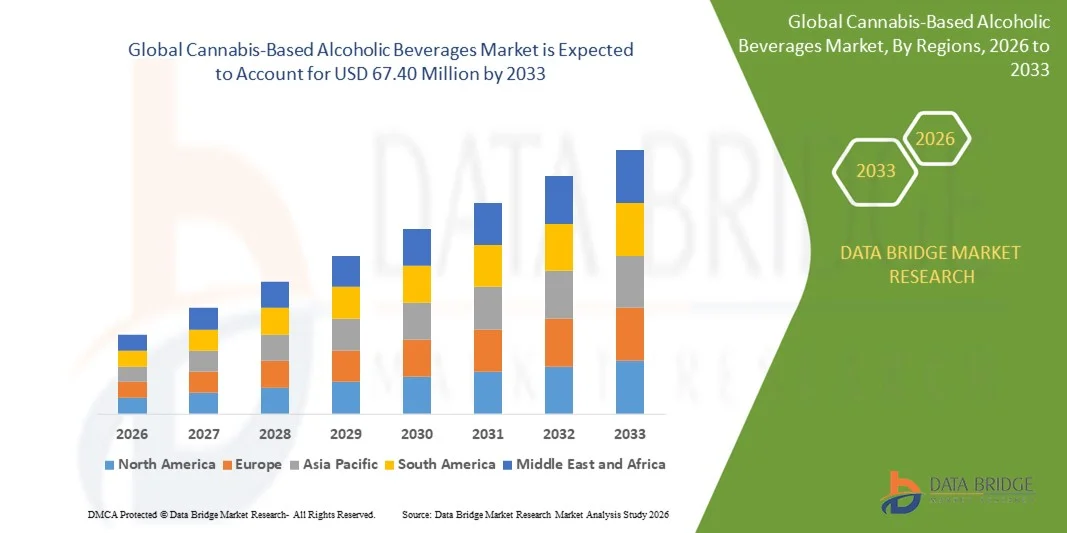
According to the latest report published by Data Bridge Market Research, the Cannabis-Based Alcoholic Beverages Market CAGR Value The global cannabis-based alcoholic beverages market size was valued at USD 42.61 million in 2025 and is expected to reach USD 67.40 million by 2033, at a CAGR of 5.9% during the forecast period Cannabis-Based...
Pushkar, the sacred town nestled in the heart of Rajasthan, is famous for its holy lake, vibrant camel fair, and spiritual energy. Yet beyond the temples and ghats, a discreet circle of visitors seeks something more private and luxurious. High-profile Russian escorts have quietly become part of the exclusive nightlife and companionship scene here, offering refined company to travelers who...

Premier Online Gaming Hubs 2026: The Definitive Ranking Criteria for Top Digital Entertainment PlatformsThe landscape of global digital entertainment and interactive sports simulation has undergone a massive evolution entering 2026. Today, modern digital consumers seek high-tech entertainment ecosystems that prioritize complete transparency, lightning-fast transaction speeds, and cutting-edge...

本格的なインド料理を味わいたい方におすすめなのが、tandoorkitchenです。伝統的なインドの調理技術と厳選されたスパイスを活かし、本場の味わいを提供しています。店内は落ち着いた雰囲気で、ご家族や友人との食事はもちろん、お一人様でもゆっくりと食事を楽しめる空間となっています。心のこもったサービスと本格料理で、多くのお客様に愛されている人気のお店です。 tandoorkitchenの大きな魅力の一つが、本場インドで古くから使用されている タンドール 窯による調理です。高温で一気に焼き上げることで、食材の旨味を閉じ込めながら香ばしい風味を引き出します。特にタンドリーチキンは人気メニューの一つで、スパイスにじっくり漬け込んだ鶏肉を焼き上げることで、外は香ばしく中はジューシーな食感を楽しめます。 ...

Personalized printed boxes are emerging as a strong instrument for companies that are keen on creating an impression in a competitive market. Bespoke printed boxes assist brands to create identity with intelligent packaging that talks even before the product is opened. The modern retail world has moved beyond simply protection in its packaging to the presentation, on market, ing and customer...